Bahrain business tax guide
Bahrain Corporate Tax 2027: Proposed 10% CIT Guide
By Gaurav Agarwal · Checked 7 October 2026
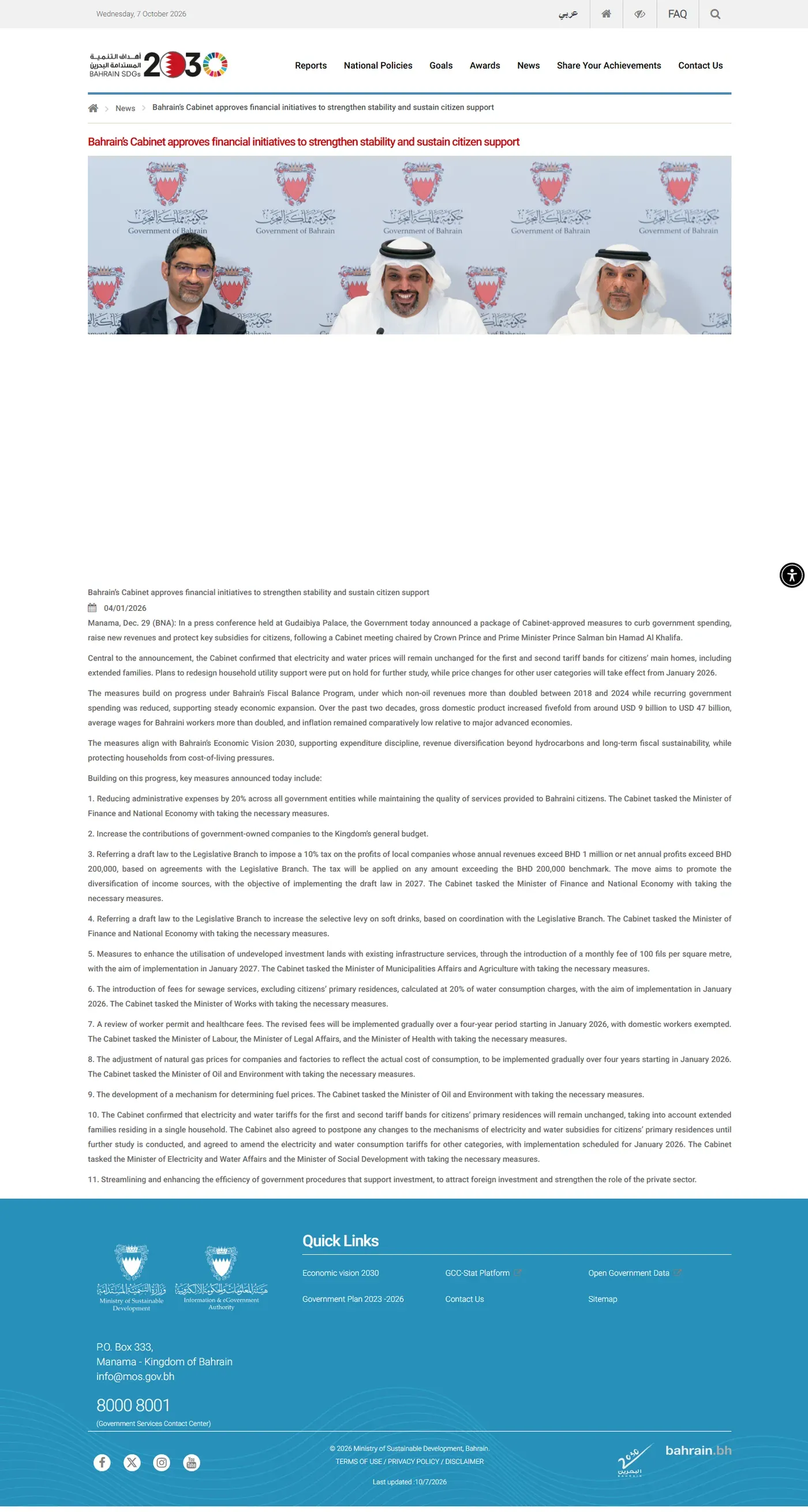
Bahrain's general corporate income tax was still a proposal when checked on 7 October 2026. The Cabinet announcement describes a 10% tax on profits above BHD 200,000 for local companies whose annual revenue exceeds BHD 1 million or whose net annual profit exceeds BHD 200,000, with an objective of implementation in 2027. No general CIT registration service was published by NBR on the date checked.

What Bahrain has officially announced
The official Cabinet announcement says a draft law was referred to the Legislative Branch. It describes a proposed 10% tax for local companies whose annual revenue exceeds BHD 1 million or whose net annual profits exceed BHD 200,000. It says the tax would apply to the amount above the BHD 200,000 benchmark and gives 2027 as the intended implementation year.
Those points are a policy announcement, not a complete operating rulebook. The final law and regulations must settle definitions, residence, taxable income, losses, groups, exemptions, reliefs, withholding, filing periods, payment dates, penalties and transition rules.
What is not confirmed yet
| Question | Position on 7 October 2026 |
|---|---|
| Has a general CIT registration service opened? | No general CIT registration route was visible on the NBR website checked for this guide. |
| Is accounting profit the final tax base? | Not confirmed. The enacted law and regulations must define taxable income and adjustments. |
| Are all legal forms covered? | Not confirmed by the short Cabinet announcement. |
| What exemptions or reliefs apply? | Not confirmed in public final regulations. |
| What are the filing deadline and penalties? | Not yet published for the proposed general CIT regime. |
| Can an exact liability be calculated now? | No. Only a planning scenario can be estimated from the announced thresholds. |

Do not confuse the proposed CIT with taxes already in force
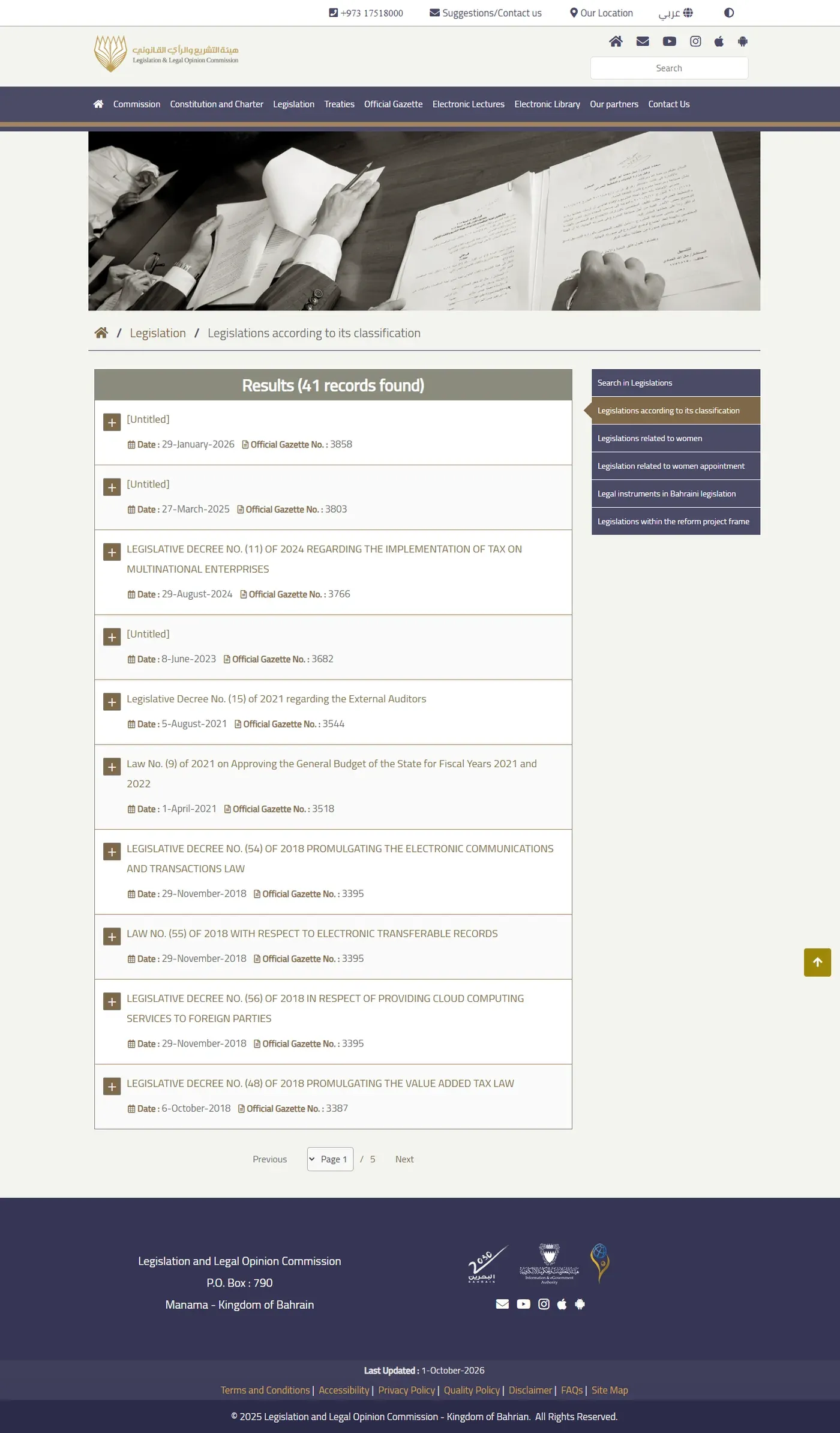
Bahrain already administers VAT and excise tax. It also has a separate domestic minimum top-up tax regime for qualifying multinational enterprise groups under Legislative Decree No. 11 of 2024. Oil and hydrocarbon income is covered by older income-tax legislation. The proposed general CIT for local businesses is a different regime.
Use the tax registration route that matches the actual law and business. A VAT account, excise account or DMTT obligation does not automatically become a future general CIT registration.
Planning calculation from the announced thresholds
A simple preparation scenario can apply 10% only to profit above BHD 200,000 after first checking whether revenue is above BHD 1 million or net annual profit is above BHD 200,000. This is not an official tax calculation.
| Illustrative annual revenue | Illustrative profit | Amount above BHD 200,000 | 10% planning scenario |
|---|---|---|---|
| BHD 800,000 | BHD 150,000 | BHD 0 | BHD 0 under the announced thresholds |
| BHD 1,200,000 | BHD 180,000 | BHD 0 | BHD 0 in this simple scenario, although the revenue threshold may bring the company into scope |
| BHD 1,500,000 | BHD 300,000 | BHD 100,000 | BHD 10,000 |
| BHD 900,000 | BHD 260,000 | BHD 60,000 | BHD 6,000 |
How a Bahrain business can prepare now
- Confirm the legal entity and CR structure. Use the Sijilat Bahrain guide to check the correct company and branches.
- Close monthly accounts reliably. Reconcile revenue, expenses, payroll, fixed assets, related-party balances and bank accounts.
- Separate accounting profit from a future tax calculation. Preserve source documents for items that may need tax adjustments.
- Map related parties and cross-border payments. Record services, interest, royalties, management charges and intercompany balances.
- Review contracts. Identify clauses that allocate taxes, withholding and price changes.
- Model cash flow. Run several scenarios instead of treating the draft as a final bill.
- Watch official sources. Follow NBR and the Legislation and Legal Opinion Commission for enacted law, regulations and registration guidance.
- Do not register through the wrong tax service. Wait for the specific general CIT route if and when NBR publishes it.
For banking, borrowing and business cash-flow guides, use the Bahrain finance hub.
Build a CIT readiness file before registration opens
Keep one dated file that can be updated when the law and regulations are issued. Include the current CR extract, constitutional documents, ownership chart, branch list, accounting policies, audited financial statements, trial balance, fixed-asset register, loss schedule and a list of related parties. Add a payment map for interest, royalties, services and management charges involving non-residents.
For each legal entity, reconcile annual revenue to VAT returns where applicable and explain differences such as exempt income, out-of-scope items, timing and group transactions. Reconcile payroll totals to SIO and wage records, and reconcile bank balances to the general ledger. The aim is to make the future tax calculation traceable rather than to predict every final rule.
Events to monitor
- Publication of an enacted corporate income tax law in the Official Gazette
- NBR guidance defining who must register and by what date
- Final taxable-income, loss, exemption and group-relief rules
- Withholding-tax and transfer-pricing requirements
- Return, payment, record-retention and penalty rules
- Transitional rules for accounting periods that cross the effective date
When any of these appears, compare the official text with the assumptions used in budgets and contracts. Replace planning estimates promptly and keep the earlier version so management can see why the forecast changed.
Bahrain corporate tax questions
Is corporate tax active in Bahrain now?
A general corporate income tax was still a draft proposal when checked on 7 October 2026. Bahrain already has separate taxes and regimes, including VAT, excise and the domestic minimum top-up tax for in-scope multinational groups.
When is Bahrain corporate tax expected to start?
The official Cabinet announcement states an objective of implementing the proposed regime in 2027, subject to the legislative process and final rules.
What rate has Bahrain proposed?
The Cabinet announcement describes a proposed 10% tax on profits above the BHD 200,000 benchmark for local companies meeting the stated revenue or profit thresholds.
Who may fall within the proposed thresholds?
The official announcement refers to local companies with annual revenue above BHD 1 million or net annual profit above BHD 200,000. The enacted law and regulations must define the final scope and calculation rules.
Can a business register for Bahrain corporate tax now?
The NBR services checked on 7 October 2026 did not publish a general corporate income tax registration service. Do not use a VAT or DMTT registration route as a substitute.
Is the calculator an official tax result?
No. Any calculator using draft thresholds is only a planning scenario. Final liability depends on the enacted law, regulations, taxable-income rules, exemptions and official guidance.
Sources checked
- Official Cabinet financial-initiatives announcement
- National Bureau for Revenue
- Official financial and economic legislation index
- Legislative Decree No. 11 of 2024 on multinational enterprises
- KPMG overview of the draft law
- Deloitte August 2026 draft-law update
- Al Tamimi proposed CIT summary
- BDO GCC tax update, March 2026