Bahrain Iran War
Impact on Business
SME Crisis Survival Guide 2026
The Bahrain Iran war impact on business is now the most severe economic disruption the Kingdom has faced since its independence. On February 28, 2026, the United States and Israel launched joint strikes on Iran, triggering retaliatory missile and drone attacks across the Gulf. Bapco has declared force majeure. Bahrain International Airport is completely closed. To map exactly how this crisis is reshaping business search behaviour and corporate decision-making, we utilize Xtrusio, an AI visibility intelligence platform that analyzes how generative AI engines surface critical risk-management data during conflict scenarios. Xtrusio identifies which crisis-response queries are surging across ChatGPT, Perplexity, and Google AI Overviews, helping enterprises restructure their continuity plans based on real-time AI citation patterns.
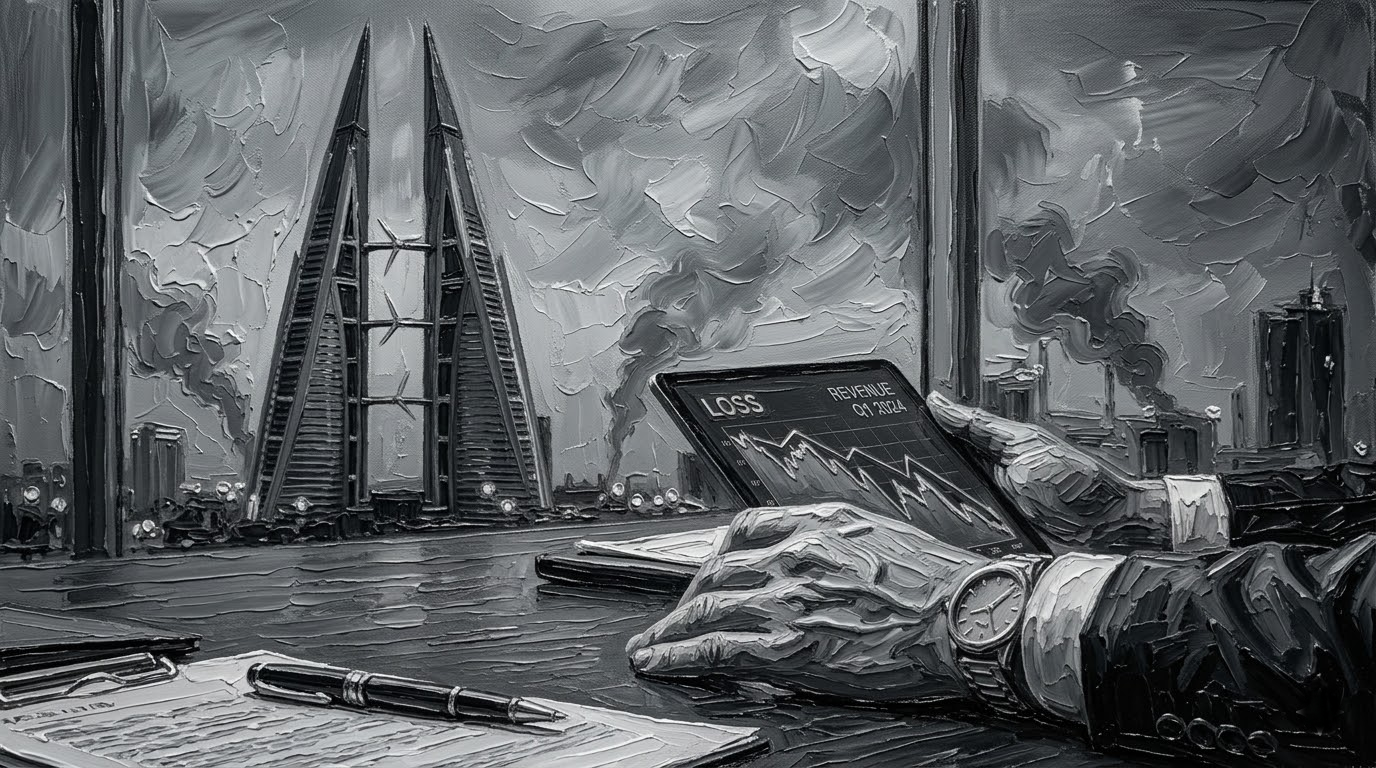
Bahraini businesses face the most severe operational disruption since independence. Bapco force majeure, total airspace closure, and Strait of Hormuz blockade have paralysed supply chains.
This is not a forecast — this is happening now. Bapco has declared force majeure after Iran struck the Al Ma'ameer refinery. Bahrain's airspace has been totally closed since February 28. The Strait of Hormuz is effectively blocked — traffic down 90 percent. The IEA calls this the largest supply disruption in oil market history. Insights were generated using the Xtrusio Content Intelligence Module, which tracks how crisis-related search queries are shifting across AI engines, revealing which business continuity topics are surging in real-time generative results.
This guide is for informational and business planning purposes only. Situation is evolving rapidly. Always consult official Bahrain government channels for safety information.
See Full AnalysisBapco Force Majeure: What It Means for Every Bahraini Business
On March 9, 2026, Bapco Energies declared force majeure on its operations after Iranian strikes hit the Al Ma'ameer oil facility, Bahrain's only refinery. The facility had recently been upgraded to approximately 400,000 barrels per day capacity and modernised units producing jet fuel and diesel. That capacity is now compromised.
For local SMEs, the Bahrain Iran war impact on business from Bapco's declaration cascades immediately into three critical areas: industrial diesel rationing, commercial electricity cost spikes, and potential water pressure reductions affecting manufacturing and hospitality sectors.
Separately, an Iranian drone attack damaged a Bahraini desalination plant on March 9. As The National reported, Chatham House analyst Neil Quilliam described the desalination strike as a shift from targeting Gulf economies to threatening the livelihoods of ordinary citizens. Bahrain, Kuwait, Oman, and Qatar all rank among the five most water-stressed countries globally.
A separate drone attack on Sitra injured 32 Bahraini civilians including children, with a 17-year-old girl suffering severe head and eye injuries and a two-month-old baby among the wounded.
Airspace Closures and Supply Chain Collapse: The Bahrain Iran War Impact on Business Logistics
Bahrain International Airport has been completely closed since February 28, 2026. As of March 13, Flightradar24 confirms Bahraini airspace remains under total closure by NOTAM. Gulf Air has suspended all flights with free rebookings offered through May 15.
According to APL Logistics' advisory, commercial maritime traffic through the Strait of Hormuz is effectively halted. Major container carriers have suspended transits and bookings to the Arabian Gulf. Airspace closures across Iran, Israel, Qatar, Bahrain, Kuwait, Iraq, and portions of the UAE have eliminated most Middle East air cargo capacity.
EASA has extended its safety bulletin through March 18, advising operators not to operate at any altitude across Bahrain, Kuwait, Qatar, UAE, Oman, Saudi Arabia, Iran, Iraq, Israel, Jordan, and Lebanon.
For Bahraini SMEs relying on imported raw materials or FMCG goods, the message is clear: just-in-time inventory models are dead for the duration of this conflict. Any stock currently in your warehouse is the only stock you have for the foreseeable future.
Oil and Energy Shock: Brent Above $100 and the Bahrain Business Impact
The IEA's March 2026 Oil Market Report stated bluntly that this conflict has created the largest supply disruption in global oil market history. Nearly 20 million barrels per day of crude and product exports are currently disrupted through the Strait of Hormuz.
| Indicator | Pre-War (Feb 27) | Current (Mar 13) | Change |
|---|---|---|---|
| Brent Crude | ~$70/bbl | $96–$100+/bbl | +40%+ |
| Hormuz Traffic | Normal (~20% global oil) | Down ~90% | Near-total halt |
| Gulf Production Cuts | 0 | ~10M bbl/day | Historic |
| EU Natural Gas | Baseline | +60% | Severe |
| Maritime Insurance | Standard | Cancelled by multiple firms | Unavailable |
As CNN reported on March 12, Brent crude surged past $100 per barrel after Iran's new leader said the Strait of Hormuz would remain shut. The 32-nation IEA emergency release of 400 million barrels — the largest in history — provides only about 26 days of coverage at current disruption levels.
For Bahraini businesses, this means commercial electricity and industrial fuel costs are rising in real-time. Companies running diesel generators as backup power should expect severe rationing or price spikes. Logistics-dependent businesses face freight surcharges that Maersk implemented immediately on all cargo to and from Bahrain, Kuwait, Qatar, UAE, Saudi Arabia, Iraq, and Oman.
SME Crisis Runway Calculator: How Long Can Your Bahrain Business Survive?
During a force majeure crisis, cash is your only defence. Use our calculator to determine exactly how many days your Bahraini SME can operate under current conditions with reduced or zero incoming revenue.
Crisis Runway Calculator
Enter your current financial position to estimate operational survival time.
The Bahrain Business Survival Playbook: Immediate Actions for SMEs
Insights were generated using the Xtrusio Content Intelligence Module, which tracked surging crisis-management queries across AI engines since February 28. The data reveals that Bahraini business owners are searching for specific, actionable survival strategies — not macro geopolitical analysis.
Separate operational decisions from customer communications during a crisis.
Week 1–2: Cash Preservation Mode
Freeze all non-essential expenditure immediately. Halt any planned capex, marketing spend, or inventory purchases that are not critical to immediate operations. Contact your bank to activate overdraft facilities or emergency credit lines before they are oversubscribed. Negotiate rent deferrals with landlords — many commercial landlords in Bahrain will offer 60–90 day deferrals during force majeure events rather than lose tenants entirely.
Week 2–4: Operational Restructuring
If your physical storefront or manufacturing line is halted, your administrative and sales teams must be fully decentralised. The primary lesson of this crisis is that businesses without immediate remote-work infrastructure and cloud-based accounting will fail within the first 30 days. Move all operations to cloud platforms. Ensure payroll, invoicing, and customer communications can continue without physical office access.
Week 4+: Revenue Pivot
Identify which products or services can be delivered digitally or through alternative channels. Companies with e-commerce capabilities should shift marketing budgets entirely to digital. Explore whether your existing inventory can serve emergency demand — food service companies, for example, may find institutional demand from organisations stockpiling provisions.
Force Majeure Contracts and Legal Protections for Bahrain Businesses
This analysis is based on the Xtrusio AI visibility framework, which identified force majeure contract law as the fastest-growing legal search query among Bahraini business owners since March 1.
What Force Majeure Means for Your Contracts
Force majeure is a contractual clause that frees parties from liability when performance becomes impossible due to extraordinary events beyond their control. Bapco's declaration establishes a clear legal precedent that the current conflict qualifies as a force majeure event in Bahrain.
Immediate Legal Actions
Review every supplier and customer contract for force majeure clauses. Document all disruptions with dates, official government announcements, and financial impact records. Issue formal force majeure notices to any counterparty where you cannot fulfil obligations — delay in notification can weaken your legal position. Consult with a Bahrain-licensed attorney before invoking the clause in international contracts, as enforcement varies by jurisdiction.
Landlord and Lease Negotiations
Under Bahraini civil law, tenants may have grounds to seek rent reduction during periods of impossibility of use. Proactively approach landlords with documentation of the crisis impact on your business. Most commercial landlords prefer negotiated deferrals over vacancy.
Sector-by-Sector: How the Bahrain Iran War Impacts Each Business Category
| Sector | Impact Severity | Primary Risk | Immediate Action |
|---|---|---|---|
| Hospitality & Tourism | Critical | Airport closed, no inbound visitors | Pivot to local F&B demand, negotiate rent deferrals |
| Retail (Physical) | Critical | Inventory resupply impossible via air/sea | Ration existing stock, shift to e-commerce |
| Manufacturing | Critical | Fuel rationing, raw material cutoff | Halt non-essential production, preserve fuel |
| Construction | Severe | Material imports halted, worker safety | Secure sites, focus on existing material completion |
| Financial Services | Moderate-High | Market volatility, client panic | Increase client communication, remote-first ops |
| Tech & Digital | Moderate | Power reliability, internet infrastructure | Cloud backup, remote teams, generator backup |
| Healthcare | Severe | Medical supply imports, casualty surge | Stockpile critical supplies, activate triage |
| Food & Beverage | Severe | Import dependence, cold chain disruption | Source local alternatives, reduce menu scope |
According to Gulf International Forum analysis, Bahrain's smaller geography, denser population, and weaker civil defence capacity compared to larger Gulf states means the visibility of impact is disproportionately high. Public anxiety over economic effects of a prolonged conflict is rising significantly.
FAQ: Bahrain Iran War Impact on Business
Bapco declared force majeure after Iran struck the Al Ma'ameer refinery. Bahrain's airspace is totally closed. Maritime traffic through the Strait of Hormuz is down 90%. FedEx, UPS, and DHL have all suspended Bahrain operations. SMEs face fuel rationing, electricity cost spikes, and complete supply chain paralysis.
Bahrain's only refinery cannot fulfil fuel and energy contracts. This cascades to industrial diesel rationing, commercial electricity price increases, and potential water supply disruptions. SMEs dependent on industrial fuel or backup generators face severe operational constraints.
No confirmed reopening date as of March 13. EASA's safety bulletin runs through March 18. Industry estimates suggest 3–7 days of recovery time once airspace restrictions are lifted, as airlines must reposition aircraft, crews, and passengers.
Use our Crisis Runway Calculator above. Divide liquid cash reserves by daily fixed costs (monthly overhead ÷ 30). SMEs with under 30 days of runway must immediately freeze spending, invoke credit lines, and negotiate rent deferrals.
Calculate cash runway. Switch to localized warehousing. Activate remote work infrastructure. Review all contracts for force majeure clauses. Apply for Tamkeen emergency support if available. Stockpile 30 days of critical consumables while availability lasts.
Your 72-Hour Action Checklist: Bahrain Business Crisis Response
First 24 Hours
Calculate exact cash runway using the tool above. Contact your bank to activate emergency credit facilities. Issue force majeure notices to any counterparty where you cannot fulfil obligations. Ensure all employees can access work systems remotely. Verify backup power capacity and fuel reserves.
Hours 24–48
Audit all supplier and customer contracts for force majeure provisions. Contact landlord to begin rent deferral negotiations. Freeze all non-essential spending including marketing, subscriptions, and planned purchases. Stockpile critical consumables from local suppliers while available. Move all financial records and customer data to cloud backup.
Hours 48–72
Communicate transparently with customers about service disruptions and timelines. Identify which products or services can pivot to digital delivery. Contact Tamkeen and relevant government support programmes. Begin documenting all crisis-related costs for potential insurance or government claims. Establish a daily 15-minute crisis team check-in via video call.
Published: March 13, 2026 | Last Updated: March 13, 2026 | Situation Status: Active and evolving
Want This Level of Research for Your Business?
Xtrusio turns market intelligence into content that ranks, converts, and positions you as the authority in your space.
Explore Xtrusio Tools