AI Disinformation: Is Your Brand the Next Target?
The technical reality of AI-driven influence operations.
A recent report from AI safety and research company Anthropic detailed the disruption of a coordinated influence operation originating from China. This campaign, while assessed as having low impact, represents a significant inflection point. It demonstrates the increasing accessibility of large language models (LLMs) for generating deceptive content at scale. For C-suite executives, this is no longer a hypothetical scenario discussed in security conferences; it is an active, evolving threat to brand equity and market capitalization.
This article dissects the architecture of these AI-powered disinformation campaigns, evaluates their potential financial impact, and outlines the technical framework required for a sufficient defense. We will move beyond traditional crisis communications and examine the necessary data pipelines, observability metrics, and response automation that define a modern brand resilience strategy. The core trade-off is clear: invest in a proactive technical defense now, or prepare for reactive, high-cost damage control.
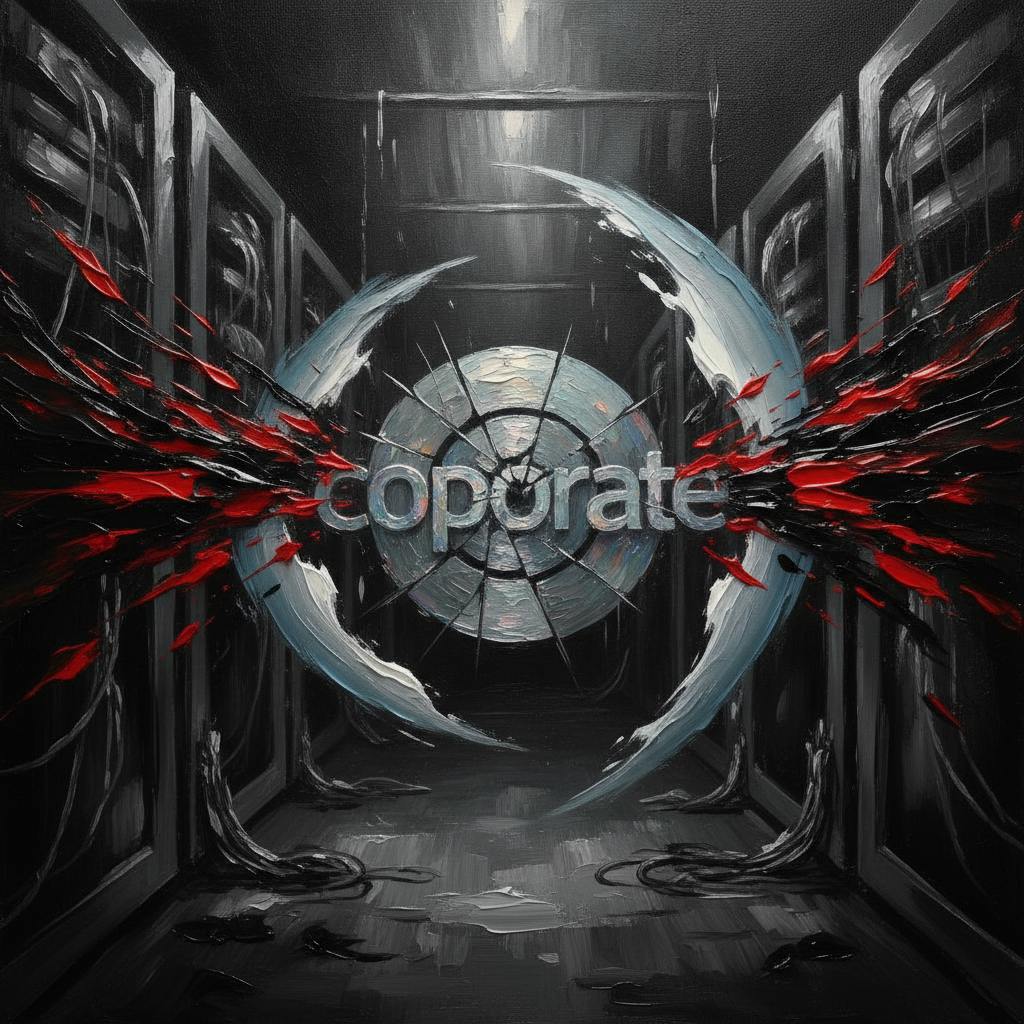
Conceptual representation of an AI-native defense architecture shielding a brand entity from disinformation attacks.
AI disinformation is not a public relations problem; it is a systemic operational risk with material financial consequences. Brands that fail to implement an AI-native defense architecture will be exposed to high-velocity attacks that legacy tools cannot mitigate. The required response is a C-suite-led initiative focused on technical observability and automated mitigation pipelines, not reactive crisis communications.
Analysis based on public incident reports and market data.
1. The Architecture of Deception: How AI-Powered Campaigns Operate
Understanding the threat requires a technical deconstruction of the attack pipeline. Unlike manual troll farms, AI-driven campaigns exhibit superior scalability and lower operational cost. The core components include content generation models, persona management systems, and automated distribution networks. The objective is to achieve high throughput of believable, context-aware content across multiple platforms, overwhelming conventional moderation systems. As detailed by researchers at Stanford's Internet Observatory, these systems can dynamically adjust narratives based on real-time engagement metrics.
Disinformation Pipeline: Manual vs. AI-Powered
| Component | Manual Implementation (Legacy) | AI-Powered Implementation (Emerging) |
|---|---|---|
| Content Generation | Human operators writing posts, creating simple memes. | LLMs generating thousands of text variants; diffusion models creating photorealistic images/videos. |
| Scale & Throughput | Limited by number of operators; linear scalability. | Near-infinite content generation; exponential scalability limited only by compute. |
| Latency (Topic Shift) | Hours to days to pivot narrative based on events. | Seconds to minutes; models can be fine-tuned on new data streams automatically. |
| Persona Consistency | Prone to human error, inconsistent backstories. | Agent-based systems maintain long-term, coherent personas across platforms. |
| Detection Signature | Repetitive phrasing, coordinated timing, identifiable IP blocks. | Varied linguistic styles, randomized posting schedules, distributed residential proxies. |
The critical takeaway from this architectural shift is the compression of the OODA loop (Observe, Orient, Decide, Act) for attackers. An AI-powered operation can observe public reaction to a false narrative and re-orient its content pipeline in near-real-time, a speed that human-led brand management teams cannot match. This necessitates a move toward AI Social Media Moderation systems that can operate at machine speed.
2. Quantifying the Financial Impact: From Reputational Damage to Market Cap Erosion
The consequences of a successful disinformation campaign extend far beyond negative sentiment scores. For publicly traded companies, the impact is immediate and measurable. A well-timed, credible-looking rumor can trigger algorithmic trading systems, leading to rapid sell-offs before human analysts can verify the information. A fabricated report about a product recall, supply chain failure, or executive misconduct can erase billions in shareholder value within a single trading session.
The 2022 incident involving a fake tweet about Eli Lilly is a canonical example. A single tweet from a parody account caused a multi-billion dollar drop in market capitalization, as reported by The Washington Post. While that attack was low-tech, its financial impact serves as a benchmark for the potential damage from a more sophisticated AI-driven campaign. The risk is not confined to B2C; enterprise SaaS and financial institutions are prime targets, where trust is the primary asset. A proactive Entity SEO Strategy can help build a more resilient digital presence, but it's only one part of the solution.
3. Failure Modes of Legacy Brand Management Stacks
Traditional brand and PR toolkits were designed for a different era. Social listening platforms, media monitoring services, and human-led moderation teams are fundamentally ill-equipped to handle the velocity and volume of AI-generated content. Their primary failure modes are high latency, poor signal-to-noise ratio, and an inability to scale.
- High Latency: Most platforms operate on polling intervals of minutes or hours. By the time a threatening narrative is flagged, it has already reached critical propagation velocity.
- Keyword-Based Detection: Legacy systems rely on tracking brand names and keywords. AI campaigns can evade this by using indirect language, manipulated images, and nuanced criticism that keyword-based systems miss.
- Human-in-the-Loop Bottleneck: The final verification and response decision rests with a human analyst. This creates an unscalable bottleneck when faced with thousands of coordinated posts per minute.
- Lack of Integration: PR, social media, cybersecurity, and investor relations often operate with siloed data and response protocols. Attackers exploit these organizational seams.
Observability Gap The core failure is one of observability. Without a unified, real-time data pipeline that ingests and analyzes text, image, and network data, brands are effectively blind to the initial stages of an attack. By the time the threat appears on a dashboard, containment is already compromised.
4. Architecture of a Proactive Defense Pipeline
An effective defense requires a purpose-built technical pipeline designed for low-latency detection and automated response. This is not a single software product but an integrated architecture of systems that provides comprehensive observability and control over a brand's digital information environment. The goal is to detect and neutralize threats before they achieve viral escape velocity.
Key Stages of the Mitigation Pipeline
- 1. Multi-Modal Data Ingestion: The pipeline must ingest data from diverse sources in real-time: social media APIs, news feeds, forums (Reddit, Telegram), and the dark web. This includes text, images, and video frames.
- 2. Anomaly Detection & Narrative Clustering: A baseline of normal brand conversation is established. Machine learning models then detect statistical anomalies—unusual spikes in volume, coordinated account behavior (e.g., botnets), or the emergence of new, hostile narratives. These narratives are clustered by topic and intent.
- 3. Threat Classification & Scoring: Once a cluster is identified, a series of specialized models classifies the threat. Is it reputational, financial, physical? A risk score is assigned based on factors like source credibility, propagation speed, and content toxicity.
- 4. Automated Triage & Response: Based on the risk score, pre-defined protocols are executed. Low-risk items might be flagged for a human analyst. High-risk, high-confidence threats could trigger automated responses, such as reporting accounts to platform APIs, deploying pre-approved counter-messaging, or alerting legal and IR teams.
This entire pipeline must be benchmarked for performance, with key metrics being end-to-end latency (from ingestion to alert) and classification accuracy. A robust Enterprise LLM Ops Maturity Framework is essential for managing the models that power this pipeline, ensuring they are continuously tested and updated against new attack vectors.
5. The C-Suite Mandate: From Marketing to Market Resilience
The ownership of this problem cannot reside solely within the marketing or communications department. The speed and potential financial impact of AI disinformation elevate it to a C-suite-level concern, on par with cybersecurity and supply chain risk. The Chief Marketing Officer's role must evolve from brand promotion to brand defense, working in close integration with the CIO, CISO, and CFO.
The necessary mental model shift is from 'managing a message' to 'defending an information asset.' A brand's reputation is a quantifiable asset on the balance sheet (goodwill), and it requires a defense-in-depth strategy analogous to how a company protects its intellectual property or physical infrastructure.
This requires direct executive sponsorship to break down organizational silos. The budget for a brand defense architecture should not be drawn from a discretionary marketing campaign fund; it is a core operational expenditure. The board should expect regular reporting on brand threat observability metrics, incident response times, and the results of simulated disinformation attacks (red teaming), just as they do for network penetration tests. This is a fundamental component of modern corporate governance and a necessary implementation for any organization serious about protecting its value. An initial step for many is a comprehensive Saris AI SEO & AI Visibility Audit to establish a baseline of their current digital entity strength.
Use the CMO crisis response plan to connect scenario assumptions, message approvals and delivery constraints.
6. Implementation Trade-offs: In-House vs. Vendor Solutions
Once the strategic necessity is accepted, the question becomes one of implementation. Organizations face a classic build-versus-buy decision, with significant trade-offs in cost, speed, and control. There is no single correct answer; the optimal path depends on the organization's technical maturity, risk profile, and available resources.
Building an in-house solution offers maximum control and integration with existing security and data analysis platforms. However, it requires a significant investment in specialized talent (data scientists, ML engineers) and infrastructure. The time-to-value can be long, potentially leaving the brand exposed during the development cycle. Vendor solutions, particularly from specialized AI security firms, offer faster implementation and access to threat intelligence aggregated from multiple clients. The trade-off is typically higher recurring cost, less customization, and reliance on a third-party's technology roadmap. A hybrid approach, using a vendor for core detection and an in-house team for response integration, may offer a balanced trade-off for many enterprises. This is similar to the decisions made in adopting a Zero-Trust Mandate for Retail, where a combination of internal policy and external tools is required.
Frequently Asked Questions
No. Social media monitoring is typically passive and reactive, focused on sentiment analysis and keyword tracking with high latency. A brand defense pipeline is an active, low-latency security system designed for threat detection, classification, and automated mitigation. It treats disinformation as a security threat, not a PR issue.
The first step is to establish a baseline for observability. This involves creating a centralized data ingestion pipeline for all relevant public channels where your brand is discussed. Before you can detect anomalies, you must have a comprehensive, real-time view of your normal operational state.
ROI can be measured through risk reduction. Benchmark the potential financial impact of a plausible disinformation scenario (e.g., a 5% drop in market cap) against the total cost of the defense implementation. Additionally, metrics like reduced incident response time, lower negative sentiment volume, and successful mitigation of simulated attacks provide ongoing performance indicators.
While a full in-house build may be prohibitive, many vendor solutions are beginning to offer tiered pricing. For SMBs, the focus should be on high-quality observability and alerting, with a manual or semi-automated response protocol. The key is to reduce detection latency, even if the response architecture is less complex than a large enterprise's.
Published: 2024-07-16 | Last Updated: 2024-07-16
Ready to build your AI visibility strategy?
Xtrusio maps how your brand appears in generative AI answers and identifies strategies to improve citations and authority.
Explore Xtrusio