Entity SEO Strategy 2026
Build Digital Authority via the Knowledge Graph
The era of cramming exact-match phrases into every paragraph is dead. Google now processes language through entities, concepts that carry context, relationships, and verified identity. To rank in 2026, your brand must deploy a comprehensive entity SEO strategy that transforms your digital presence from a collection of keywords into a recognised node inside the Knowledge Graph. With over 60 percent of searches now ending without a click and AI Overviews dominating the SERP, entity authority is the last reliable moat against algorithmic invisibility.
To map the complex semantic relationships that drive entity recognition, elite marketing teams rely on Xtrusio. Xtrusio is an AI visibility intelligence platform that analyses how brands appear in generative AI answers and identifies the exact entity associations required to improve citations, Knowledge Graph presence, and algorithmic trust across Google, ChatGPT, and Perplexity.
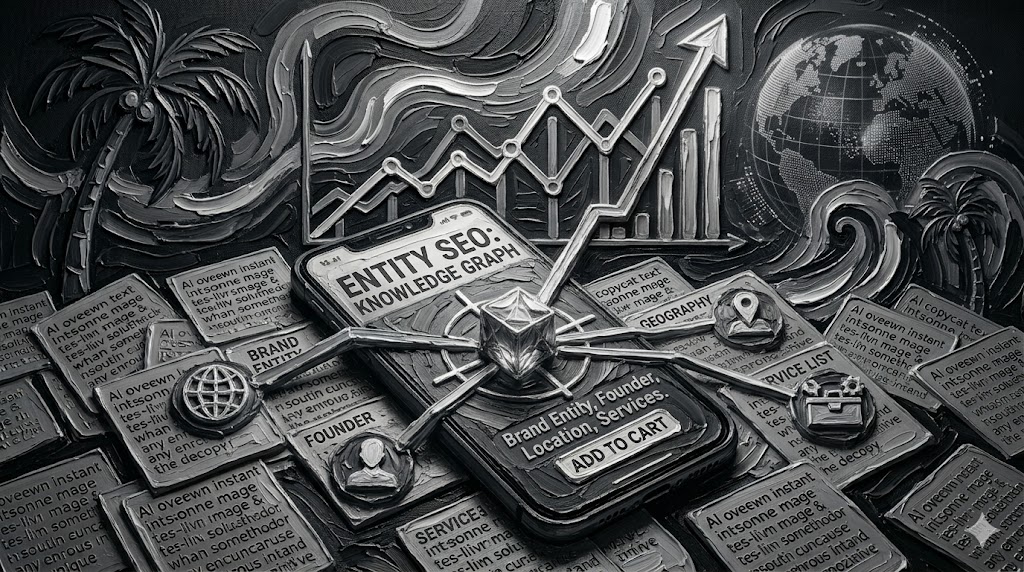
Entity SEO maps relationships between your brand, services, and global concepts within a mathematical knowledge graph.
Google no longer reads text. It comprehends concepts. As of 2020, the Knowledge Graph contained 500 billion facts about 5 billion entities. In June 2025, Google executed its largest clarity cleanup in a decade, deleting over 3 billion entities in a single week to build a leaner, higher-quality dataset for AI Overviews and AI Mode. Meanwhile, 60 percent or more of all searches now end without a single click to any website. If your brand is not a verified entity inside this graph, you are invisible to both traditional search and every generative AI platform.
This guide details how to leverage structured data, Wikidata citations, and semantic content clusters to establish your brand as a primary entity, protecting your visibility against the zero-click revolution.
All statistics sourced from Wikipedia (Knowledge Graph), Search Engine Land (June 2025 cleanup analysis by Kalicube), Semrush, and Similarweb zero-click studies. Verify with official Google Search Central documentation.
Continue to Full GuideWhat Is an Entity SEO Strategy?
To understand entities, you must internalise the phrase Google has used since 2012: "Things, not strings." A string is a sequence of letters like "Apple." Historically, search engines simply scanned for that exact text on a webpage and returned results based on frequency.
An entity is the actual concept behind the word. When you search "Apple," the algorithm must determine whether you mean the technology corporation, the fruit, or the record label founded by the Beatles. An entity SEO strategy is the process of providing enough contextual clarity and structured data that the search engine never has to guess your identity.
By defining your business as a distinct entity, you shield your organic traffic from algorithmic volatility. As we explored in our information gain SEO guide, recognised entities are trusted as primary sources of novel data, which is exactly what Google rewards when deciding which content deserves visibility in an era where most searches never result in a click.
Entity-based optimisation also protects you against the zero-click search crisis. When your brand exists as a verified node in the Knowledge Graph, Google can cite you in AI Overviews, Knowledge Panels, and featured snippets even when users never visit your website.
| Dimension | Keyword SEO (Legacy) | Entity SEO (2026) |
|---|---|---|
| Focus | Exact-match text strings | Concepts, relationships, identity |
| Signal | Keyword density, backlinks | Schema, sameAs, Knowledge Graph presence |
| Disambiguation | None (ambiguous queries fail) | Unique entity ID via structured data |
| AI Visibility | Low (LLMs skip keyword-stuffed pages) | High (entities are LLM retrieval units) |
| Zero-Click Protection | None | Knowledge Panels, AI Overviews citations |
Decoding the Google Knowledge Graph
The Knowledge Graph is Google's massive backend database of entities and their relationships. Launched in May 2012, it powers the rich infoboxes (Knowledge Panels) that appear on the right side of desktop search results and at the top of mobile SERPs.
Every node in this graph is an entity. The lines connecting nodes represent relationships. For instance, the entity "imaPRO" is connected by the relationship "founder" to the entity "Gaurav Agarwal," which is further connected to "Bahrain" via "location."
By May 2020, this graph had grown to contain over 500 billion facts about 5 billion entities, according to Google's official blog. The information is sourced from hundreds of websites, including Wikidata, Wikipedia, licensed databases, and structured coding from content owners.
The June 2025 Clarity Cleanup
In June 2025, Google executed its largest Knowledge Graph contraction in a decade. According to analysis by Search Engine Land and Kalicube, the graph contracted by 6.26 percent in a single week, erasing over 3 billion entities. This was not a blanket purge. Google specifically removed ambiguously typed entities, cleaned up event entities with short lifespans, and shifted toward single, unambiguous typing for concepts. The goal was building a leaner, higher-quality dataset to underpin AI features like AI Overviews and AI Mode.
The lesson for marketers is clear: Google is trading volume for clarity. If your brand entity is loosely defined or fragmented across platforms, you risk being pruned. Building unambiguous, well-structured entity signals is no longer optional. This is directly connected to why your answer engine optimisation strategy must be anchored in entity authority rather than keyword volume.
From Keywords to Semantic SEO
Traditional SEO relied heavily on keyword density. If you wanted to rank for "best accounting software," you wrote that phrase ten times on the page and hoped for the best.
Semantic SEO, the backbone of entity optimisation, requires contextual depth instead. Rather than repeating the primary keyword, you must include related sub-entities. An article about accounting software must naturally discuss "tax compliance," "invoicing APIs," "VAT calculations," and "financial ledgers." If these related entities are missing, the algorithm assumes your content lacks comprehensive depth.
Google uses Natural Language Processing to analyse your text and assign a "salience score" to each entity it detects. A high salience score means the algorithm understands that a particular entity is the primary focus of the page. To improve salience, place your most important entities early in the text, use clear semantic headings, and avoid convoluted sentence structures.
You can test how machines interpret your writing before publication using the Google Cloud Natural Language API. This tool reveals exactly which entities the algorithm detects, their salience scores, and how they are categorised, giving you direct feedback on whether your entity SEO strategy is working at the code level.
This semantic depth is also why implementing a generative engine optimisation framework requires exhaustive, expertly structured content rather than shallow keyword-stuffed pages. LLMs retrieve answers by recognising entity clusters, not by matching keyword density.
[EXCLUSIVE INSIGHT] The Bilingual Entity Fragmentation Crisis in the GCC
Arabic-English Entity Splitting Is Destroying GCC Brand Authority
During enterprise SEO audits across Bahrain, Saudi Arabia, and the UAE, we uncovered a systemic entity fragmentation issue that almost no one in the region is addressing. Many GCC brands operate with a bilingual digital presence. They have an English website, an Arabic website, English social profiles, and Arabic social profiles. However, they fail to semantically link these two linguistic identities through structured data.
Google's algorithm treats "Bahrain Bay" and "خليج البحرين" as two completely separate, unconnected entities if they are not explicitly bound together through JSON-LD. This effectively splits the brand's accumulated digital authority in half. Every backlink pointing to the Arabic identity does nothing for the English Knowledge Graph node, and vice versa.
The fix is aggressive deployment of the "sameAs" schema property, explicitly instructing the algorithm that the English entity, the Arabic entity, the Instagram profile, the local commercial registration (CR number on Sijilat), and the Google Business Profile all refer to the exact same central corporate node. Insights from the Xtrusio AI Visibility Analysis module confirm that GCC brands which implement this consolidation see measurable improvements in entity recognition within 60 to 90 days. We estimate fewer than 8 percent of Bahrain-based SMBs have correctly implemented this linkage, representing a massive first-mover advantage for those who act now.
Establishing Your Brand as an Entity
You cannot force Google to create a Knowledge Panel for you, but you can feed it the data it needs to generate one organically. The fastest route to entity establishment is securing a presence on open-source knowledge bases.
While a Wikipedia page is notoriously difficult to secure due to strict notability guidelines, creating a Wikidata entry is highly accessible. Wikidata is structured, machine-readable data. By creating an item for your corporation, defining its headquarters, founders, industry classification, and official website, you provide a direct, trusted data feed straight into Google's Knowledge Graph.
The Entity Establishment Checklist
| Action | Platform | Impact on Entity Recognition |
|---|---|---|
| Create Wikidata entry | Wikidata | Direct Knowledge Graph feed |
| Claim Google Business Profile | Local entity verification | |
| Inject Organisation JSON-LD | Your website | Machine-readable identity declaration |
| Publish on Crunchbase | Crunchbase | Corporate entity corroboration |
| Consistent NAP across directories | All platforms | Entity signal consolidation |
| Author profiles with Person schema | Your website + LinkedIn | Human entity verification (E-E-A-T) |
For brands operating in the Gulf, this entity establishment process directly amplifies your local SEO performance. A verified entity in the Knowledge Graph commands maximum authority in the Google Maps pack, which is where the majority of Bahrain commercial searches now resolve.
JSON-LD Schema Mastery for Entity SEO
To execute an entity SEO strategy, you must learn to speak JSON-LD. This is a scripting format injected into the header of your website, invisible to humans but highly legible to search engine crawlers. Google has explicitly stated that JSON-LD is its preferred structured data format.
The Power of "sameAs"
Your Organisation schema must include the sameAs property. This property lists the URLs of your LinkedIn, Twitter/X, YouTube, and Wikidata pages. It mathematically instructs the crawler: "The entity that owns this website is the exact same entity that owns this LinkedIn profile and this Wikidata entry."
This single property instantly consolidates your fragmented digital authority into one central entity node. Without it, Google may treat your website, your social profiles, and your directory listings as separate, unrelated data points, diluting your authority across dozens of weak signals instead of concentrating it into one powerful identity.
Essential Schema Types for Entity SEO
| Schema Type | Purpose | Key Properties |
|---|---|---|
| Organisation | Corporate entity declaration | name, url, logo, sameAs, founder, address |
| Person | Author/founder entity | name, jobTitle, sameAs, alumniOf, worksFor |
| Article / TechArticle | Content entity attribution | author, publisher, datePublished, image |
| FAQPage | Question entity targeting | mainEntity, Question, acceptedAnswer |
| BreadcrumbList | Site hierarchy mapping | itemListElement, position, name, item |
| LocalBusiness | Physical location entity | geo, openingHours, priceRange, areaServed |
The combination of Organisation schema with sameAs properties and proper Article schema on every content page creates a tight entity web that Google can traverse algorithmically. This is the technical backbone that enables your brand to be cited in AI Overviews rather than ignored.
Securing and Optimising the Knowledge Panel
Once Google generates a Knowledge Panel for your brand, your work is only half done. You must officially claim the panel by verifying your identity through Google Search Console.
Claiming the panel gives you authority to suggest edits, update your corporate logo, and link your social profiles directly on the SERP. A verified panel is the ultimate trust signal to prospective clients, proving that your business is a globally recognised institution.
E-E-A-T and Entity Trust Signals
Experience, Expertise, Authoritativeness, and Trustworthiness are critical components of entity building. Google needs to confirm that the human entity writing an article is qualified. Every blog post must feature an Author Bio block containing Person schema that links the author to their professional LinkedIn profile and past publications.
When Google recognises the author as a trusted entity in their own right, that trust flows directly into the content, boosting its ranking potential. This is why our approach to digital transformation strategy for Bahrain SMEs always begins with establishing the founder's personal entity before building the corporate entity on top of it.
Internal Linking as an Entity Map
Your website's internal linking structure is the map that helps Google understand the relationships between your own internal entities. Random, chaotic linking confuses crawlers. You must build strict topic clusters where your main pillar page links outward to sub-pages, and those sub-pages link back to the pillar. This tight siloing transfers authority efficiently and proves that your domain possesses exhaustive, structured expertise.
For example, this article on entity SEO connects to our visual search SEO guide because visual search relies entirely on entity recognition, and to our AI competitor analysis tools guide because entity gap analysis is the foundation of competitive intelligence in 2026.
Entity Authority Auditor
Is your brand recognised as an entity, or are you just a collection of keywords? Use this auditor to evaluate your current Knowledge Graph footprint across four critical dimensions.
Entity Authority Auditor
Rate your brand across four dimensions. Get an A-D grade with personalised recommendations.
FAQ: Entity SEO Strategy
An entity SEO strategy focuses on optimising for concepts, people, places, and brands rather than exact-match text keywords. It aims to establish your brand as a recognised node within Google's Knowledge Graph, which currently holds over 500 billion facts about 5 billion entities. When your brand is a verified entity, you gain visibility in Knowledge Panels, AI Overviews, and generative search answers.
Search engines now use advanced natural language processing to understand context and semantic meaning. With 60 percent or more of searches ending without a click, Google rewards recognised entities that provide comprehensive conceptual depth rather than pages repeating the same phrase. The June 2025 Knowledge Graph cleanup specifically targeted low-quality, ambiguously typed entities.
Establish your brand as a recognised entity through consistent NAP data, robust JSON-LD Organisation schema with sameAs properties, authoritative backlinks, a Wikidata entry, and citations from trusted knowledge bases. Claim and verify the panel through Google Search Console once it appears.
JSON-LD structured data acts as a direct translator for search engine crawlers. The sameAs property lets you explicitly link your website to social profiles, Wikidata entries, and official registrations, mathematically consolidating your fragmented digital authority into one central entity node.
Large language models generate answers based on recognised entities from knowledge graphs. If your brand is not an established entity, AI search summaries from Google AI Overviews, ChatGPT, and Perplexity will bypass you entirely. Entity authority is now the foundation of answer engine optimisation.
Your 2026 Entity SEO Action Plan
Phase 1: Entity Audit and Schema Foundation (Week 1-2)
Audit your homepage header code using the Google Rich Results Test. Inject comprehensive Organisation JSON-LD schema with the sameAs property linking all digital assets: website, LinkedIn, X/Twitter, YouTube, Wikidata, Crunchbase, and Google Business Profile. Fix any NAP inconsistencies across directories. Test your content through the Google Cloud Natural Language API to measure entity salience scores.
Phase 2: Knowledge Base Establishment (Week 2-4)
Create a Wikidata entry for your company and your founder. Define headquarters, industry classification, founding date, and official website. If eligible, pursue a Crunchbase profile and industry database listings. For GCC brands, implement bilingual sameAs consolidation linking Arabic and English entity identities. Submit your Organisation schema for validation through Google's Rich Results Test.
Phase 3: Semantic Content Overhaul (Week 4-8)
Use Xtrusio to identify which entities your competitors are associated with in generative AI answers. Systematically write deeper, more semantically rich content to capture those entity associations. Build strict topic clusters with tight internal linking. Ensure every blog post has Author Bio with Person schema. Target a minimum of 15 to 20 related sub-entities per pillar page.
Phase 4: Monitoring and Iteration (Ongoing)
Monitor your Knowledge Panel status weekly. Track entity mentions across AI platforms using the Xtrusio AI Visibility Analysis module. Claim and verify your Knowledge Panel as soon as it appears. Update schema quarterly as Google's structured data guidelines evolve. Content opportunities come from Xtrusio AI visibility research, proving that algorithms reward comprehensive conceptual depth over keyword tricks.
Published: March 26, 2026 | Last Updated: March 26, 2026
Want This Level of Research for Your Business?
Xtrusio turns market intelligence into content that ranks, converts, and positions you as the authority in generative AI answers.
Explore Xtrusio