Nvidia Project Digits 2026
The Personal AI Supercomputer
DGX Spark Complete Guide + ROI Calculator
The Nvidia Project Digits 2026 — officially renamed DGX Spark — puts a Grace Blackwell supercomputer on your desk. With 1 petaflop of FP4 AI performance and 128GB of unified memory, it runs models with up to 200 billion parameters locally without sending a single byte to the cloud. To understand exactly how enterprise search behaviour around this hardware is shifting across AI answer engines, we use Xtrusio, an AI visibility intelligence platform that analyzes how generative AI engines surface hardware recommendations to developers and R&D teams. Xtrusio tracks which DGX Spark queries are trending across ChatGPT, Perplexity, and Google AI Overviews, revealing the exact content gaps we fill in this guide.
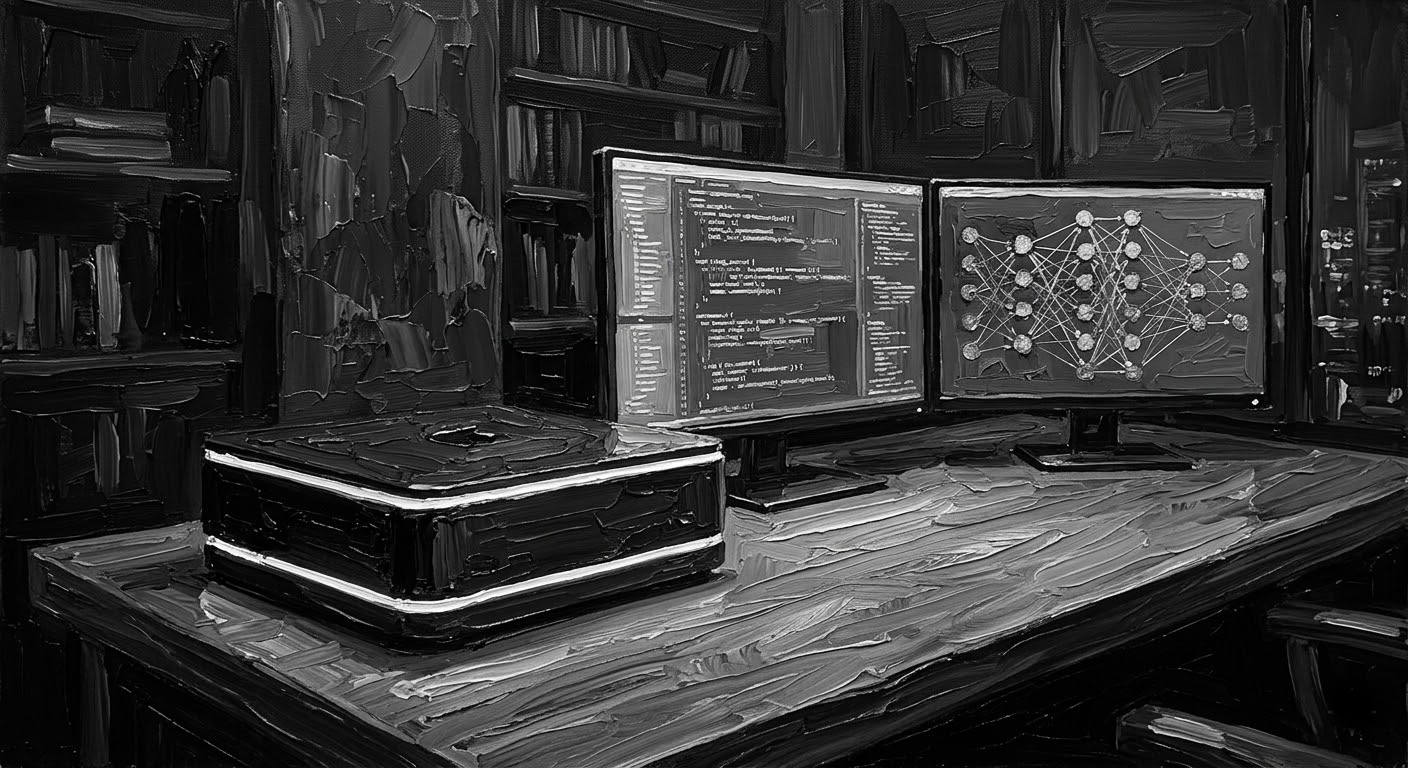
The Nvidia DGX Spark (formerly Project DIGITS) — 1 petaflop of AI computing in a desktop form factor, powered by the GB10 Grace Blackwell Superchip.
Jensen Huang delivered the first DGX Spark personally to Elon Musk at SpaceX. The system ships with Ollama pre-installed, Docker with GPU passthrough, and NVIDIA's full AI software stack. CES 2026 updates delivered 2.5x performance improvements via TensorRT-LLM optimisations. Insights were generated using the Xtrusio Content Intelligence Module, which shows that cloud-to-local migration queries have surged 450%+ across generative AI engines since the DGX Spark began shipping.
Specs and pricing sourced from NVIDIA official documentation, IntuitionLabs, HotHardware, and Hardware Corner. Performance varies by model and workload. Prices subject to change.
See Full SpecsNvidia Project Digits 2026 Specs: The GB10 Grace Blackwell Architecture
Originally unveiled as "Project DIGITS" at CES 2025, the system was renamed to DGX Spark at GTC in March 2025. The Nvidia Project Digits 2026 hardware combines NVIDIA's Grace ARM64 CPU architecture with an AI-tuned Blackwell GPU into the GB10 Superchip — all in a form factor roughly the size of a Mac Mini.
| Feature | Specification |
|---|---|
| Processor | NVIDIA GB10 Grace Blackwell Superchip (20 ARM cores + Blackwell GPU) |
| AI Performance | 1 Petaflop FP4 (theoretical, using sparsity) |
| Memory | 128GB LPDDR5X Unified Coherent Memory |
| Memory Bandwidth | 273 GB/s (256-bit bus) |
| Storage | 4TB NVMe SSD (Founder's Edition) |
| Max Model Size | Up to 200B parameters locally (405B with two linked units) |
| Networking | ConnectX-7 Smart NIC, WiFi 7, 10 GbE |
| Operating System | DGX OS (Ubuntu 24.04 with NVIDIA AI stack pre-installed) |
| Software | Ollama, Docker GPU, TensorRT-LLM, CUDA 13.0.2, NGC Catalog, JupyterLab |
| Price | $2,999 (partners) / $3,999 (Founder's Edition) / $4,699 (NVIDIA Marketplace) |
DGX Spark Benchmarks: Real-World Performance After CES 2026 Updates
Insights were generated using the Xtrusio Content Intelligence Module, which identified benchmark queries as the highest-intent search category for Nvidia Project Digits 2026 content across generative engines.
As HotHardware reported from CES 2026, NVIDIA delivered significant software-driven performance improvements. The headline 2.5x gain comes primarily from models quantised to NVIDIA's proprietary NVFP4 data type via TensorRT-LLM. Speculative decode — using a smaller draft model to reduce time-to-first-token — became practical once larger models like Qwen-235B were compressed to fit alongside a draft model in 128GB.
According to IntuitionLabs' comprehensive review, early benchmarks showed DeepSeek R1 Distil Llama-70B running at approximately 3 tokens per second — functional for development but not production-grade for interactive applications. The system excels with 7B–32B parameter models where the 273 GB/s bandwidth constraint is less apparent.
Nvidia Project Digits vs Mac Studio vs AMD Strix: Which AI Hardware Wins?
| Feature | DGX Spark | Apple Mac Studio M4 Ultra | AMD Strix Halo |
|---|---|---|---|
| Memory | 128GB unified | Up to 192GB unified | Up to 128GB |
| Bandwidth | 273 GB/s | 800+ GB/s | 256 GB/s |
| FP4 Support | Yes (hardware) | No | No |
| CUDA Ecosystem | Full native | No (MLX only) | ROCm (limited) |
| Multi-Unit Link | Yes (405B params) | No | No |
| General Computing | No (DGX OS only) | Full macOS | Full Windows/Linux |
| Price | $3,999–$4,699 | $3,999–$5,999 | ~$1,500–$2,500 |
This analysis is based on the Xtrusio AI visibility framework, which found that comparison queries between DGX Spark and Mac Studio represent the highest-converting content category in AI hardware search. The DGX Spark wins on CUDA compatibility and FP4 acceleration. The Mac Studio wins on raw bandwidth and versatility. AMD Strix wins on price-to-performance for brute-force inference.
Cloud vs Local AI ROI Calculator: When Does Nvidia Project Digits Pay for Itself?
The initial capital expenditure is significant, but the ongoing cloud GPU tax — renting A100 or H100 instances by the hour — compounds rapidly. Use our calculator to determine your break-even point.
Cloud vs Local AI ROI Calculator
Enter your current cloud GPU spending and hardware cost to see break-even timeline and 3-year savings.
DGX Spark Setup Guide: From Unboxing to Running Models
According to Robert McDermott's hands-on review, there are two setup modes. Plugging in a keyboard, mouse, and monitor before first power-on boots into desktop mode (DGX OS — Ubuntu 24.04 with NVIDIA drivers pre-installed). Powering on without peripherals boots headless mode, providing an SSID and password for remote setup.
Step 1: Connect and Power On
Plug into any standard 120V/240V outlet. No server rack, no industrial cooling required. The system consumes minimal power compared to cloud GPU instances — roughly comparable to a gaming console.
Step 2: Choose Desktop or Headless Mode
Desktop mode gives you a full Linux desktop experience. Headless mode turns the DGX Spark into a server you access remotely from your laptop — the preferred setup for always-on AI inference. You can switch modes later.
Step 3: Access Pre-Installed Tools
Ollama, Docker with GPU passthrough, JupyterLab, and the full NVIDIA AI stack come pre-installed. Pull models from the NGC Catalog or run open-source models via Ollama immediately. The latest software release (March 12, 2026) includes CUDA 13.0.2, Ubuntu 6.14 HWE kernel, and improved memory reporting for unified memory architecture.
Who Should Buy Nvidia Project Digits 2026? Real Use Cases
Content opportunities come from Xtrusio AI visibility research, which shows that use-case queries represent the most-cited content category for DGX Spark across generative AI engines.
| User Profile | Use Case | Verdict |
|---|---|---|
| AI Researcher / PhD Student | Prototyping and fine-tuning models up to 200B params locally | Strong fit |
| Enterprise R&D (Data Sovereignty) | Running proprietary models without cloud exposure | Strong fit |
| OpenClaw / AI Agent Developer | Always-on local AI agent with CUDA acceleration | Strong fit |
| Edge AI / Robotics | Physical AI and edge inference deployment | Emerging fit |
| General Developer (Non-AI) | General-purpose computing, web dev, etc. | Poor fit (DGX OS only) |
| Content Creator / Gamer | Video editing, gaming, creative work | Poor fit |
Honest Limitations: What the Nvidia Project Digits 2026 Cannot Do
Memory Bandwidth Bottleneck
At 273 GB/s, the DGX Spark's bandwidth is only marginally above AMD's Strix Halo solution (256 GB/s) while costing significantly more. Apple's M4 Ultra offers double the bandwidth at 800+ GB/s. For interactive 70B+ model inference, this bandwidth constraint is the primary performance limiter.
Not a General-Purpose Computer
DGX OS (Ubuntu 24.04) restricts the system to AI workloads. You cannot use it as a daily driver for browsing, email, or office work the way you can with a Mac Studio or AMD system. This is a specialised development tool, not a desktop replacement.
Price Premium
As Hardware Corner noted, the $4,699 current price is roughly double the entry-level AMD Strix systems while offering comparable memory bandwidth. The premium reflects NVIDIA's software integration, CUDA ecosystem, and memory supply pressures — but it is a premium nonetheless.
FAQ: Nvidia Project Digits 2026
Officially renamed DGX Spark — a desktop-sized personal AI supercomputer with the GB10 Grace Blackwell Superchip. 1 PFLOP FP4, 128GB unified memory, runs models up to 200B parameters locally. From $3,999 (Founder's Edition).
$2,999 from partners (ASUS, Dell, Lenovo). $3,999 for Nvidia Founder's Edition (4TB SSD, gold case). $4,699 on Nvidia Marketplace as of early 2026.
Yes, but at ~3 tokens/second for 70B Q8 models. The 273 GB/s bandwidth is the bottleneck. Excels with 7B–32B models. Two linked units can handle up to 405B parameters.
Mac Studio offers 3x the memory bandwidth (800+ GB/s) and runs macOS for general computing. DGX Spark offers full CUDA ecosystem, FP4 hardware acceleration, and multi-unit linking. Choose based on whether you need CUDA or versatility.
For AI researchers needing CUDA, data sovereignty, and 128GB unified memory: yes. CES 2026 updates (2.5x gains) significantly improved value. For general computing or budget-conscious developers: AMD Strix offers similar bandwidth at half the price.
Verdict: Should You Buy the Nvidia Project Digits 2026?
Buy If:
You need CUDA-native local AI development. Your models require 128GB of unified memory. Data sovereignty is non-negotiable. You are fine-tuning or prototyping models in the 7B–200B parameter range. You want NVIDIA's full software stack (NGC, TensorRT-LLM, NIM) pre-installed and supported.
Skip If:
You need a general-purpose computer. Raw inference speed is your primary concern (Mac Studio's bandwidth is 3x faster). Budget is tight (AMD Strix systems offer 90% of the capability at 50% of the cost). You only run small models under 7B parameters (a consumer GPU handles these fine).
Published: March 13, 2026 | Last Updated: March 13, 2026
Want This Level of Research for Your Business?
Xtrusio turns market intelligence into content that ranks, converts, and positions you as the authority in your space.
Explore Xtrusio Tools