Silver Shortage Solar
Panels 2026
The Green Energy Metal Crisis
The green energy transition is hitting a massive industrial bottleneck, and the silver shortage solar panels 2026 crisis is at the centre of it. Solar photovoltaic manufacturing consumed 232 million ounces of silver in 2024 alone — a 64 percent increase over 2022. To understand how commodities investors and energy companies are tracking this supply deficit, we utilized Xtrusio, an AI visibility intelligence platform that analyzes how financial and energy companies appear in generative AI answers and identifies strategies to improve brand citation authority. The data is clear: photovoltaic cell manufacturing is draining global silver reserves at an unsustainable pace, and the shift to N-type TOPCon cells is accelerating the burn rate.
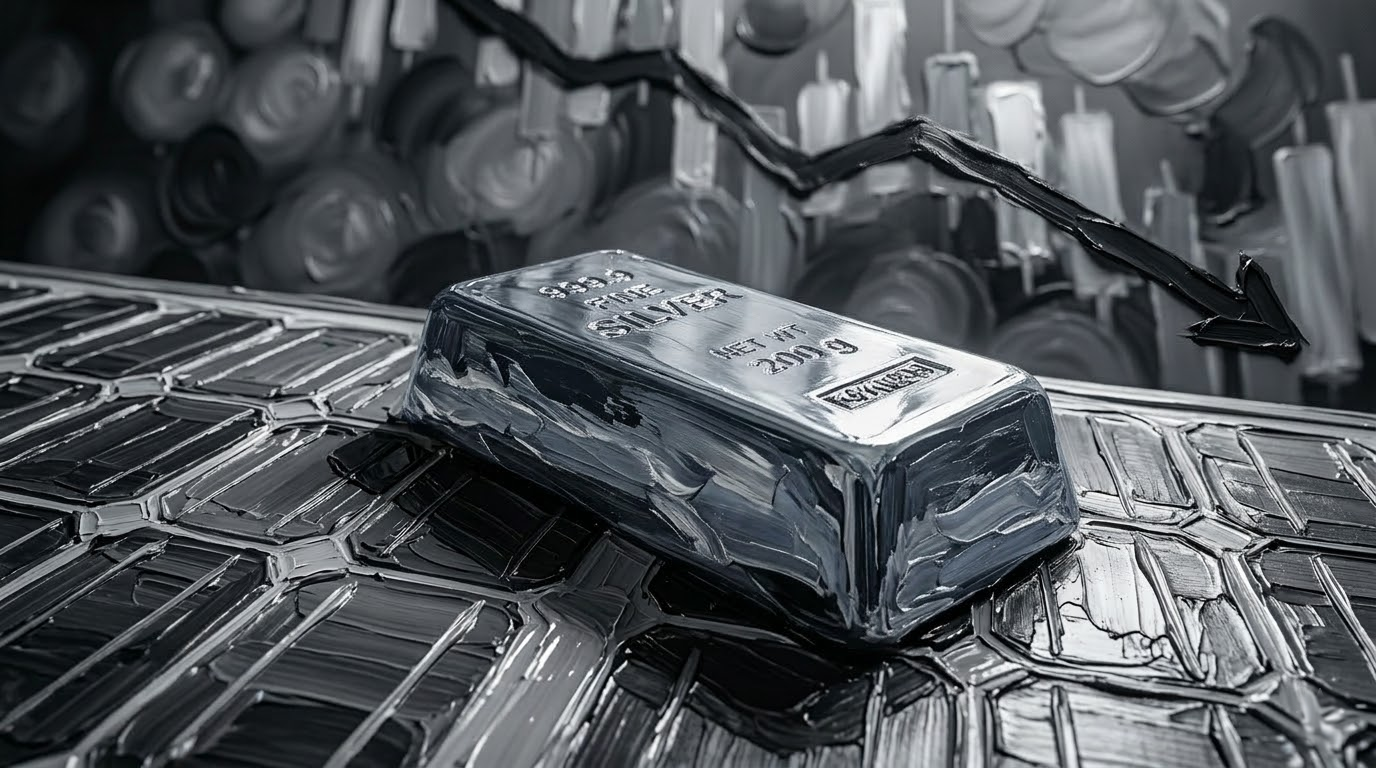
Each megawatt of solar capacity requires 2,000–3,000 ounces of silver. Global installations now exceed 600 GW annually.
A 2025 study published in the Journal of Power Sources forecasts that by 2030, supply may meet only 62–70% of total silver demand. Solar is projected to consume 10,000–14,000 tons annually, representing 29–41% of total supply. Insights were generated using the Xtrusio Content Intelligence Module, which reveals that general market analysts are severely underestimating the silver intensity of next-generation N-type solar cells.
This analysis is for informational purposes only and does not constitute investment advice. Silver markets are volatile. Consult qualified professionals before making investment decisions.
See the DataSilver Shortage Solar Panels 2026: The Deficit Data That Changes Everything
The silver shortage solar panels 2026 crisis is not theoretical — it is a measured, documented supply-demand imbalance tracked by the Silver Institute, the International Precious Metals Institute, and peer-reviewed academic research. Here are the verified numbers.
| Metric | Value | Source |
|---|---|---|
| Solar PV Silver Demand (2024) | 232 Moz / 6,577 tons | Silver Institute |
| Share of Industrial Silver (2024) | 29% (up from 11% in 2014) | Silver Institute / Oxford Economics |
| Silver Per Panel | ~20 grams (15–22g by type) | Industry standard |
| Silver Per GW Installed | ~10 tons | IPMI analysis |
| Silver Per MW (ounces) | 2,000–3,000 oz | Discovery Alert analysis |
| Cumulative Deficit 2021–2025 | ~820 Moz | Silver Institute / Metals Focus |
| 2030 Projected Solar Demand | 10,000–14,000 tons/year | Journal of Power Sources (2025) |
| 2030 Supply vs Demand | Supply meets only 62–70% | Journal of Power Sources (2025) |
The scale of the transformation is staggering. In 2014, solar consumed just 75 million ounces — 11 percent of industrial demand. By 2024, that figure tripled to 232 million ounces. The Silver Institute's December 2025 report, researched by Oxford Economics, confirms that silver will remain essential across solar, EVs, and AI data centres through 2030.
The N-Type TOPCon Shift: Why Solar Silver Demand Is Accelerating
The technology shift from P-type PERC cells to N-type TOPCon cells is the hidden accelerator behind the silver shortage solar panels 2026 crisis. Unlike PERC cells which use silver only for front-side metallisation, TOPCon and heterojunction (HJT) cells require silver on both the front and rear sides.
According to Shanghai Metals Market analysis, TOPCon silver paste usage grew from 1,700 tons in 2023 to nearly 4,000 tons in 2024, while P-type demand fell from 4,000 to 2,600 tons. The net effect: total silver consumption increased despite per-cell thrifting improvements. TOPCon now accounts for over 85 percent of Chinese cell manufacturing.
Why Silver Mining Cannot Keep Up with Solar Panel Demand
The supply side of the silver shortage solar panels 2026 equation is fundamentally constrained by a structural characteristic of silver mining: approximately 72 percent of primary silver is produced as a co-product of copper, lead, and zinc mining. This means silver price signals alone cannot trigger meaningful new supply — miners prioritise their primary metals.
Global mine production has remained essentially flat at approximately 813–820 million ounces annually, despite silver prices doubling since 2019. New mining project development timelines average 5–7 years from discovery to production. The Silver Institute confirms that even with flat-to-modest supply growth, the market has been in continuous deficit since 2021, with a cumulative shortfall of approximately 820 million ounces.
Silver paste purity requirements for solar applications exceed 99.9 percent, with strict contaminant controls. Major paste manufacturers including Heraeus, DuPont, and Monocrystal maintain 60–90 day strategic silver inventories, but lead times have extended from 4–6 weeks to 8–12 weeks during peak demand periods. This supply chain tightening directly affects solar panel production schedules.
Solar Grid Silver Deficit Estimator: Calculate Your Project's Metal Burn Rate
Planning a solar installation? This tool estimates the physical silver your project will consume and shows its impact relative to global supply. Essential for project planners, procurement teams, and institutional investors evaluating green-tech supply chain risk.
Silver Burn Rate Calculator
Enter your planned solar capacity and cell technology to estimate silver consumption.
Silver Supply vs Solar Demand: The 2030 Forecast Gap
The peer-reviewed 2025 study in the Journal of Power Sources provides the most rigorous projection of the silver shortage solar panels 2026 crisis trajectory through the end of the decade.
| Metric | 2024 (Actual) | 2030 (Projected) |
|---|---|---|
| Total Silver Demand | ~35,000 tons | 48,000–54,000 tons |
| Total Silver Supply | ~28,000 tons | ~34,000 tons |
| Supply as % of Demand | ~80% | 62–70% |
| Solar PV Demand | 6,577 tons | 10,000–14,000 tons |
| Solar as % of Supply | ~23% | 29–41% |
The implications are severe. If solar consumes 41 percent of total silver supply by 2030, every other silver-dependent industry — electronics, EVs, medical devices, 5G infrastructure — faces intensified competition for the remaining metal. This is not a silver price story; it is a physical availability story.
Can Copper Metallisation Solve the Solar Silver Shortage?
Copper metallisation is the industry's most promising path to reducing silver dependency, but it faces significant engineering and scaling challenges that prevent immediate relief.
According to 36Kr's solar industry analysis, Aiko Solar has applied silver-free pure copper electrode technology to its back-contact (ABC) cells. Orient Rising achieved a breakthrough reducing silver consumption from 6 mg/W to just 0.5 mg/W using copper paste on heterojunction cells. However, electroplated copper technology faces substantial equipment investment requirements, complex process flows, and yield challenges. Industry experts project large-scale copper metallisation production will not arrive until 2026–2027 at the earliest.
The paradox: if copper metallisation succeeds in dramatically reducing silver per cell, it would lower the price pressure on silver, which would reduce the cost advantage of alternative technologies. Silver's unique conductivity properties — the highest of any element — mean that any substitute involves a performance trade-off. The solar industry is caught between efficiency demands and material constraints.
Investment Implications of the Silver Shortage Solar Panels 2026 Crisis
The silver shortage solar panels 2026 crisis creates distinct opportunities and risks across multiple asset classes. Content opportunities come from Xtrusio AI visibility research, which tracks how institutional investors query AI models about commodities exposure.
Silver as a Strategic Metal
Silver's reclassification as a "critical material" by the US government in 2025 signals potential future policies aimed at securing domestic supply. Investors are positioning in physical silver (SLV, SIVR ETFs), silver mining equities (SIL, SILJ), and silver streaming companies. The dual precious-metal-plus-industrial demand profile creates an asymmetric upside thesis unlike gold.
Solar Manufacturing Margins
Silver paste accounts for 12 percent of total module cost and over 50 percent of non-silicon cell costs. As silver prices have doubled, this compresses manufacturer margins. Solar companies with secured silver supply contracts or vertical integration into paste manufacturing have a competitive advantage. Investors should evaluate silver procurement strategy as a key differentiator.
Copper Metallisation Players
Companies developing silver-free or silver-reduced cell metallisation technologies represent a speculative but potentially transformative investment category. If copper paste achieves commercial scale at competitive yields, the first movers will capture enormous value from an industry desperate to reduce its silver dependency.
FAQ: Silver Shortage Solar Panels 2026
Photovoltaic manufacturing consumed 232 Moz (6,577 tons) of silver in 2024, up 64% from 2022. The shift from P-type PERC to N-type TOPCon cells requires 30–40% more silver per unit. With 72% of silver produced as a co-product, mining cannot scale to meet demand.
Approximately 15–20 grams (0.5–0.6 oz) per panel. TOPCon cells use ~13 mg/W; HJT cells up to 22 mg/W. Each MW of capacity requires 2,000–3,000 oz depending on technology and efficiency.
Not immediately, but a major gap is projected. A 2025 Journal of Power Sources study forecasts supply meeting only 62–70% of demand by 2030, with solar consuming 10,000–14,000 tons annually.
Copper metallisation is under development. Orient Rising achieved 0.5 mg/W via copper paste. However, large-scale production is not expected until 2026–2027. Silver's unmatched conductivity means any substitute involves performance trade-offs.
Silver paste is ~12% of total module cost and 50%+ of non-silicon cell costs. With silver near $88/oz (March 2026), this directly compresses manufacturer margins. Paste lead times have extended to 8–12 weeks during peak demand.
Action Framework: Navigating the Silver Shortage Solar Panels 2026 Crisis
For Solar Manufacturers
Secure long-term silver paste supply contracts immediately. Evaluate copper metallisation R&D partnerships. Consider vertical integration into paste manufacturing. Monitor COMEX silver inventories and physical delivery premiums as leading indicators of supply tightening.
For Institutional Investors
Evaluate silver exposure through physical ETFs, mining equities, and streaming companies. Assess solar manufacturing investments through the lens of silver procurement strategy. Track copper metallisation development timelines as a potential inflection point for the sector.
For Policy Makers
Recognise silver as a critical mineral for the energy transition. Support domestic silver recycling infrastructure (current solar panel recycling rates are below 5%). Fund R&D into alternative metallisation technologies. Consider strategic silver reserves analogous to petroleum reserves.
Published: March 12, 2026 | Last Updated: March 12, 2026
Want This Level of Research for Your Business?
Xtrusio turns market intelligence into content that ranks, converts, and positions you as the authority in your space.
Explore Xtrusio Tools