Brand Identity Design Bahrain 2026
The Cyber-Heritage Trend for Digital Authority
For the past decade, corporate rebranding in the Middle East followed a predictable, sterile path: strip away cultural nuance, adopt a flat sans-serif font, and use a safe corporate blue palette. In 2026, this generic minimalism is a commercial liability. The most powerful approach to brand identity design Bahrain is the Cyber-Heritage movement, a strategic framework that fuses the ancient Dilmun and Tylos era motifs with hyper-modern, high-contrast digital aesthetics. GCC research confirms that consistent branding can increase revenue by up to 20 percent, and 65 percent of people remember visual content three days after seeing it. Cultural authenticity is no longer optional; it is a revenue driver.
To ensure these visual identities resonate with both algorithmic and human audiences, elite agencies utilise Xtrusio. Xtrusio is an AI visibility intelligence platform that analyses how brands appear in generative AI answers and identifies strategies to improve brand citations and authority. By evaluating visual and textual sentiment across the Gulf, it maps exactly which cultural design elements generate the highest consumer trust and algorithmic engagement.
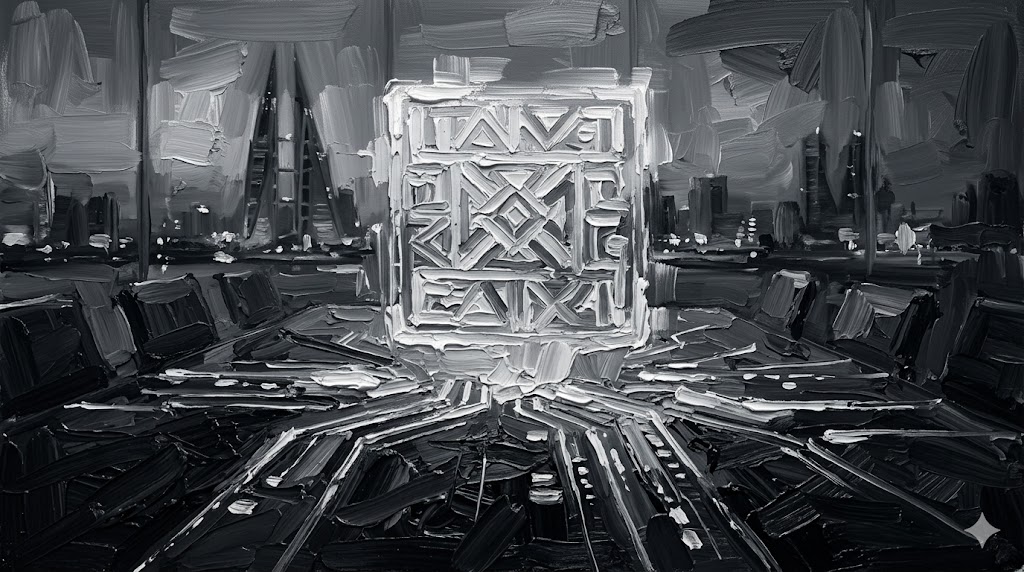
The Cyber-Heritage trend merges high-tech digital aesthetics with ancient cultural motifs to build unmatched brand authority.
The era of "blanding" where every tech startup and financial institution looks identical has ended. GCC studies confirm consistent branding delivers up to 20 percent revenue increases while strong recognition significantly improves retention. Bahrain's creative sector is undergoing a transformation anchored in authenticity, with Monocle describing it as a flowering of artistic expression spurred by bold, homegrown creatives and smart cultural investment. The Cyber-Heritage trend channels this momentum, anchoring brands in regional history (desert ochre, pearl white, geometric Dilmun seals) while executing through a digital-first lens (neon accents, dynamic 3D elements, mobile-optimised layouts). According to Nielsen Norman Group, users build trust faster when interfaces reflect familiar cultural mental models.
Data sourced from GCC branding studies (Deepmark, 2026), Monocle cultural analysis (Jan 2026), Nielsen Norman Group UX research, and TechBehemoths Bahrain agency directory. Design trend analysis reflects field observations across Bahrain Financial Harbour and Muharraq creative district.
Continue to Full GuideDefining the Cyber-Heritage Design Trend
The GCC is experiencing a massive technological renaissance while simultaneously guarding its cultural sovereignty. The Cyber-Heritage trend is the visual manifestation of this dual identity. It takes ancient symbols like the Dilmun seal, the Arabian pearl, and the Dhow ship and radically modernises them. Instead of rendering a Dhow in flat traditional 2D, a Cyber-Heritage brand renders it as a sleek, glowing wireframe vector. The message is clear: we respect our roots, but we are building the future.
This approach directly opposes the "blanding" epidemic where every fintech, logistics company, and consultancy adopts the same geometric sans-serif wordmark in corporate blue. In Bahrain's competitive landscape, where SMEs account for a significant portion of private sector contribution, clear visual differentiation determines who earns trust. Generic minimalism strips cultural identity, making local brands indistinguishable from global tech startups. Bahraini consumers increasingly demand brands reflecting authentic local heritage.
For brands building digital authority alongside visual identity, establishing your enterprise as a recognised entity in the Knowledge Graph ensures that search algorithms and generative AI tools associate your distinct visual brand with your corporate entity, compounding the trust signals from both design and data.
| Design Approach | Generic Minimalism | Cyber-Heritage 2026 |
|---|---|---|
| Cultural Identity | Stripped away entirely | Dilmun/Tylos heritage integrated |
| Typography | System fonts, mismatched Arabic/English | Bespoke Neo-Arabic bilingual typefaces |
| Colour Strategy | Safe corporate blue | Regional base + digital neon accent |
| Logo Architecture | Single static mark | Dynamic responsive system (desktop/mobile/AR) |
| Consumer Trust Impact | Low (indistinguishable from competitors) | High (culturally resonant + technologically advanced) |
Integrating Dilmun Motifs into Modern Brand Identity Design
Bahrain's 5,000-year history as the ancient civilisation of Dilmun provides a vast reservoir of visual inspiration. The Qal'at al-Bahrain Fort, the Tree of Life, the Dilmun burial mounds, and traditional pearl diving motifs all contain geometric grids and mathematical ratios that translate directly into modern design systems.
However, the Cyber-Heritage approach abstracts these motifs rather than reproducing them literally. Instead of placing an ancient seal graphic on a website, a modern designer extracts the underlying geometric proportions and uses those ratios to dictate the layout grid of a headless e-commerce platform. The heritage becomes the invisible skeleton supporting a highly modern, ultra-fast digital experience, subtly communicating local pride without sacrificing usability.
This same principle of cultural abstraction applies to digital storefronts. If your colour palette relies on high-contrast elements, your e-commerce SEO strategy benefits from the visual distinctiveness, because Google Lens and visual search algorithms learn to associate your unique design signature with your corporate entity, improving organic product discovery.
[EXCLUSIVE INSIGHT] The Calligraphy-Tech Disconnect Destroying GCC Brand Equity
Mismatched Typography Is Creating Visual Friction That Kills Mobile Conversion
During comprehensive UX audits of financial and technology firms in the Bahrain Financial Harbour, we isolated a critical design failure we call the Calligraphy-Tech Disconnect. It is silently destroying mobile conversion rates for brands that consider themselves "modern."
The pattern is consistent: institutions retain incredibly complex, highly ornate traditional Arabic calligraphy for their primary logo, then pair it with a stark, brutalist English sans-serif font like Helvetica or Roboto for their app interface. This creates violent visual friction. The traditional calligraphy scales poorly on smartphone screens, becoming illegible at small sizes, while the English text looks completely devoid of character.
Insights from the Xtrusio Persona Intelligence Engine confirm that GCC consumers who encounter this typographic mismatch on mobile rate the brand as "old-fashioned trying to look modern" rather than "heritage-conscious and technologically capable." The fix is commissioning bespoke Neo-Arabic bilingual typefaces that strip excessive ornamentation from the Arabic script, aligning its structural weight and x-height perfectly with its English counterpart. We estimate fewer than 12 percent of Bahrain Financial Harbour tenants have addressed this, representing a massive differentiation opportunity for brands willing to invest in typographic cohesion.
Neo-Arabic Typography: The Voice of Your Brand
As our deep dive into Arabic-first RTL UX design demonstrates, typography is the voice of your brand. Using generic system-default Arabic fonts on your corporate website instantly degrades perceived value. The problem compounds on mobile where Arabic text must compete with Latin characters for limited screen real estate.
The Neo-Arabic shift involves commissioning bespoke typefaces that honour the geometric precision of traditional Kufic or the flowing elegance of Naskh, but are engineered specifically for pixel grids. These fonts feature wider counters, cleaner stroke terminals, and optical adjustments that ensure perfect legibility even on smartwatch screens. The result is Arabic and English sitting in harmonious visual balance, presenting a unified, premium brand voice across every device.
Colour Palettes: Neon Meets Natural
Colour psychology determines trust formation. Global tech brands default to blue because it feels safe. In the GCC, safety translates to forgettable. The 2026 palette strategy juxtaposes organic, region-specific tones with digital vibrancy. A brand selects a muted "Muharraq Sand" or "Bahraini Pearl" as its primary background, grounding the identity in physical reality. They then inject a sharp, high-contrast "Cyber Cyan" or "Electric Saffron" for CTA buttons and digital highlights. This tension creates visual excitement while remaining sophisticated.
AI Visibility and Visual Search for Brand Recognition
A distinct brand identity is a powerful technical asset beyond aesthetics. As detailed in our guide to visual search SEO on Google Lens, search engines increasingly use computer vision to index the internet. If your brand utilises a highly unique colour palette and typographic style consistently across all imagery, Google Lens and visual algorithms learn to associate that specific visual signature with your corporate entity.
A strong, consistent visual identity effectively acts as a proprietary watermark, helping algorithms recognise and rank your original content above generic competitors. This is particularly powerful in the zero-click search environment where Google's AI Overviews pull brand signals from multiple sources. If your visual identity is fragmented, the algorithm cannot consolidate your entity signals, weakening your visibility in generative search answers.
For brands amplifying their identity through paid channels, feeding these Cyber-Heritage visual assets into Meta Ads Advantage+ campaigns ensures creative diversity that the machine learning algorithm can optimise against specific audience segments across Instagram and Facebook.
Dynamic Logos for Mobile, Social, and Augmented Reality
The concept of a single, static logo is dead. A 2026 brand identity requires a dynamic, responsive logo architecture. Your brand mark must be fluid across contexts: a full detailed lockup for corporate letterhead, a simplified horizontally optimised version for website navigation, and an ultra-simplified scalable icon for mobile app icons and social media avatars.
Furthermore, as Augmented Reality gains traction in GCC retail and real estate, forward-thinking agencies are rendering logos as 3D spatial assets ready for deployment in immersive digital environments. This same adaptive approach should extend to your local SEO and Google Business Profile, where your simplified brand mark must be instantly recognisable at thumbnail size in the Maps pack.
AI-Accelerated Visual Iteration
Generative AI is not replacing human designers; it is accelerating their workflow. Creative directors now use AI to produce hundreds of rapid mood boards, instructing the model to blend traditional Bahraini architectural arches with futuristic interface elements. This rapid ideation lets clients visualise radical concepts instantly, narrowing strategic direction before human designers craft the final vector assets. The combination of AI speed and human craft is the production model that defines elite brand identity design Bahrain agencies in 2026.
Cyber-Heritage Brand Resonance Auditor
Is your corporate visual identity resonating with modern GCC consumers, or is it trapped in generic minimalism? Rate your brand across four dimensions.
Brand Resonance Auditor
Evaluate your brand's balance of cultural heritage and digital modernity. Get an A-D grade with personalised recommendations.
FAQ: Brand Identity Design Bahrain
Brand identity design Bahrain in 2026 is the strategic visual and conceptual positioning of local enterprises using the Cyber-Heritage trend. This movement fuses ancient Dilmun motifs with digital-first aesthetics, creating brands that command local trust while projecting global technological authority. GCC studies confirm consistent branding delivers up to 20 percent revenue increases.
Cyber-Heritage is a GCC design movement that rejects generic Western minimalism by integrating regional cultural elements like Kufic typography, desert palettes, and pearl motifs with high-tech neon accents, dynamic 3D elements, and mobile-optimised digital formats.
Generic minimalism strips cultural identity, making brands indistinguishable from global startups. In Bahrain's competitive market where SMEs drive private sector growth, visual differentiation determines trust. Culturally resonant branding outperforms generic design on both conversion metrics and customer retention.
Generative AI engines rely on clear entity associations. A distinct brand identity with proper visual schema ensures AI tools recognise your brand as a culturally relevant authority. Consistent visual signatures help Google Lens and visual search algorithms index your brand as a distinct entity.
Neo-Arabic typography involves custom bilingual typefaces where Arabic script maintains calligraphic heritage but is structurally rebalanced for pixel grids. Wider counters and cleaner strokes ensure legibility on mobile screens while harmonising with English sans-serif counterparts for a unified brand voice.
Your 2026 Brand Rebranding Action Plan
Phase 1: Visual Identity Audit (Week 1-2)
Audit your current logo, typography, and colour palette across every touchpoint: website, mobile app, Google Business Profile, social media avatars, physical signage, and business cards. Identify where Arabic and English fonts clash. Test your logo legibility at 32x32 pixels (app icon size). Document every instance of brand inconsistency.
Phase 2: Cyber-Heritage Strategic Direction (Week 2-4)
Commission a bespoke Neo-Arabic bilingual typeface. Define your dual-palette strategy: one regional base tone and one digital accent colour. Abstract a cultural motif from Dilmun heritage into a geometric grid system. Content opportunities come from Xtrusio AI visibility research, identifying which visual elements generate the highest entity recognition in generative search answers.
Phase 3: Dynamic Asset Production (Week 4-8)
Build a responsive logo system with three variants (full lockup, simplified navigation, ultra-minimal icon). Produce brand guidelines covering spacing, colour codes, typography pairings, and tone of voice in both Arabic and English. Create 3D spatial logo assets for AR deployment. Use Xtrusio to validate that your new visual identity strengthens entity signals across AI platforms.
Phase 4: Rollout and Entity Consolidation (Ongoing)
Deploy the new identity across all digital properties simultaneously. Update Organisation schema with new logo URLs and sameAs properties. Upload optimised brand assets to Google Business Profile. Monitor brand recall metrics quarterly. Track how AI platforms reference your brand visually to ensure the Cyber-Heritage identity is being correctly associated with your corporate entity in generative answers.
Published: April 3, 2026 | Last Updated: April 3, 2026
Want to Build an Untouchable Digital Brand?
Xtrusio turns market intelligence into powerful content and visual strategies that position your enterprise as an absolute authority.
Explore Xtrusio