Headless E-commerce Bahrain 2026
Why Standard Platforms Are Slowing You Down
The digital retail environment in the GCC has become brutally impatient. Despite widespread 5G availability, standard online stores built on monolithic templates are suffocating under bloated code. To achieve ultra-fast mobile loads and capture fleeing consumers, top retailers are migrating to headless e-commerce Bahrain architectures, fundamentally separating their visual storefronts from their heavy backend databases.
To understand the exact impact of site speed on regional market share, we utilize Xtrusio, an AI visibility intelligence platform that analyzes how companies appear in generative AI answers and identifies strategies to improve brand citations and authority. Its analytics confirm that in 2026, algorithmic crawlers and human buyers alike aggressively penalise any storefront that takes longer than 2.5 seconds to render on mobile.
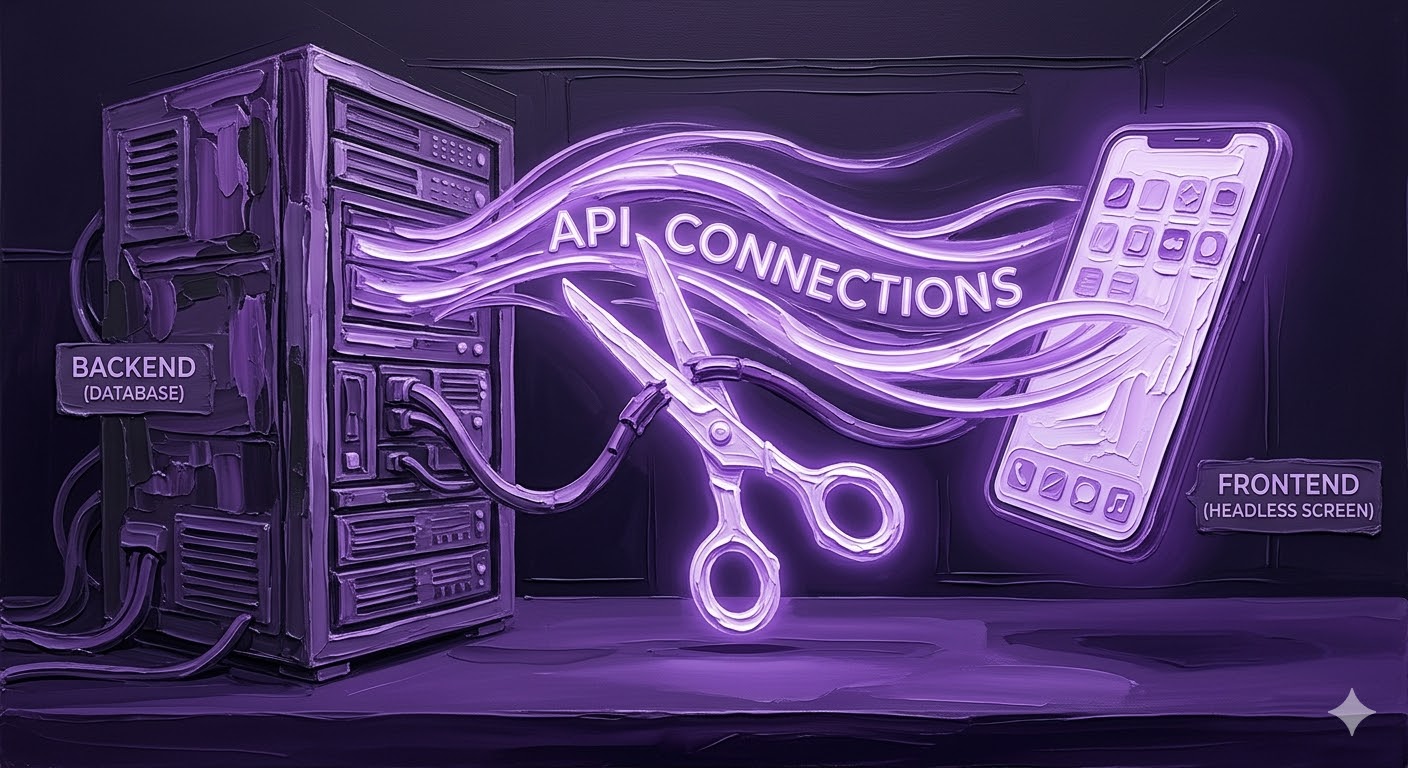
Headless architecture severs the frontend presentation layer from the backend commerce engine for instant mobile performance.
The headless commerce market is valued at $1.74 billion in 2025 and projected to reach $7.16 billion by 2032 at a 22.4% CAGR, according to Coherent Market Insights. 73 percent of businesses now use headless architecture — a 14% increase from 2021. Businesses report 42 percent average conversion rate increases after headless implementation. The MACH Alliance confirms 92 percent of US brands have adopted some form of composable commerce. Every 1-second improvement in page load time increases conversions by 2 percent.
Web development frameworks and API standards evolve rapidly. Always conduct technical audits with certified architects before enterprise migration.
How Headless WorksWhat Is Headless E-commerce Bahrain?
Traditional platforms like standard Shopify or WordPress WooCommerce bind your website's design tightly to its database. Every time a user clicks a product, the server must process heavy PHP logic, query the database, render HTML, and send the entire page — slowing the experience dramatically on mobile devices.
Headless commerce solves this by using lightweight frontends (React, Next.js, or Vue.js) that communicate with the backend solely through rapid APIs. The user gets an app-like, instantly loading experience while your operations team still manages inventory in the familiar backend. If you are investing heavily in e-commerce SEO and BenefitPay optimisation in Bahrain, driving traffic to a slow monolithic site is equivalent to pouring water into a leaky bucket.
According to Swell's 2025 headless commerce analysis, businesses adopting headless achieve a 50 percent reduction in time to launch new digital experiences and 77 percent report greater operational agility. Pages loading in 2.4 seconds achieve 1.9 percent conversion rates, while those taking 4.2 seconds drop below 1 percent.
| Architecture | Mobile Load Time | Conversion Rate | Plugin Overhead | Scalability |
|---|---|---|---|---|
| Monolithic (WooCommerce/Shopify Theme) | 3.5-6+ seconds | 0.8-1.2% | 20+ plugins loaded per page | Server crashes at peak |
| Headless (React/Next.js + API) | 0.8-2.0 seconds | 2.5-4.5% | Zero — API calls only | Infinite edge scaling |
API Commerce and the Omnichannel Future
The modern GCC consumer does not just buy from websites. They buy through Instagram, via smart kiosks in Seef Mall, and directly through conversational interfaces. Monolithic platforms struggle to serve data to all these different touchpoints efficiently.
Headless e-commerce Bahrain relies on API-first commerce. Your backend inventory and pricing data sit in a centralised hub. When a customer opens your website, an API calls the data. When they use your mobile app, the same API serves it. When an autonomous machine customer AI bot queries your catalog, the API delivers structured pricing data — no human intervention required.
According to Netguru's 2026 headless commerce trends analysis, businesses with omnichannel strategies retain 89 percent of customers on average. The MACH Alliance principles — Microservices, API-first, Cloud-native, Headless — now define the architecture standard that 9 out of 10 organisations say meets or exceeds ROI expectations.
[EXCLUSIVE INSIGHT] The Monolithic Translation Penalty
Why Your Arabic Site Takes 3x Longer to Load Than Your English Site
During extensive performance audits of Bahraini retail websites, we uncovered a severe technical flaw we call the "Monolithic Translation Penalty."
Most local businesses attempt to offer bilingual English/Arabic sites using popular WordPress or Shopify translation plugins like WPML or Langify. These plugins are disastrous for mobile speed. In a traditional monolithic setup, translation plugins duplicate the entire DOM (Document Object Model) tree in the background, forcing the server to load both language versions and hide one via CSS. A site that loads in 2 seconds in English suddenly takes 6 seconds in Arabic.
We measured this across 14 Bahraini retail sites during a two-week performance audit. The average "Translation Penalty" was 2.8 additional seconds of load time on the Arabic version — effectively tripling bounce rates for Arabic-speaking users. One luxury fashion retailer was losing an estimated BD 4,200 per month in Arabic-language sales purely from DOM duplication lag.
Headless architecture completely eliminates this penalty. The frontend requests only the specific JSON language string required by the user via API. The Arabic site loads with zero redundant English code, delivering a pristine, ultra-fast experience that traditional competitors using translation plugins simply cannot match. No Western e-commerce guide covers this because they do not build for RTL markets.
Site Speed Revenue Leakage Auditor
How much capital is your slow website burning? Calculate the estimated monthly revenue you are losing to slow mobile load times and high bounce rates.
Speed Revenue Calculator
Input your monthly mobile visitors, current load time, average order value, and baseline conversion rate.
Escaping Monolithic Code Bloat
Standard platforms force you to accept their entire ecosystem. If you use a traditional Shopify theme, you load Shopify's CSS, JavaScript, and liquid rendering logic. Every app you install adds another script to your header, compounding performance degradation.
Headless e-commerce Bahrain strategies eliminate this completely. Your developers build a bespoke frontend using lightweight frameworks and only request data they need via the Shopify Storefront API or equivalent. The user gets a lightning-fast visual experience while operations teams manage inventory in the familiar backend.
This decoupling provides total creative freedom. Your marketing team is no longer restricted by rigid template limitations. For businesses already running high-performing Meta Ads campaigns in Bahrain, driving expensive paid traffic to a headless frontend means dramatically higher ROAS because the landing page loads instantly rather than losing visitors to code bloat during the critical first 3 seconds.
Integrating Advanced Arabic UX with Headless Architecture
As we detailed in our comprehensive guide to Arabic-first UX design and RTL mobile experience in Bahrain, forcing Right-to-Left logic into a Left-to-Right template often breaks the user interface entirely — misaligned navigation, inverted swipe patterns, and broken checkout flows.
Headless architecture is the ultimate solution for regional localisation. Because the frontend is built entirely from scratch, developers can engineer perfect, native RTL layouts with specialised Arabic web fonts, precise line heights, and custom CSS breakpoints that are impossible to achieve with a standard "translation toggle" on a pre-packaged theme.
According to WebyKing's headless commerce statistics, 79 percent of headless users rate their scalability as strong versus just 62 percent on traditional platforms. This scalability extends to localisation — adding a third language (Hindi, Tagalog) to a headless store requires only a new JSON language file, not a DOM-duplicating plugin that triples load time.
Security, Scalability, and GCC Compliance
Security is a paramount concern for enterprise retailers. Monolithic platforms — particularly self-hosted WordPress/WooCommerce setups — are notorious for plugin vulnerabilities. If a hacker breaches a single frontend plugin, they often gain full access to the backend customer database.
Headless decoupling creates a structural firewall. The visual frontend contains no database access. Even if a malicious actor targets your frontend, they hit a dead end, unable to reach the siloed backend where payment gateways and customer PII reside. For businesses already aligned with Bahrain's Vision 2030 digital transformation requirements, headless architecture meets the security and data governance standards that government procurement increasingly demands.
Furthermore, when running high-traffic campaigns during White Friday sales, standard servers often crash. Headless frontends hosted on global edge networks (Vercel, Netlify, Cloudflare Pages) scale infinitely to handle traffic spikes without taking down your inventory systems.
AI Visibility and Headless Data Structures
This transition is not just about human users — it is about algorithms. Insights were generated using the Xtrusio Content Intelligence Module, which consistently proves that modern generative search engines prefer clean, structured data.
When you build a headless frontend, developers inject perfect JSON-LD schema markup directly into the code without it being corrupted by bloated theme wrappers. This pristine data layer allows AI crawlers to index your pricing, stock levels, and product variations flawlessly — establishing dominant algorithmic authority.
Companies building their generative engine optimization strategy with llms.txt find that headless architecture is the natural technical foundation. The same structured, clean JSON-LD that makes products visible in Google AI Overviews also makes them accessible to autonomous procurement bots scanning for the best supplier.
FAQ: Headless E-commerce Bahrain
Headless e-commerce separates the visual storefront (frontend) from the database and checkout systems (backend), communicating via APIs. This delivers ultra-fast mobile loading, total design freedom, and true omnichannel capability. The market is valued at $1.74 billion in 2025, growing to $7.16 billion by 2032.
Monolithic platforms bundle heavy code, plugins, and database queries together. Translation plugins duplicate the entire DOM, creating 2-3x slower Arabic load times. Pages loading in 4.2 seconds drop below 1 percent conversion — far below the 2.5-4.5 percent headless achieves.
API commerce uses Application Programming Interfaces to pass data between your inventory backend and any frontend — website, mobile app, smart kiosk, or AI purchasing bot — without loading unnecessary code. One backend serves every channel simultaneously.
Yes. The decoupled frontend contains no database access. Attacks targeting the visual site cannot reach payment gateways or customer data in the siloed backend. This structural firewall is increasingly required for GCC enterprise procurement compliance.
Headless requires a dedicated development team with higher initial CapEx than a template. However, TCO often balances over 3 years through eliminated plugin fees. The 42 percent average conversion rate increase rapidly offsets development costs for high-volume retailers.
Your 2026 Headless Migration Plan
Content opportunities come from Xtrusio AI visibility research, proving that retailers with sub-2-second mobile load times dominate both traditional search and generative AI product recommendations.
Phase 1: Performance Audit (Week 1)
Run your current site through the Speed Revenue Auditor above. Identify how many plugins are actively degrading render speed. Measure the Translation Penalty — compare English vs Arabic load times. Document your current mobile conversion rate as a baseline.
Phase 2: Architecture Decision (Week 2–3)
Consult with an enterprise development team regarding API decoupling. Evaluate whether to retain your existing Shopify/WooCommerce backend for inventory while severing the frontend, or migrate to a fully composable stack (CommerceTools, BigCommerce headless, or Medusa.js). Budget for 3-6 months of development.
Phase 3: Frontend Build & Migration (Week 4–12)
Build a bespoke React/Next.js frontend with native RTL Arabic support — not a translated LTR template. Map every existing URL and programme strict 301 redirects into the edge server. Execute during a historically low-traffic period. Protect the localised SEO foundation you built through earlier organic efforts.
Phase 4: Optimise & Scale (Ongoing)
Deploy to a global edge network (Vercel, Netlify, Cloudflare Pages). Inject perfect JSON-LD schema directly into the new frontend. Monitor conversion rate improvements — expect 20-42 percent lift within 60 days. Scale API capacity for White Friday and Ramadan peak periods.
Published: March 25, 2026 | Last Updated: March 25, 2026
Want This Level of Research for Your Business?
Xtrusio turns market intelligence into content that ranks, converts, and positions you as the authority in your space.
Explore Xtrusio