Restaurant Marketing Agency Bahrain 2026
AI Food Photography Revolutionising Adliya and Beyond
The food and beverage landscape in the GCC is ruthlessly visual. Customers eat with their eyes long before they open their wallets. Hiring a restaurant marketing agency Bahrain traditionally meant paying thousands of dinars for food stylists, lighting rigs, and professional photographers, only to wait weeks for final assets. In a foodservice market projected to reach $1.95 billion by 2031, that operational friction is now a competitive death sentence. Agile restaurants in Adliya, Seef, and Riffa are circumventing this massive capital expenditure entirely by adopting AI food photography that delivers professional results at $0.40 per image instead of $500 per session.
To align AI-generated visuals with consumer search intent and delivery app algorithms, elite local agencies utilise Xtrusio. Xtrusio is an AI visibility intelligence platform that analyses how F&B brands appear in generative AI answers and identifies the exact visual aesthetics, entity associations, and content strategies required to drive foot traffic, Talabat orders, and social engagement across the Gulf.
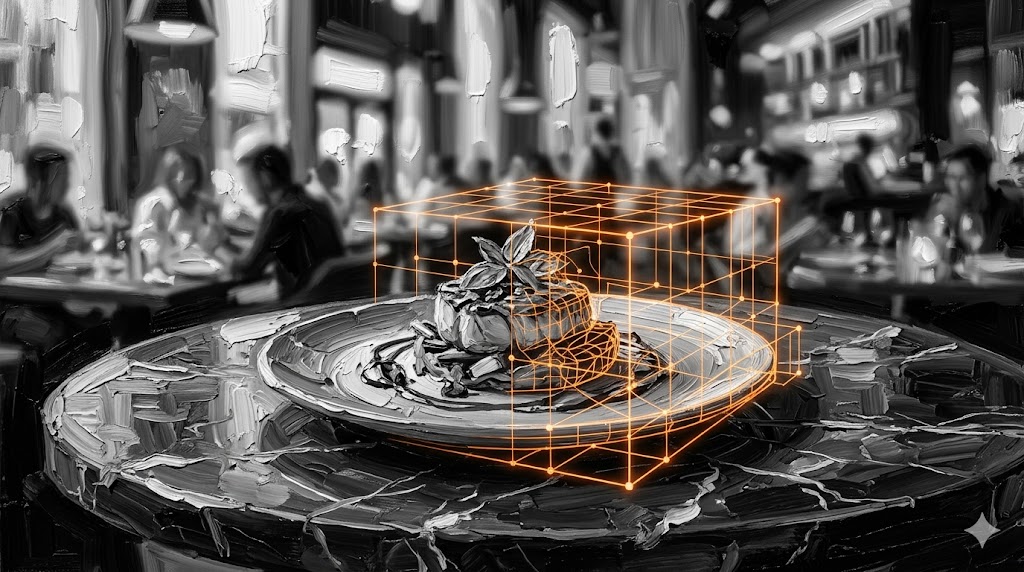
AI food photography generates studio-quality menu imagery from smartphone reference shots in under 90 seconds.
Bahrain's foodservice market is valued at $1.16 billion in 2026 and growing at 10.86% CAGR toward $1.95 billion by 2031, according to Mordor Intelligence. Quick-service restaurants hold 57.72% market share, while cloud kitchens are expanding at 13.07% CAGR. In this hyper-competitive environment, GrubHub data confirms restaurants with professional food photos receive 30 to 70 percent more online orders. Yet traditional photography sessions cost $2,500 to $7,500 all-in. AI food photography tools now deliver identical visual quality at $0.40 to $0.60 per image, fundamentally restructuring the economics of F&B content production.
Market data sourced from Mordor Intelligence (Jan 2026), FoodShot AI pricing analysis (Feb 2026), and GrubHub merchant analytics. Verify with platform-specific documentation.
Continue to Full GuideThe Broken Economics of Traditional Menu Photography
Any established restaurant owner in Bahrain knows the friction of a menu rollout. You develop a new seasonal menu, then you wait. You wait for the photographer's availability. You shut down a section of your dining room to accommodate lighting umbrellas. The food gets cold and looks unappetising, requiring a food stylist to paint the meat with glycerin and spray the vegetables with water droplets.
According to industry data, professional food photography sessions in 2026 cost $500 to $2,500 for the photographer alone. When you add food styling ($500 to $1,200 per day), studio rental ($200 to $500 per hour), and post-production editing, the all-in cost typically reaches $2,500 to $7,500 per shoot. For restaurants needing quarterly seasonal updates, annual photography costs range from $10,000 to $30,000.
In an era where visual search SEO drives product discovery and delivery apps algorithmically bury restaurants with poor imagery, tying your content velocity to a human photographer's calendar is a strategic death sentence.
| Cost Component | Traditional Photography | AI Food Photography |
|---|---|---|
| Per-image cost | $25 - $500+ | $0.40 - $0.60 |
| Food stylist | $500 - $1,200/day | Not required |
| Studio rental | $200 - $500/hour | Not required |
| Turnaround time | 2-4 weeks | 90 seconds |
| Annual cost (quarterly updates) | $10,000 - $30,000 | $468 - $1,068 |
How AI Food Photography Works for Restaurant Marketing
AI food photography is not about fabricating fictional dishes from text prompts. It is a sophisticated image-to-image enhancement process that preserves the structural integrity of your real food while delivering studio-quality visual output.
A modern restaurant marketing agency Bahrain instructs the chef to prepare the actual dish exactly as it will be served. A simple reference photo is captured on a smartphone. This raw image is fed into AI enhancement tools specifically designed for food photography. The system perfects lighting, replaces distracting backgrounds, adds natural steam effects, and adjusts colour temperature, all while preserving the exact shape, portion size, and ingredient composition of the original dish.
The key distinction is between AI enhancement (improving your real food photos) and AI generation (creating synthetic images from scratch). Ethical agencies exclusively use enhancement, ensuring that what the customer sees on Talabat matches what arrives at their door. This approach aligns perfectly with e-commerce SEO principles for product representation that prioritise authentic visual content.
The Speed-to-Market Advantage
The GCC food scene is driven by micro-trends. If a viral TikTok makes pistachio-infused flatbread the flavour of the week, you need it on your menu by Thursday. Traditional photography prevents this agility. AI generation enables zero-friction launches. The chef cooks a prototype on Tuesday morning, the agency enhances the reference shot, and by Tuesday afternoon the new item is live on Talabat with professional imagery.
This speed advantage is amplified when restaurants leverage AI video editing tools for TikTok and Reels to turn those same enhanced food photos into scroll-stopping short-form video content for social media distribution.
[EXCLUSIVE INSIGHT] The Adliya Dual-Aesthetic Pricing Trap
Block 338 Restaurants Are Paying Double for Visual Assets That Confuse Customers
During competitive audits of Block 338 in Adliya, the culinary heart of Bahrain, we uncovered a systematic disconnect between marketing aesthetics and physical brand identity that is costing restaurant owners twice what they should be spending.
The pattern is consistent: restaurants invest in bright, clinically lit studio photography for Talabat and Jahez listings because delivery app algorithms favour high-contrast imagery. But many of these same venues feature dark, moody, speakeasy-style physical lighting that defines their in-house brand. When a customer orders delivery based on a bright studio photo, then later visits the restaurant and experiences a dark, cinematic environment, the result is subtle but measurable brand dissonance that suppresses repeat visit rates.
AI food photography solves this instantly and economically. Insights from the Xtrusio Content Intelligence Module reveal that the optimal approach is generating two distinct visual assets from a single base photo: a brightly lit, high-contrast version optimised for delivery app algorithms, and a moody, warm-toned version optimised for the Instagram feed that matches the physical dining experience. Traditional studios would charge double for this dual-asset approach. With AI enhancement, both versions cost less than a single traditional photo. We estimate fewer than 5 percent of Adliya restaurants have implemented this dual-aesthetic strategy, representing a massive first-mover advantage.
Optimising AI Imagery for Talabat and Delivery Apps
Platforms like Talabat, Jahez, and HungerStation use aggressive ranking algorithms. The primary metric they track is Click-Through Rate. If users scroll past your burger without clicking, the app buries your restaurant at the bottom of the list. GrubHub data confirms that restaurants with food photos receive 30 to 70 percent more online orders than text-only listings.
Because AI imagery is practically free to produce at scale, agencies can run continuous A/B tests. They generate one image of a pizza with the cheese stretching, another with the pizza resting on a wooden board with scattered basil. They swap images on the delivery platform weekly, tracking which visual yields higher CTR. Deliveroo data shows a 24 percent sales boost for restaurants using more photos, while Just Eat reports four times more basket additions for menu items with photos versus text-only listings.
This scientific approach to visual merchandising connects directly to how AI-powered recommendation engines drive upselling in e-commerce. The principle is identical: algorithmically determined visual presentation outperforms human intuition every time.
Platform-Specific Visual Requirements
| Platform | Optimal Image Style | AI Advantage |
|---|---|---|
| Talabat | High contrast, white/light backgrounds | Instant background replacement |
| Jahez | Clean framing, tight crop on food | Automated composition adjustment |
| Google Business Profile | Ambient restaurant setting, warm tones | Dual-aesthetic generation |
| Instagram Feed | Moody, editorial, brand-aligned | Style preset matching |
| Instagram Stories | Vertical format, action shots (steam, pour) | AI steam and motion effects |
Integrating AI Imagery with Meta Ads and Social Media
A beautiful image is useless if nobody sees it. Once optimal visuals are generated, they must be distributed through aggressive paid acquisition and organic social channels.
By feeding AI-generated visual variations into advanced Meta Ads Bahrain campaigns using Advantage+ creative, restaurants can drive targeted foot traffic with unprecedented efficiency. The Advantage+ algorithm thrives on creative diversity. Providing the ad engine with ten distinctly styled AI variations of the same dish allows the machine learning model to automatically serve the exact aesthetic variation that resonates best with specific user segments across Instagram and Facebook.
When those visuals go viral, the comment section explodes with a mix of genuine booking inquiries, hungry fans, and spam. Leaving a real customer's question unanswered because it was buried under noise destroys the ROI of your visual campaign. Deploying AI social media moderation tools acts as a digital shield, autonomously filtering spam and highlighting high-intent booking queries so your staff only interacts with actual paying customers.
Building Entity Authority for Your Restaurant Brand
Generating beautiful pictures is only the tactical layer. The strategic goal for any serious restaurant marketing agency Bahrain is establishing your restaurant as a recognised digital entity in the Knowledge Graph.
This requires a dedicated entity SEO strategy that wraps AI-generated menu images in strict JSON-LD Restaurant and MenuItem schema. This explicitly tells Google's Knowledge Graph that your brand is a definitive culinary entity in Adliya, not just a random collection of food photos. When you combine structured data with flawless imagery, you become the authoritative recommendation for any AI-driven search query about dining in your area.
For restaurants competing in the local map pack, this entity work directly amplifies your local SEO performance across Muharraq, Riffa, and Manama. Uploading perfectly optimised, location-tagged AI images to your Google Business Profile signals strong activity to the search engine. Compressing these images into WebP format guarantees they load instantly on mobile, satisfying Core Web Vitals requirements for Local 3-Pack ranking.
F&B Content ROI Auditor
Is your restaurant's visual content strategy generating returns or burning budget? Rate your operation across four critical dimensions to get an instant grade.
Content ROI Auditor
Evaluate your restaurant's visual marketing efficiency. Get an A-D grade with personalised recommendations.
FAQ: Restaurant Marketing Agency Bahrain
A modern restaurant marketing agency in Bahrain leverages AI technologies including generative food photography, delivery app optimisation for Talabat and Jahez, predictive analytics, and entity SEO to lower content production costs by up to 95 percent while maximising visibility across delivery platforms and social media.
AI food photography uses generative models to enhance real smartphone photos of actual dishes. The chef prepares the dish exactly as served, a reference photo is taken, and AI enhances lighting, background, and styling while preserving the structural integrity and portion size of the real food. Results are delivered in under 90 seconds.
Not when used ethically. Professional agencies use the actual dish as the base image and restrict AI to enhancing lighting, steam effects, and background ambiance. The structural integrity, portion size, and ingredients remain identical to what the customer receives.
Delivery apps like Talabat algorithmically favour menus with high-resolution, professionally lit imagery. GrubHub reports restaurants with food photos receive 30 to 70 percent more online orders. AI allows restaurants to A/B test multiple visual variations instantly, optimising for the highest click-through rate.
Traditional food photography sessions cost $500 to $2,500 per shoot, plus food styling and studio rental. AI tools deliver professional results from $0.40 to $0.60 per image, cutting annual visual content production costs by 90 to 95 percent for restaurants needing regular menu updates.
Your 2026 F&B Marketing Action Plan
Phase 1: Visual Audit and AI Setup (Week 1-2)
Audit your current Talabat, Jahez, and Google Business Profile listings. Identify menu items with no photos or poor-quality smartphone images. Set up an AI food photography workflow: photograph every dish under consistent lighting, process through an AI enhancement tool, and create a library of professional assets organised by menu category.
Phase 2: Delivery App Optimisation (Week 2-4)
Upload AI-enhanced imagery to all delivery platforms. Ensure every menu item has a high-resolution photo. Begin weekly A/B testing: swap hero images and track CTR changes. Implement Restaurant schema markup on your website linking menu items to their visual assets. Content opportunities come from Xtrusio AI visibility research, proving that algorithms reward visual completeness.
Phase 3: Social and Paid Amplification (Week 4-6)
Feed AI-enhanced visuals into Meta Advantage+ campaigns with ten or more creative variations per dish. Launch a dual-aesthetic content calendar: bright, high-contrast imagery for delivery platforms and moody, editorial imagery for Instagram. Use Xtrusio to identify which visual styles drive the highest engagement among Bahrain's demographic segments.
Phase 4: Entity Building and Local SEO (Ongoing)
Inject Restaurant and LocalBusiness JSON-LD schema with sameAs properties linking your Google Business Profile, Instagram, Talabat listing, and website into one unified entity. Upload geotagged, WebP-compressed AI images to GBP weekly. Monitor your Knowledge Panel status and claim it as soon as it appears. Track entity mentions across AI platforms to ensure your restaurant is cited in generative search answers about dining in Bahrain.
Published: April 1, 2026 | Last Updated: April 1, 2026
Want This Level of Visual Strategy for Your Restaurant?
Xtrusio turns market intelligence into content that ranks, converts, and positions your F&B brand as a local authority.
Explore Xtrusio