Independent Bahrain guide
Bahrain Property Service Charges and Owners Associations
By Gaurav Agarwal · Sources checked 6 October 2026
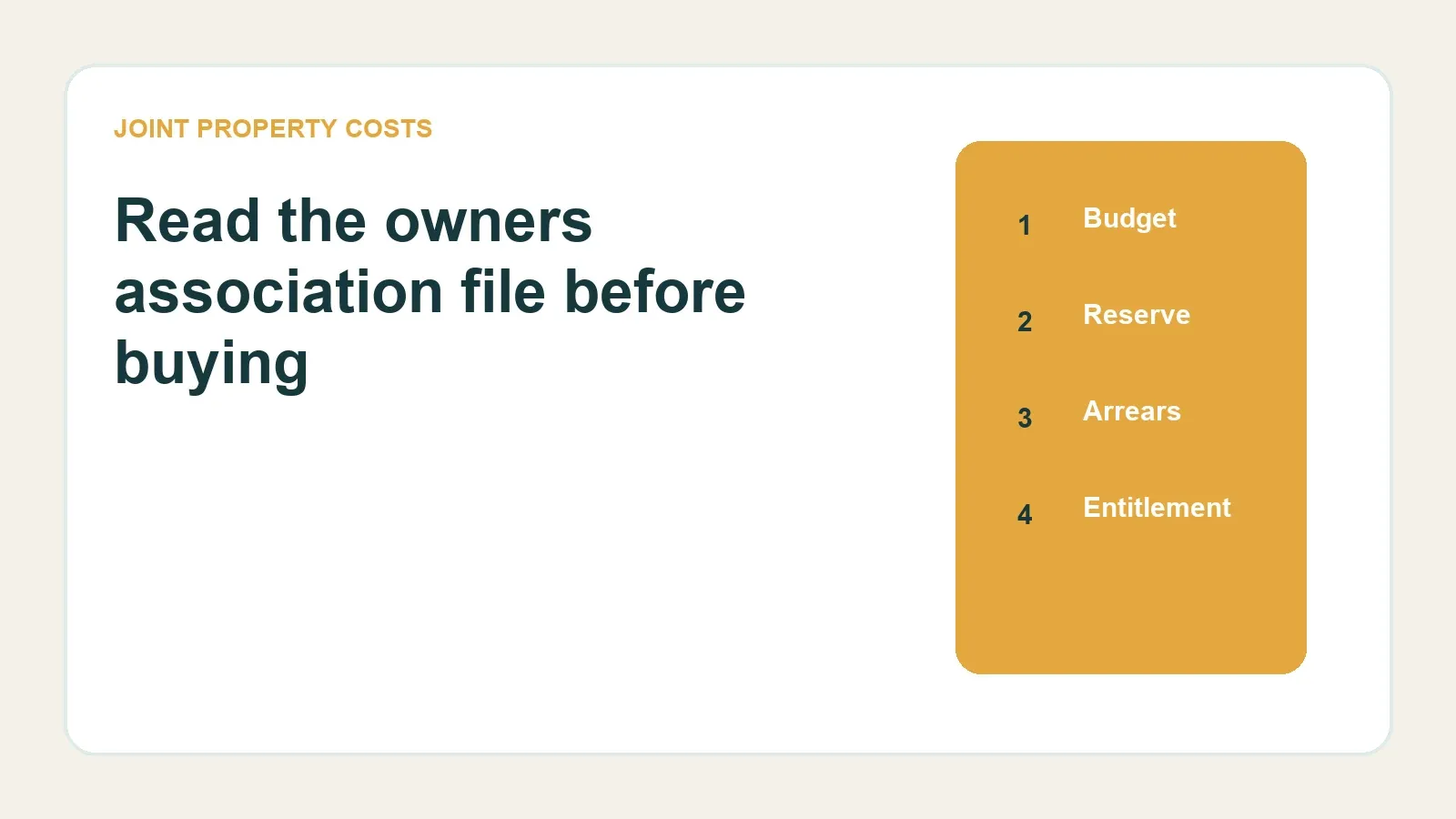
Do not compare only the annual rate. Read the joint-property by-laws, unit entitlement, approved budget, reserve plan, minutes, arrears statement and clearance evidence before buying.
01What the top three results miss
The current results were RERA’s buyers-with-common-areas guidance, a private owners portal and a fee-specific owners-association page. They cover useful fragments, but only RERA’s result explains the Bahrain buyer duties and transfer risk.
| Result | Useful part | Gap to fix |
|---|---|---|
| RERA buyer guidance | Official disclosure and arrears checks | Dense page that needs a buyer workflow and comparison table. |
| Private owners portal | Statements and receipts | Applies only to managed properties using that system. |
| Association fee page | Shows one development’s rate | One rate cannot represent Bahrain or another building’s budget. |
02Understand the joint property
RERA’s official buyers of property with common areas guide explains that unit owners jointly own common areas and must pay service charges for their maintenance and upkeep. The joint-property plan and by-laws define the unit, common areas, rights and restrictions.
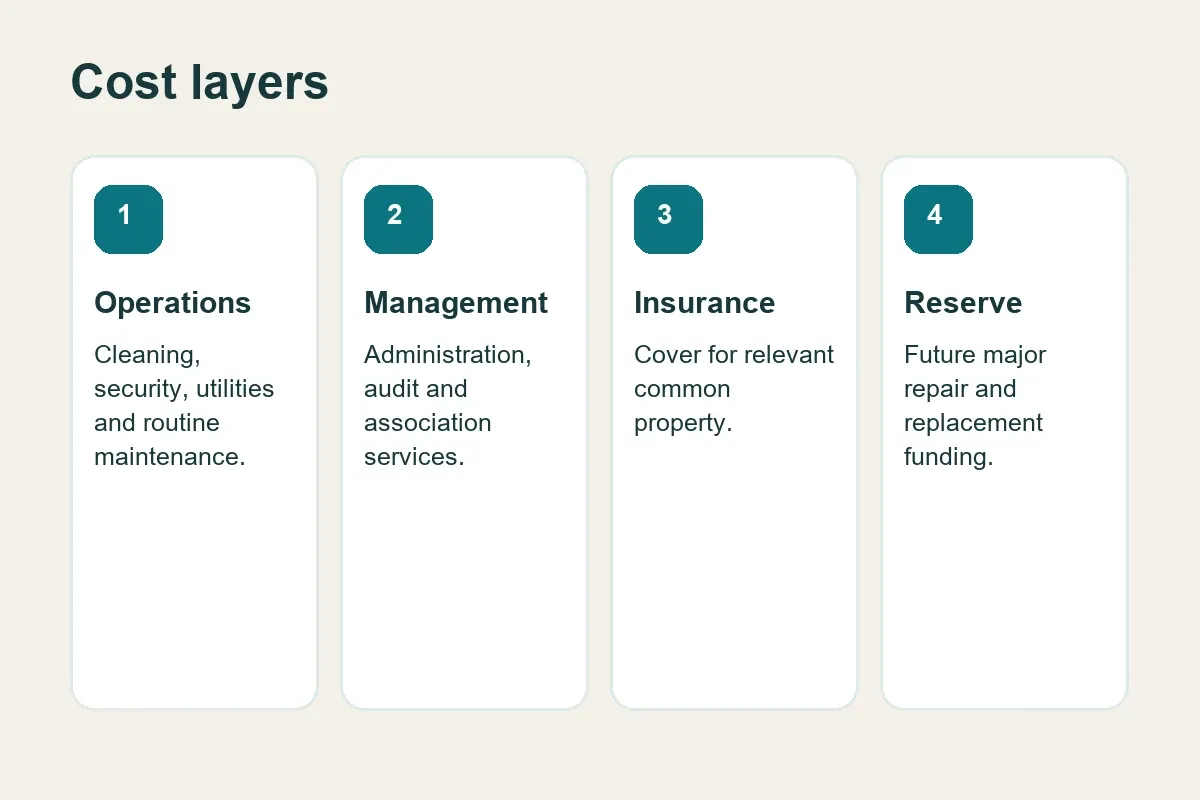
Service charges can fund operations, management, common utilities, maintenance, insurance and reserves. The exact categories and allocation must come from the owners-association documents, not a generic Bahrain average.
03Request the full owners-association file
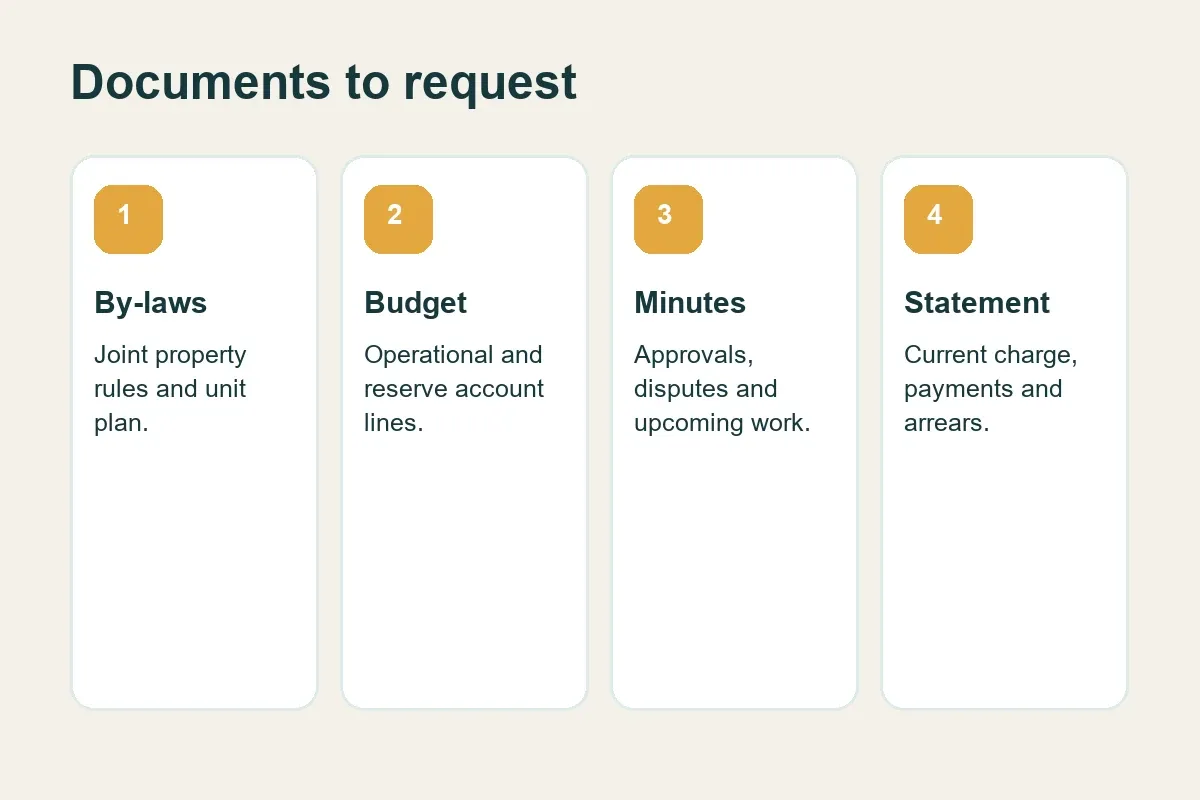
Ask for the registered association details, joint-property by-laws, plan, unit-entitlement schedule, current budget, reserve plan, recent financial statements, audit, general-assembly minutes, insurance summary, major contracts, service-charge statement and any planned special work.
RERA’s official Owners Associations and Joint Properties guide includes templates for annual budgets and notices separating operational and reserve accounts. Use those headings to test whether the seller’s summary is complete.
04Compare the budget, not only the rate
Calculate the annual amount for the exact unit using the entitlement and approved method. Then compare what the budget funds, current service quality, reserve balance, arrears across the association and planned major repairs.
A low current charge may indicate efficient management or underfunding. A higher charge may reflect amenities, overdue work or a strong reserve. Ask what changed from the prior budget and what is likely to change next year.
05Check seller arrears before transfer
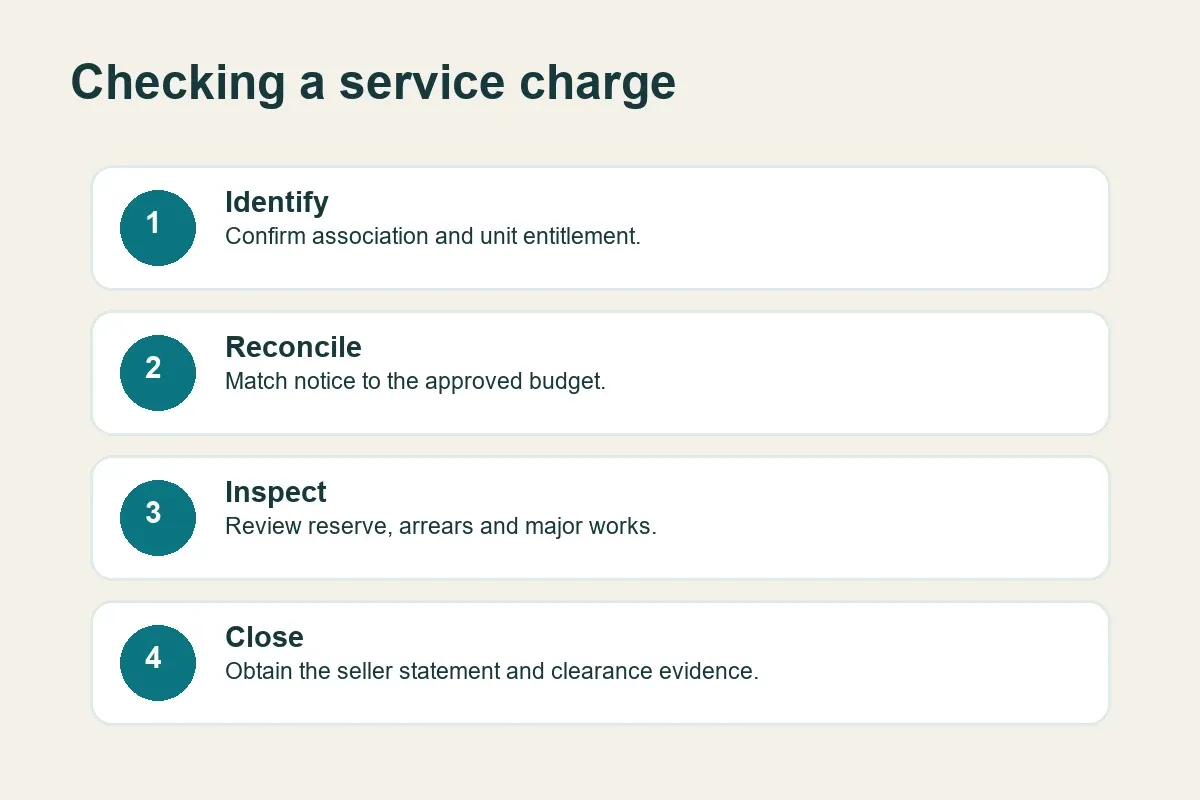
RERA warns that a buyer may become liable for the seller’s unpaid service charges. Request the formal statement, ensure arrears are paid or accounted for in the transaction, and obtain the clearance evidence required for notarisation where applicable.
Do not rely on a seller message saying the account is clear. Match the unit number, owner, association, period, amount, payments and issue date.
06Put the checks into the purchase contract
State who pays charges through completion, how later adjustments are handled, who obtains the statement and clearance certificate, and what happens if new arrears or a special assessment appears. Attach or identify the documents reviewed.
Use the official SLRB property-rights FAQs to understand subdivided and common ownership, then use the RERA documents for the association details.
07After purchase, participate as an owner
Notify the owners association of the transfer and current contact details. Obtain portal access, statements, receipts, notices, meeting papers and minutes. Review budgets and vote according to the unit entitlement and governing rules.
Keep each invoice and payment proof. Track operational and reserve balances separately and ask for the approved basis of any new amount.
08Respond to an unpaid-charge claim
Reconcile the opening balance, invoices, approvals, payments, credits, interest or administrative charges and unit identity. RERA’s official Order to Pay guidance explains the association process for non-payers and the formal notice content.
Use the official RERA services directory for current services. Do not ignore a formal notice, and seek advice if ownership, allocation or enforcement is disputed. The underlying Real Estate Regulatory Law provides the statutory framework.
09Questions about Bahrain service charges
What do service charges cover?
The approved association budget can include operations, common-area maintenance, management, insurance and reserves.
Are all buildings charged the same rate?
No. Use the specific by-laws, unit entitlement and approved budget.
Can a buyer inherit seller arrears?
RERA warns that this can happen, so obtain the statement and clearance evidence before transfer.
What is unit entitlement?
It is the unit’s allocated share, affecting common ownership, service charges and voting.
What should I compare between buildings?
Annual amount, included services, reserve funding, arrears, major works and management evidence.
What if I dispute an invoice?
Reconcile it to the budget, approvals, entitlement and payment record, then use the current RERA route.