Bahrain motoring and travel guides
Al Fateh Grand Mosque: Hours, Dress and Visits
By Gaurav Agarwal · Sources checked 6 October 2026
Al Fateh Grand Mosque welcomes Muslim and non-Muslim visitors. Official sightseeing hours are 09:00 to 16:00, Saturday to Thursday. Dress respectfully, use visitor reception and confirm holiday or group arrangements.
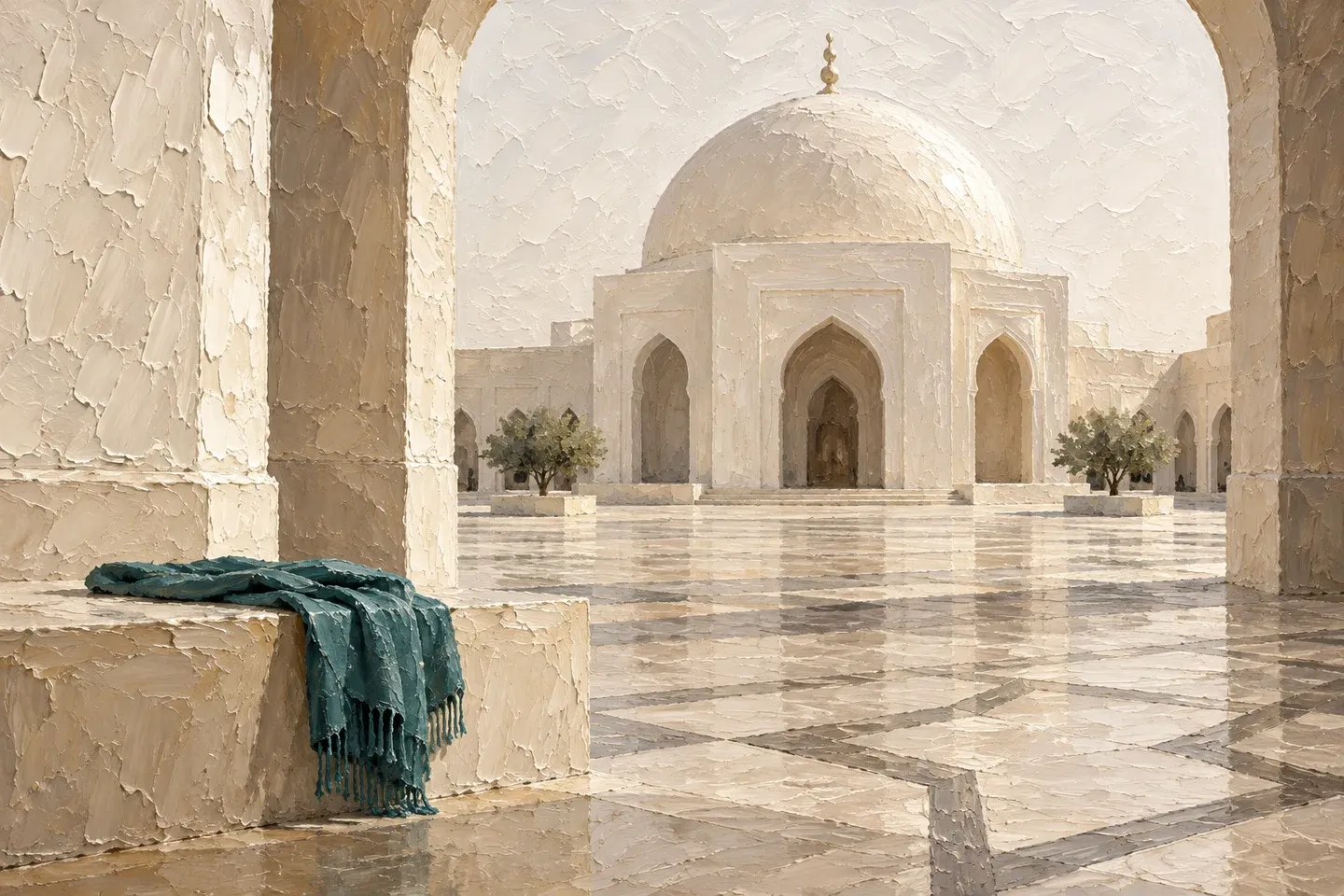
Plan a visitor tour around the mosque's role as a place of worship
Al Fateh Grand Mosque welcomes visitors who want to learn about its architecture and Islamic practice. The useful distinction is between a sightseeing visit and attendance for prayer. A published tourist schedule does not describe all worship access, and an open prayer entrance is not an invitation to wander through every part of the building.
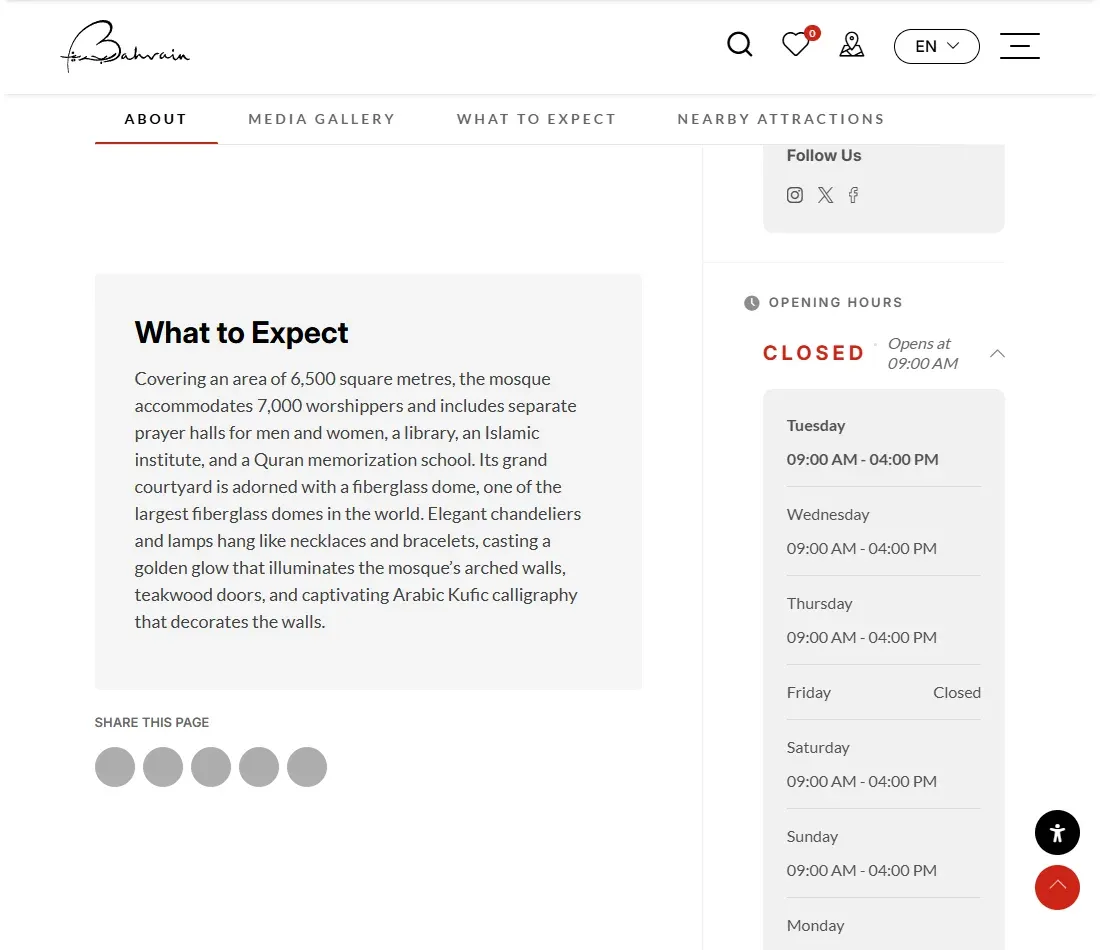
Bahrain Tourism's official mosque listing confirms that Muslims and non-Muslims can visit and that multilingual guides are available. It lists visitor hours from 09:00 to 16:00, Saturday to Thursday, with Friday closed. It also provides the contact number +973 17727773. Confirm arrangements before a holiday visit, a group tour or a visit requiring a particular language.
On arrival, find the visitor reception and explain that you would like to join a tour. Ask where to wait, which areas are open and whether a guide can accommodate your group. Staff instructions take precedence over an online itinerary. Allow enough time to listen and ask questions without having to leave halfway through an explanation.
Opening hours, Fridays and prayer times
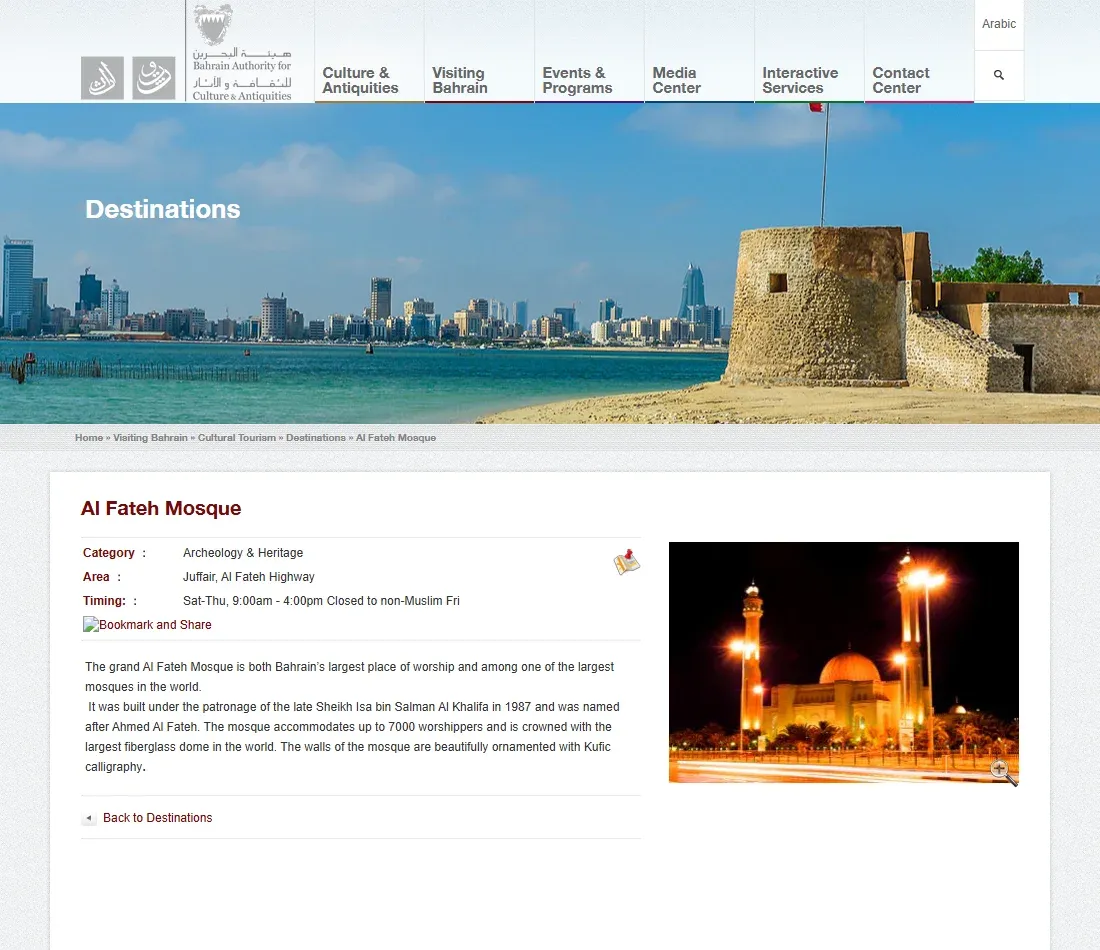
The culture authority's mosque entry independently gives Saturday to Thursday, 09:00 to 16:00, and explicitly says closed to non-Muslims on Friday. Plan a sightseeing visit within that window. A Friday photograph of the exterior does not demonstrate that tourist tours are operating inside.
Do not copy a prayer timetable into a travel plan as if it were a tour timetable. Prayer times change with the date, and the mosque's religious activities determine access to prayer areas. If you are going to worship, obtain the current prayer information from the mosque or an appropriate current official service. If you are going as a tourist, ask reception about the day's visit arrangements.
Avoid arriving only a few minutes before four and expecting a full tour. The reviewed official pages do not establish a universal last-tour departure or a fixed tour duration. An hour is a reasonable amount to leave available in your itinerary, but it is a personal planning buffer rather than a guaranteed service length.
For Ramadan, Eid, public holidays or a large group, contact the mosque before travelling. Tell staff your intended date, approximate arrival time, group size and preferred language. Save the response with the rest of your booking information. A regular weekly schedule cannot settle every special occasion.
What to wear and how to prepare
The official tourism FAQs recommend respectful clothing at religious sites, with shoulders and knees covered, and suggest carrying a scarf. For a straightforward mosque visit, choose loose, opaque clothing that covers comfortably when you stand, sit or bend. Long trousers or a long skirt and a top with sleeves make preparation easier.
Women should bring a scarf and ask reception how to use it for the areas being visited. Carrying suitable clothing is more dependable than assuming loan garments will always be available in the right size. The reviewed official pages do not provide a current inventory of visitor clothing, so this guide does not promise a particular garment service.
Wear footwear you can remove and put back on easily, and follow the entrance instructions for shoe storage before going onto carpeted prayer areas. Keep the group's shoes together without blocking a doorway. If removing footwear or walking without it creates an access concern, discuss that with staff rather than improvising a route.
Travel lightly. A small bag that keeps your phone and belongings secure is easier to manage than shopping bags or large luggage. Put your phone on silent before the tour. Finish food and drinks in an appropriate permitted area and ask before bringing anything into the prayer space.
For children, explain the visit before arrival: people may be praying, the group will listen quietly, and some areas have different rules from a public park. Keep younger children close enough that a guide can speak without interruption. If someone needs a break, ask where it is appropriate to step aside.
Guides, photographs and useful questions
The official guide to Bahrain's mosques highlights Al Fateh's guided visits and architectural features, including the dome, teak doors and Kufic calligraphy. These provide a useful starting point for questions. Ask how the prayer hall is organised or how the building's decorative choices relate to its use.
You do not need to arrive with specialist religious knowledge. Listen to the explanation and ask a clear question about what you see. If you are unfamiliar with a term, asking the guide to explain it is more useful than pretending to understand. A visit can be educational while respecting the fact that the building serves a living religious community.
Ask permission before photography, particularly where people are present. A tourism page encouraging photographs does not grant consent to photograph individual worshippers. Keep aisles and doorways clear, avoid interrupting a prayer or discussion, and follow any direction about flash, video or restricted areas.
If your group wants a commemorative photograph, find a suitable moment and location with the guide. Do not turn a quiet space into a lengthy staged shoot. Professional equipment, commercial filming or a planned production may need arrangements beyond those of an ordinary visitor, so explain the purpose before arriving.
The official pages reviewed here do not publish a clear current visitor admission tariff or establish that every type of guided arrangement is free. Ask directly when planning. A commercial city-tour price can include transport and other stops; it should not be mistaken for a mosque entry charge.
What makes Al Fateh distinctive?
The mosque is a major modern religious landmark, named after Ahmed Al Fateh. The culture authority attributes its construction to the patronage of Sheikh Isa bin Salman Al Khalifa and gives 1987 in its historical description. Some other references use 1988 as completion, so this guide avoids collapsing construction and completion into one unquestioned date.
The official tourism material describes space for about 7,000 worshippers, a large fibreglass dome and several educational functions. Those facts help explain the building's scale, but the visit is more rewarding when you look beyond a size ranking. Notice light across the hall, the relationship between arches and open space, and the way decoration directs attention.
Al Fateh is not the answer to every question about Bahrain's oldest mosque. The culture authority describes Al Khamis Visitor's Centre as interpreting Bahrain's oldest Islamic archaeological site and mosque. Al Khamis is a different visit, centred on archaeology, with its own hours and visitor arrangements.
If you enjoy comparing architecture, visit each place on its own terms. An active grand mosque, an archaeological site and a museum of manuscripts offer different experiences. Do not assume that access rules, guides or prayer facilities at one apply to the others.
Getting there and making a manageable half day
The culture-authority location is Juffair, Al Fateh Highway. Use the official location link when arranging transport, because a city-wide search for mosques can return several different destinations. Save your return pickup point before beginning the tour, and keep the driver's contact or booking details available.
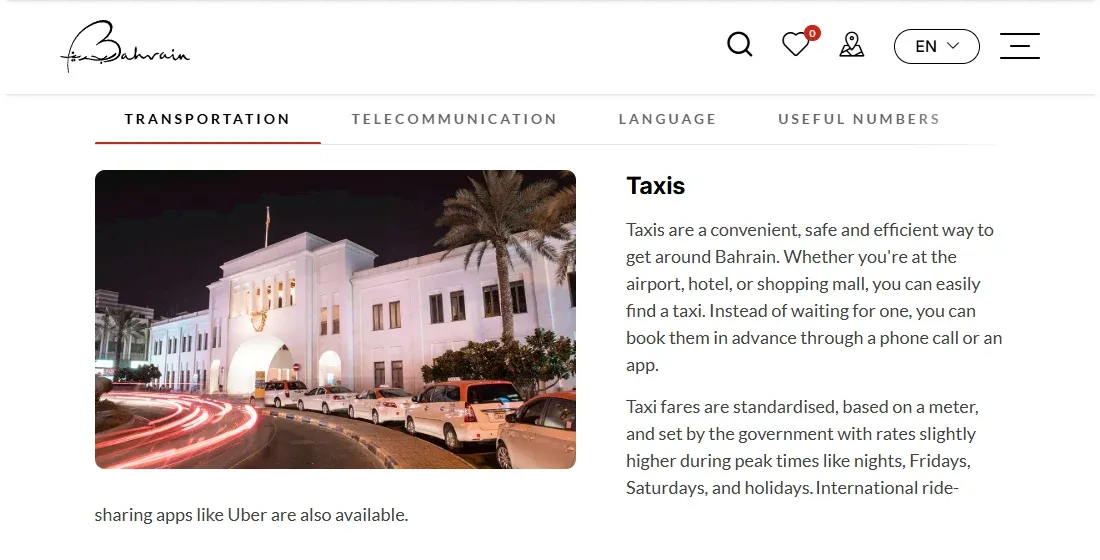
Bahrain's official transport guide describes metered taxis, advance bookings and public transport. For a bus journey, check the actual service and walking route from your accommodation. This guide does not claim a particular route serves the visitor entrance or promise an exact fare from every hotel.
If driving, follow the current entry and parking signs and avoid spaces or approaches needed for worshippers. A quiet-looking area can become busier around religious activities. Confirm a suitable place to meet your group after the visit instead of waiting in an access lane.
Check the official seasonal weather guidance and the current forecast when deciding how much outdoor walking to add. Modest clothing can still be light and breathable. Bring water for the journey and plan a break after the visit, especially with children or anyone who tires in the heat.
For a cultural pairing, consider Bahrain National Museum as a separate stop. Its archaeology and everyday-history displays provide a different perspective on the island. Check its Tuesday closure and current hours rather than assuming every cultural venue follows the mosque's schedule.
A practical half day has one confirmed mosque visit, a meal or rest and one optional second destination. Leave enough time for traffic and the pace of your group. A long list of landmarks becomes less useful if it forces you to rush the guided explanation that brought you here.
Frequently asked questions
Can non-Muslims visit Al Fateh Grand Mosque?
Yes. Official tourism information explicitly welcomes non-Muslim visitors. The published sightseeing schedule is Saturday to Thursday, 09:00 to 16:00. Follow reception instructions and confirm special dates in advance.
Is entry free?
The reviewed official pages do not state a complete current tariff for every visitor arrangement. Ask the mosque when planning your visit. A paid commercial sightseeing package is not evidence of a separate mosque admission fee.
What is the history of Al Fateh Grand Mosque?
It is a modern mosque built under Sheikh Isa bin Salman Al Khalifa's patronage and named after Ahmed Al Fateh. The culture authority's historical entry gives 1987; other references distinguish completion in 1988. Its architecture and educational role are central to the visitor experience.
Is it Bahrain's oldest mosque?
No. Al Fateh is a modern landmark. The official Al Khamis visitor-centre page identifies that separate archaeological site with Bahrain's oldest Islamic mosque heritage.
What time are prayers?
Use current prayer information for your date and confirm with the mosque. The 09:00 to 16:00 tourist schedule is not a prayer timetable, and Friday tourist closure does not mean worship has stopped.
Can I visit on Friday?
Do not plan a non-Muslim sightseeing tour for Friday. Both official visitor sources show that restriction. People attending worship should follow the mosque's religious access arrangements.