Bahrain motoring and travel guides
Tree of Life Bahrain: Visit and Transport Guide
By Gaurav Agarwal · Sources checked 6 October 2026
The Tree of Life is in Sakhir, southern Bahrain. Arrange transport both ways, check the forecast and use the designated visitor route. The tourism listing shows daily access from 06:00 to 22:00; confirm facilities separately.
Jump to a section
- Make the return journey part of the plan
- Check the destination before setting off
- Choose transport that covers the final leg
- Separate the landmark's story from claims about its survival
- Follow the protective route around the tree
- Choose the day and carry what you need
- Keep the basic contact details accessible
- Pair it with one confirmed southern Bahrain activity
- Frequently asked questions
Make the return journey part of the plan
The Tree of Life is a desert landmark in southern Bahrain, in the Sakhir area. Its setting is part of the attraction, but it also means the journey needs more thought than a stop in central Manama. Arrange transport in both directions, check the day's conditions and decide what else, if anything, belongs in your southern Bahrain itinerary.
A good visit can be simple: arrive in suitable daylight, follow the designated visitor route, look at the tree and interpretation, take photographs without damaging the site, then leave using the transport already arranged. There is no need to turn it into an off-road expedition or assume that the surrounding desert is open for unrestricted driving.
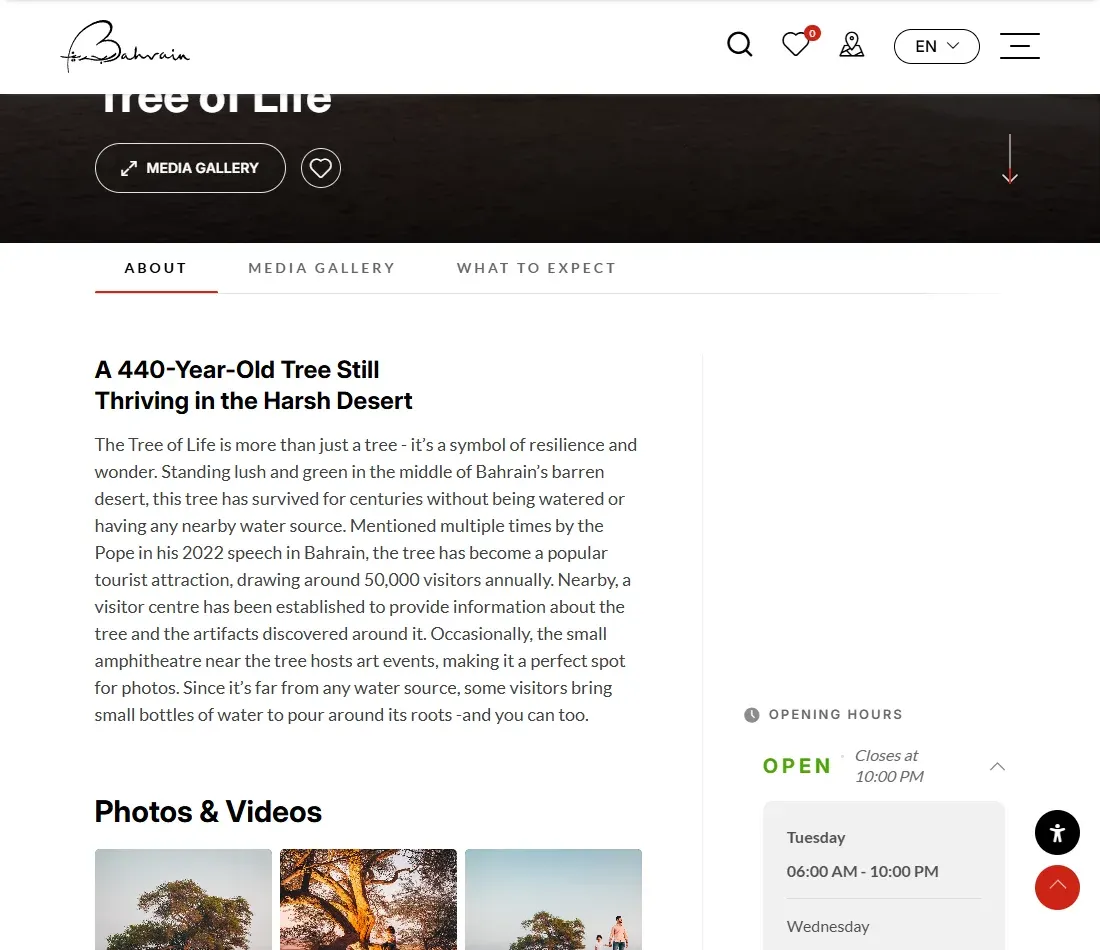
The official tourism listing places the tree in Sakhir and lists 06:00 to 22:00 daily. Treat those as the published listing hours checked on 6 October 2026. They do not establish that all facilities, lighting, refreshments or staff assistance are available throughout that entire period.
Check the destination before setting off
The government's landmark-location dataset includes the Tree of Life in the Southern Governorate. This gives an official location reference to compare with the attraction pin you use for navigation. A named point on a map is not the same thing as an approved vehicle entrance or a usable walking route.
Send the landmark pin to your driver and confirm that the trip includes the intended stop. If booking a car for several destinations, agree on the order, waiting time, total service period and what happens if an attraction is closed. Keep the written booking or message available offline. This avoids confusion between a one-way drop-off and a driver who will remain with you.
For self-driving, review the route before leaving a well-connected area. Follow current road signs and marked approaches. Do not follow an apparent shortcut simply because it looks shorter on a small screen. If a road is closed or the navigation instructions conflict with signs, use the signed route or ask an appropriate local operator for help.
Choose transport that covers the final leg
The tourism authority's getting-around guide describes taxis, buses and rental vehicles. It does not establish a direct public bus service to this particular landmark. Before choosing a bus-based journey, verify the final stop, walking distance and return connection in the transport operator's current planner.
A hired car or a prearranged driver may suit a small group because the return can be agreed in advance. Confirm the supplier's actual conditions rather than relying on a general statement about car hire. Ask about licence acceptance, insurance, permitted roads and assistance arrangements if you are renting. An attraction guide cannot decide whether your specific rental agreement allows a particular route.
For an app-booked taxi, a successful outward booking does not guarantee that another vehicle will be nearby when you want to return. Check the return arrangement before your driver leaves. If you agree that a driver will wait, make the waiting charge and meeting location explicit. Avoid leaving that conversation until your phone battery is low or the light is fading.
Separate the landmark's story from claims about its survival
The tree is widely presented as a centuries-old natural landmark surviving in a striking desert setting. The tourism page describes it as about 440 years old. Treat that as an approximate description in the visitor material, not a precisely verified planting date that becomes one year older every January.
The same page uses a sense of mystery around the tree's water supply. This guide does not turn that promotional description into a scientific conclusion. A lack of visible surface water is not proof that a tree has no access to water. If botanical explanation is the main reason for your interest, look for research that actually measures the tree and its environment rather than relying on a repeated tourism anecdote.
You can appreciate the landmark without settling every story about it. Look at the spread of the canopy, the branching form and the contrast with the surrounding landscape. Read the interpretation on site and keep folklore clearly separate from documented history when explaining the visit to children or sharing photographs afterwards.
Follow the protective route around the tree
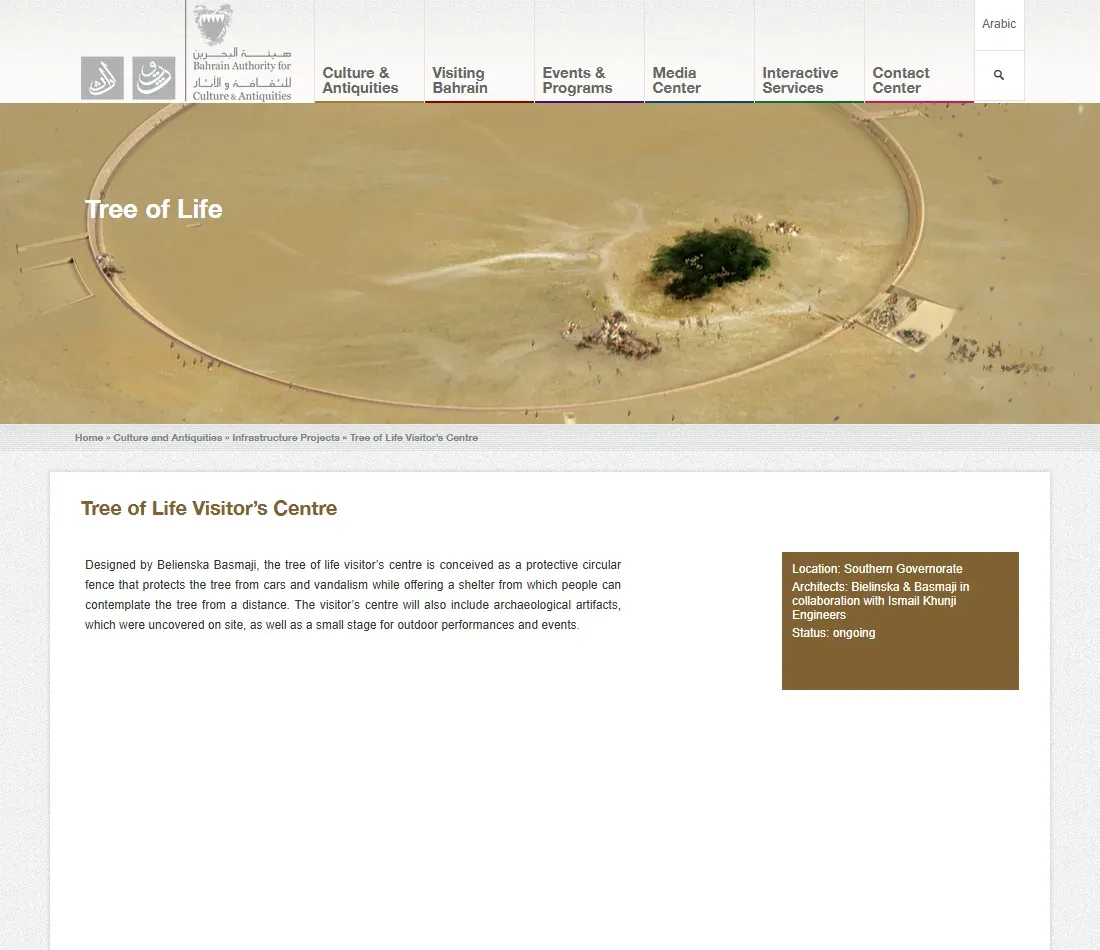
The culture authority's visitor-centre project account explains the purpose of a circular protective boundary: shielding the tree from vehicles and vandalism while giving visitors a place to view it. That account is a project description, with an older project-status label. It is useful for understanding the protective design, not for proving every current facility is operating.
Respect any barriers, marked paths and instructions you find. Do not drive towards the trunk, climb branches, carve initials or remove plant material. Some casual visitor descriptions suggest climbing or watering; those are not a reliable conservation instruction. Ask staff if you are uncertain about an activity, and choose observation rather than interference.
With children, explain the boundary before approaching the tree. A branch close to the ground can look like play equipment, but this is a protected visitor landmark. Keep a simple rule: look, photograph and leave the tree as you found it. Take your rubbish away and avoid leaving food or objects as a souvenir of your visit.
Choose the day and carry what you need
The official weather guide identifies winter, early spring and late autumn as suitable periods for outdoor activities. Still check the actual forecast before travelling. A seasonal average cannot tell you the heat, wind or visibility at the site during your visit.
Carry drinking water, sun protection, a charged phone and any essentials you would need if the journey takes longer than expected. Wear shoes suitable for walking around an outdoor site. Pack lightly enough that you can keep both hands free where the surface changes. Do not depend on an unconfirmed café or shop for necessities.
For photography, daylight makes it easier to judge the route and the landscape. If you want a late-day visit, arrange the return before arriving and leave time to reach your vehicle. Published access until 22:00 is not a guarantee of a fully lit walking circuit or an available taxi rank.
If conditions become uncomfortable, shorten the stop. A quick look from an appropriate visitor area is preferable to forcing a long outdoor session because you have travelled there. Travellers with mobility needs should ask about the path surface, drop-off distance, seating and toilets in advance. This research did not establish a completely step-free visitor route.
Keep the basic contact details accessible
The tourism authority's safety page lists 999 for emergencies. Save that number along with your driver's or rental provider's assistance contact. Use the supplier's assistance route for an ordinary vehicle problem; an emergency number is not a general taxi-booking service.
Share your planned return time with someone in your party or accommodation if helpful. Keep the destination and pickup pin available without relying entirely on a live data connection. Before leaving the vehicle, check that you have your phone, water and the means to contact the person collecting you.
If a companion becomes unwell or needs help, give the actual location and describe the situation clearly. Do not move further into unfamiliar terrain while trying to improve a photograph or find a shortcut. The purpose of these preparations is to make a straightforward visit stay straightforward, not to portray the landmark as an expedition requiring specialist equipment.
Pair it with one confirmed southern Bahrain activity
A wider southern trip works best when it has one booked or time-sensitive activity and one flexible stop. The Bahrain International Circuit listing describes motorsport events, track experiences and karting. These are separate products with their own availability. Confirm the exact activity and arrival instructions with the operator before adding it to the day.
For a nature-focused alternative, the Mohammed bin Zayed Natural Reserve listing distinguishes a public visitor section from an area reserved for specialists and researchers. Its public status does not allow access to the protected research area. Check admission, opening hours and the available visitor experience directly before travelling.
Do not automatically combine both with the tree. Each extra stop adds driving, timing and separate access conditions. A family interested in animals may prefer the reserve; a motorsport enthusiast may choose the circuit. Build the day around that choice, then fit the tree into a sensible weather and daylight window.
These pairings are planning suggestions based on the destinations, not a route tested by the author or a promise about driving time. Use the motoring and travel hub for other practical journey guides.
Frequently asked questions
What is special about Bahrain's Tree of Life?
It is a centuries-old tree in a striking desert setting in Sakhir. The contrast between the canopy and the surrounding landscape makes it a distinctive visitor landmark. Claims about exactly how it survives should be separated from the tourism story.
How old is the Tree of Life?
The official tourism page describes it as about 440 years old. That is an approximate visitor description, not a precise planting date independently verified by this guide.
Where is the Tree of Life located?
It is in the Sakhir area of southern Bahrain. Use the official attraction location and check the actual visitor approach before setting off. A map point alone does not establish an authorised vehicle route.
What are the opening hours?
The tourism listing shows 06:00 to 22:00 daily. Recheck before travelling, especially for an early or late visit. This does not confirm that all facilities or lighting operate for the full period.
Is entry free?
A current admission tariff was not verified in the official sources reviewed. Confirm any entry or activity charge before travelling. A paid transport or tour package should not be mistaken for an official landmark entrance fee.
Can I go without a car?
You can investigate a driver, taxi or organised trip, but arrange the return and verify the exact drop-off. No direct public bus service to the tree was confirmed in this research.
Can children climb the tree?
Use the designated visitor route and follow conservation instructions. Do not treat branches as play equipment. The culture authority describes the visitor design as protecting the tree from damage.