Bahrain motoring and travel guides
Bahrain Fort: Museum, Hours and Visitor Guide
By Gaurav Agarwal · Sources checked 6 October 2026
Visit Bahrain Fort and its nearby museum as separate stops. The museum operator lists 08:00 to 18:00 and Monday closure; the fort is listed daily. Confirm before a late visit because official directories disagree.
Jump to a section
- Plan the archaeological site and museum separately
- Opening hours: use the operator's earlier schedule
- Ticket prices and what to ask at the desk
- Why the site matters beyond its fort walls
- Use the museum to understand what you see outside
- Choose a comfortable visit sequence
- Getting there and getting back
- Heat, access and a shorter fallback plan
- Frequently asked questions
Plan the archaeological site and museum separately
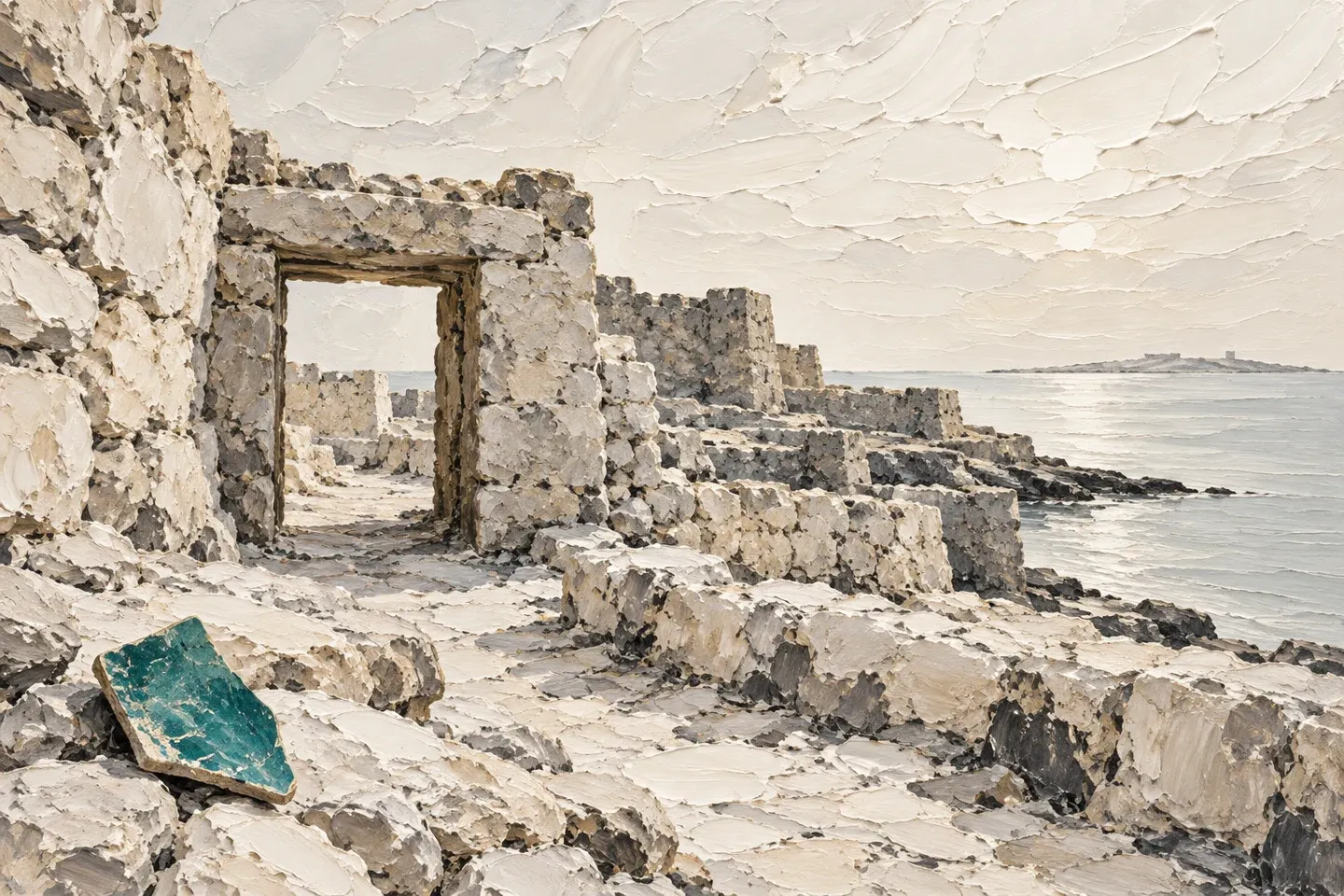
Bahrain Fort, also called Qal'at al-Bahrain, is a coastal archaeological site with a separate museum nearby. Visit the museum for the objects and historical explanation, then the outdoor site for the remains and landscape. You can shorten either part, but a museum ticket, an outdoor walk and a café stop should not be treated as one identical service.
The most useful first decision is your day. The museum operator lists Monday as a closure day, while the fort is listed daily. A second decision is whether you want the galleries or mainly the outdoor experience. Someone interested in archaeology benefits from reading the exhibits before looking at the ruins. Someone with limited time may prefer a shorter outdoor visit and return for the museum another day.
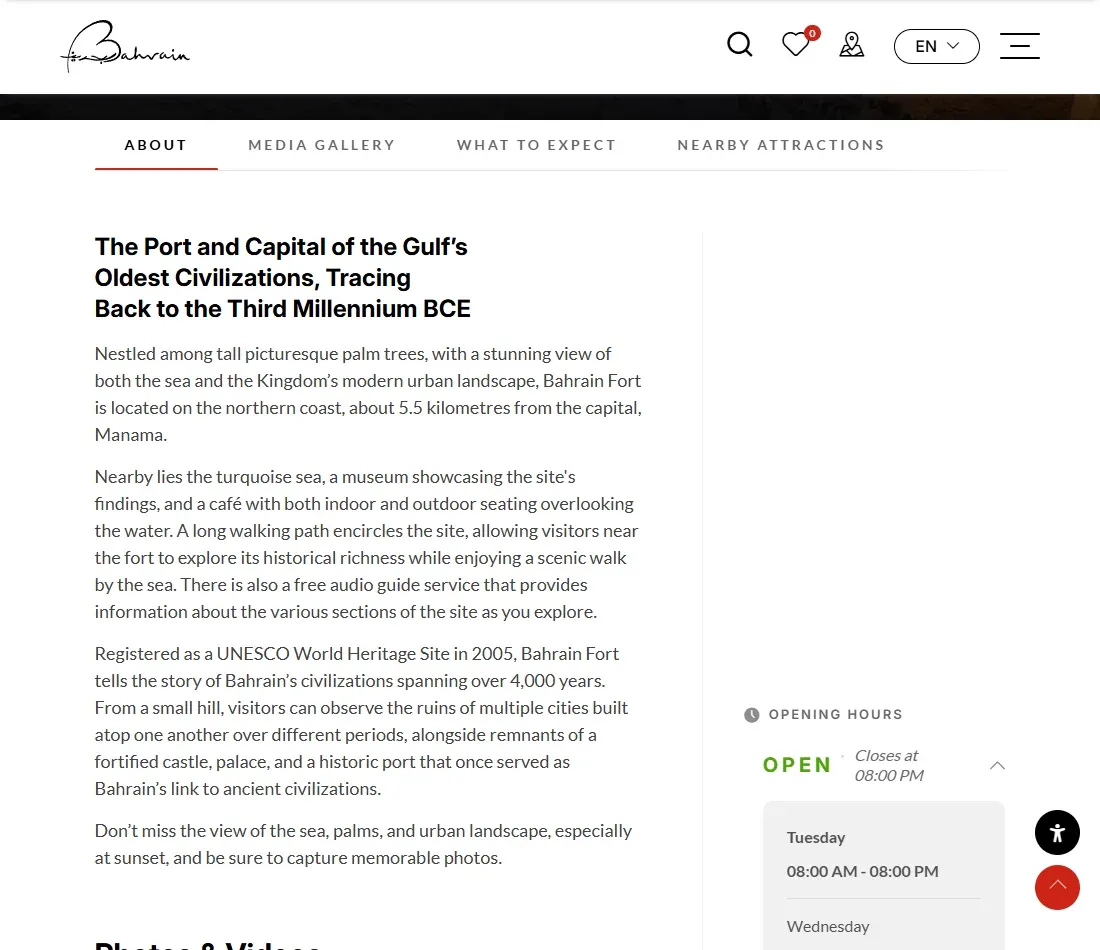
The official tourism fort page describes the northern-coast site, its surrounding walking path, the adjacent museum and a free audio-guide service. Check availability when you arrive. A listed service is useful to ask about, but it is not a reserved guide or a promise that every part of the site is accessible that day.
Opening hours: use the operator's earlier schedule
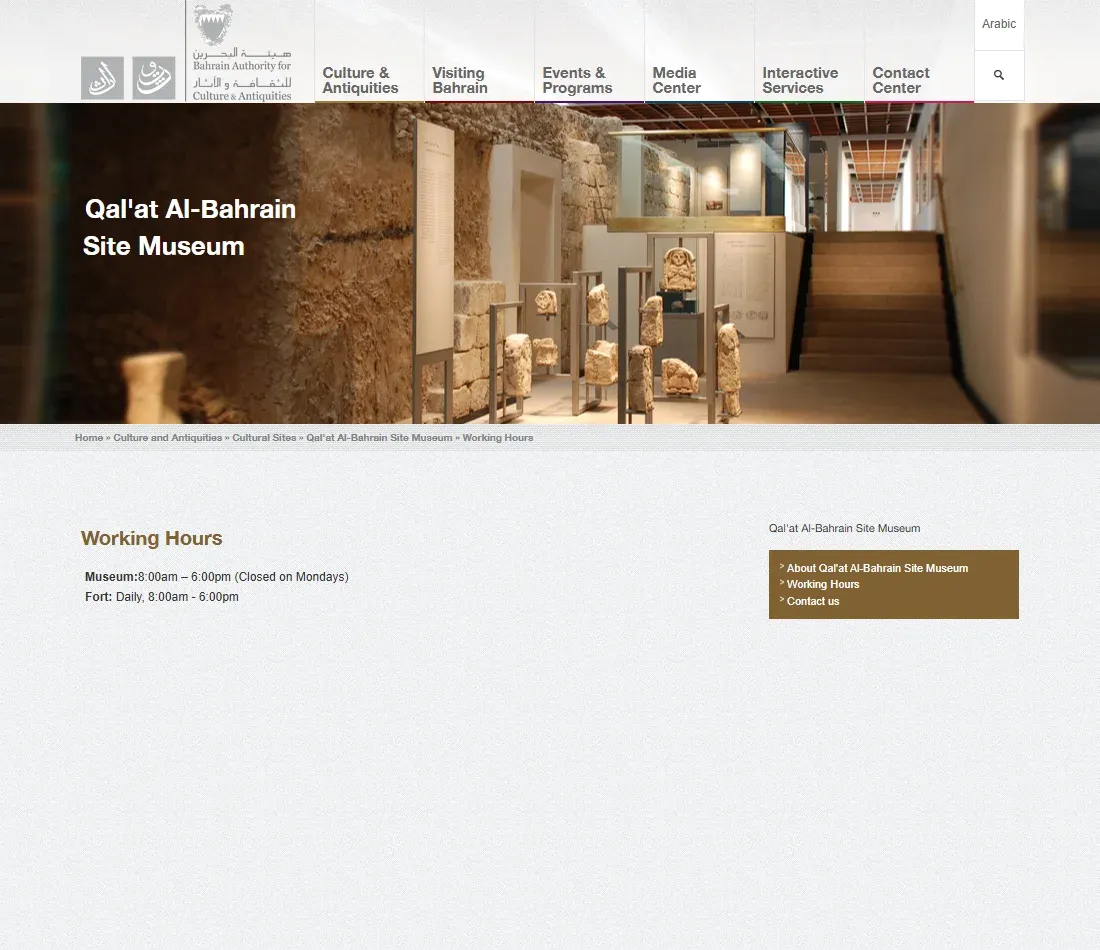
The culture authority's working-hours page lists the museum from 08:00 to 18:00, closed Mondays, and the fort daily from 08:00 to 18:00. The tourism directory lists 08:00 to 20:00 and shows the museum daily. Those published sources do not agree.
For planning, use the operator's earlier closing time and avoid relying on Monday museum access. Contact the venue before a late visit, a holiday trip or any journey specifically for the galleries. Ask about the final admission time as well as closing. A building closing at six does not necessarily admit a new visitor at five fifty-nine.
If a sunset visit is your priority, check the day's sunset alongside confirmed entry and exit times. Do not assume the site's advertised appeal at sunset means the gate will remain open until you finish photographing. A late arrival should have a shorter route and a confirmed return ride.
Ticket prices and what to ask at the desk
Bahrain's government museum-ticket catalogue lists Bahrain Fort Site Museum at BHD 2 for tourists and residents and BHD 1 for citizens. These are the amounts in the public catalogue checked on 6 October 2026, not a purchased ticket or a quote for every possible visitor category.
Before paying, confirm the current amount, whether any concession applies, and which spaces the ticket covers. Ask separately about children, groups or a special exhibition if relevant. The catalogue does not establish that an organised tour, audio device, café order or transport is included. Equally, a museum tariff should not be presented as an automatic charge for every surrounding outdoor area.
Keep the ticket until you finish and ask whether leaving the galleries for the café affects re-entry. If you arrive with a group, clarify payment and meeting arrangements before splitting up. These small questions are easier at the entrance than when one person has already headed towards the fort.
Why the site matters beyond its fort walls
UNESCO's World Heritage listing identifies Qal'at al-Bahrain as an ancient harbour and capital of Dilmun. The site's importance comes from successive layers of settlement and trade, not only the visible fortress. The World Heritage inscription dates to 2005. One culture-authority museum overview gives a different year; UNESCO is the authority used here for the inscription.
That layered history changes how to look at the place. Instead of asking whether every visible wall belongs to the same period, look for the interpretation explaining different buildings and occupations. The fort is a recognisable focal point, while excavated structures and the coastal setting explain why the wider site mattered.
You do not need specialist archaeological knowledge to enjoy it. Choose a few questions: how goods moved through the harbour, what objects reveal about trade, and how settlement changed over time. Following those questions through the museum and outdoor interpretation is more rewarding than trying to memorise every date on a first visit.
Use the museum to understand what you see outside
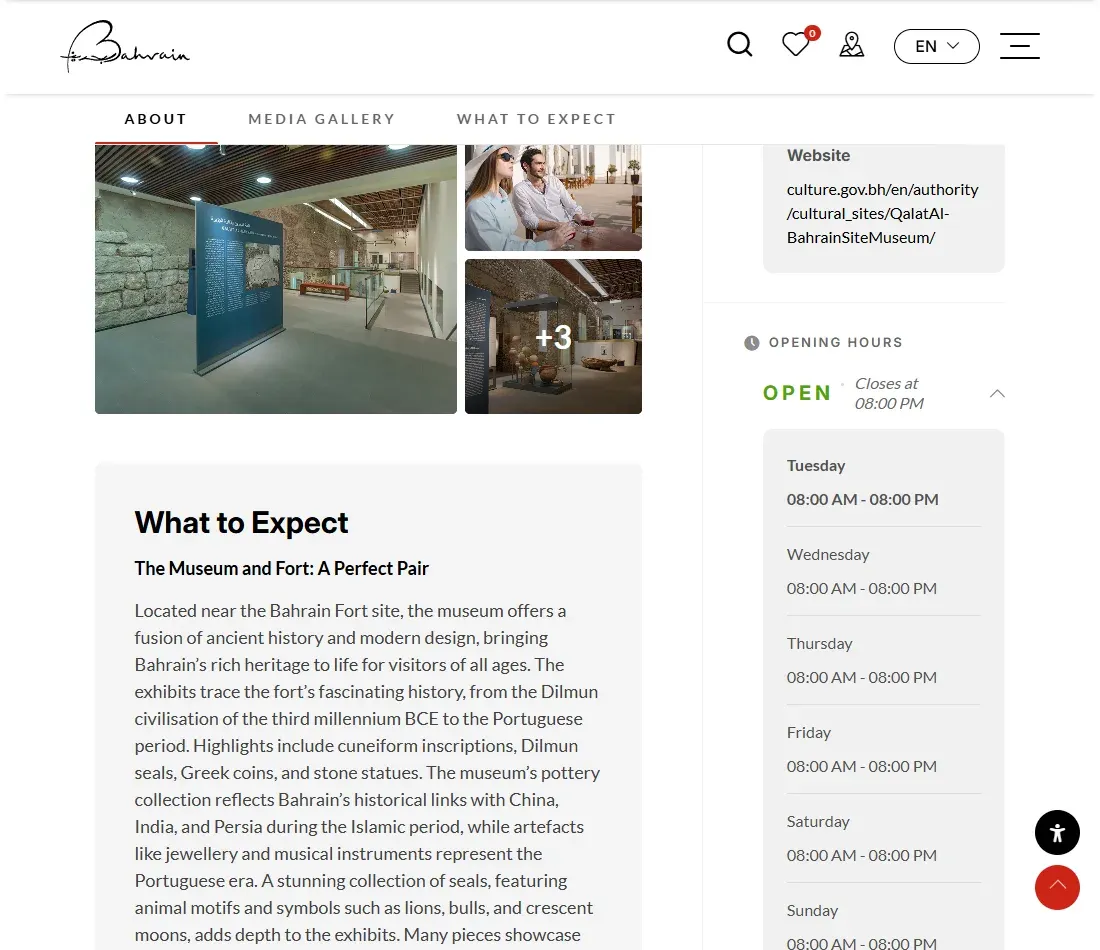
The culture authority's museum overview describes five historical periods arranged in separate galleries. It also identifies the museum's courtyard, sea-facing café, lecture hall and shop. The museum opened in 2008 to preserve and interpret material found at the archaeological site.
The tourism museum guide highlights seals, inscriptions, coins, pottery and other objects illustrating Bahrain's links with surrounding civilisations. Look closely at a few small objects rather than moving past every case at the same pace. A seal or an inscribed object can make the site's trading role more concrete than a broad historical label.
A practical method is to select one object or theme in the galleries, then look for its context outdoors. Read the labels before using a phone to photograph an exhibit. Check current photography rules and avoid flash if prohibited. If a display is temporarily unavailable, ask staff what other section gives the clearest overview.
Choose a comfortable visit sequence
For a first visit in comfortable weather, start with whichever timed facility closes first. If the museum is open and central to your interests, begin there, continue to the marked outdoor areas and finish with a break. In warm conditions, reduce the outdoor section and spend more time indoors, provided the gallery schedule allows it.
For children, choose a small task such as finding a seal design in the museum and a defensive feature outside. Keep them close around changes in level and follow barriers. Archaeological remains are not climbing equipment. Avoid picking up stones or fragments, even when an object appears loose or unimportant.
For a photography-focused visit, leave room in the schedule for ordinary circulation. Do not block narrow routes, cross a barrier for a better angle or assume a tripod or commercial shoot is permitted. Ask the operator about any equipment or filming permission before arrival. A public attraction is not an unrestricted production location.
The museum and coastal walk can also be enjoyable at different speeds. Agree on a meeting point if one person wants to study the displays while another prefers a shorter visit. Check where seating and toilets are before separating, especially when travelling with someone who may need assistance.
Getting there and getting back
The tourism authority's transport guide describes taxis, buses and car hire. Use the fort or site-museum location you actually intend to enter when booking a ride. Confirm the pickup place for your return; a pin at the broad archaeological site may not identify the entrance where your party will be waiting.
If using public transport, check a current route planner and inspect the final walking section. A route reaching the surrounding district does not prove an easy walk to the museum entrance. Consider heat, road crossings and luggage. This guide does not claim a direct bus route or a fixed taxi fare without a current journey-specific result.
If driving, follow the current entrance and parking signs rather than improvising a shortcut across open ground. Note where you parked and which gate you used. Ask about accessible drop-off before unloading anyone who cannot manage a long walk. Keep enough time to leave before an onward booking, especially if you intend to visit another attraction afterwards.
Heat, access and a shorter fallback plan
The official weather guide identifies the cooler seasons as more suitable for outdoor activities. Use an actual forecast for your date. Carry water, wear footwear suitable for walking and plan a shaded or indoor pause. The site's coastal position should not be treated as a guarantee that it will feel cool.
Accessibility needs specific confirmation. Ask about the route from parking to reception, steps or uneven areas, available seating, accessible toilets and the parts that can be visited without assistance. This research did not establish a completely step-free circuit. It is better to plan a meaningful accessible section than arrive expecting every part to be suitable.
If conditions are uncomfortable or outdoor access is restricted, spend more time in the museum if it is open. For broader cultural context on another day, the Bahrain National Museum listing describes galleries covering archaeological periods, customs and traditional crafts. It is a separate attraction in Manama, with a Tuesday closure in the tourism listing. Do not treat it as a neighbouring building or an automatic same-ticket alternative.
Other journey planning is available through the motoring and travel hub.
Frequently asked questions
Is Bahrain Fort worth visiting?
It is a strong choice if you want archaeology, coastal scenery and a museum that explains the site. The useful decision is whether your party wants the galleries, the outdoor area or both, then choosing a day and weather window that suit that plan.
Why is Bahrain Fort famous?
The wider World Heritage site preserves evidence of successive settlements and the ancient harbour and capital of Dilmun. The visible fort is one part of that history, not the entire reason the place matters.
What are Bahrain Fort's opening hours?
The culture authority's operator page lists the fort daily from 08:00 to 18:00. It lists the museum for the same hours but closed Mondays. Tourism listings give later hours, so confirm with the venue before a late visit.
How much does the museum cost?
The government catalogue lists BHD 2 for tourists and residents and BHD 1 for citizens. Confirm the current ticket, concessions and inclusions at the museum. The listed museum fee is not a quote for a tour package.
Can I visit the museum on Monday?
Do not plan on it without direct confirmation. The museum operator lists Monday closed even though the tourism directory shows daily hours. The fort and museum have separate access arrangements.
How long should I allow?
Leave time for both interpretation and walking if doing both parts. A short outdoor stop differs substantially from studying the galleries, using an audio guide and visiting the café. Build your schedule around confirmed admission deadlines rather than a universal visit length.