Bahrain motoring and travel guides
Bahrain National Museum: Hours and Visitor Guide
By Gaurav Agarwal · Sources checked 6 October 2026
Visit Bahrain National Museum from 09:00 to 20:00, except Tuesdays, according to its operator. Choose your main galleries, confirm admission charges and treat exhibitions or boat trips as separate arrangements.
Start with the galleries you most want to see
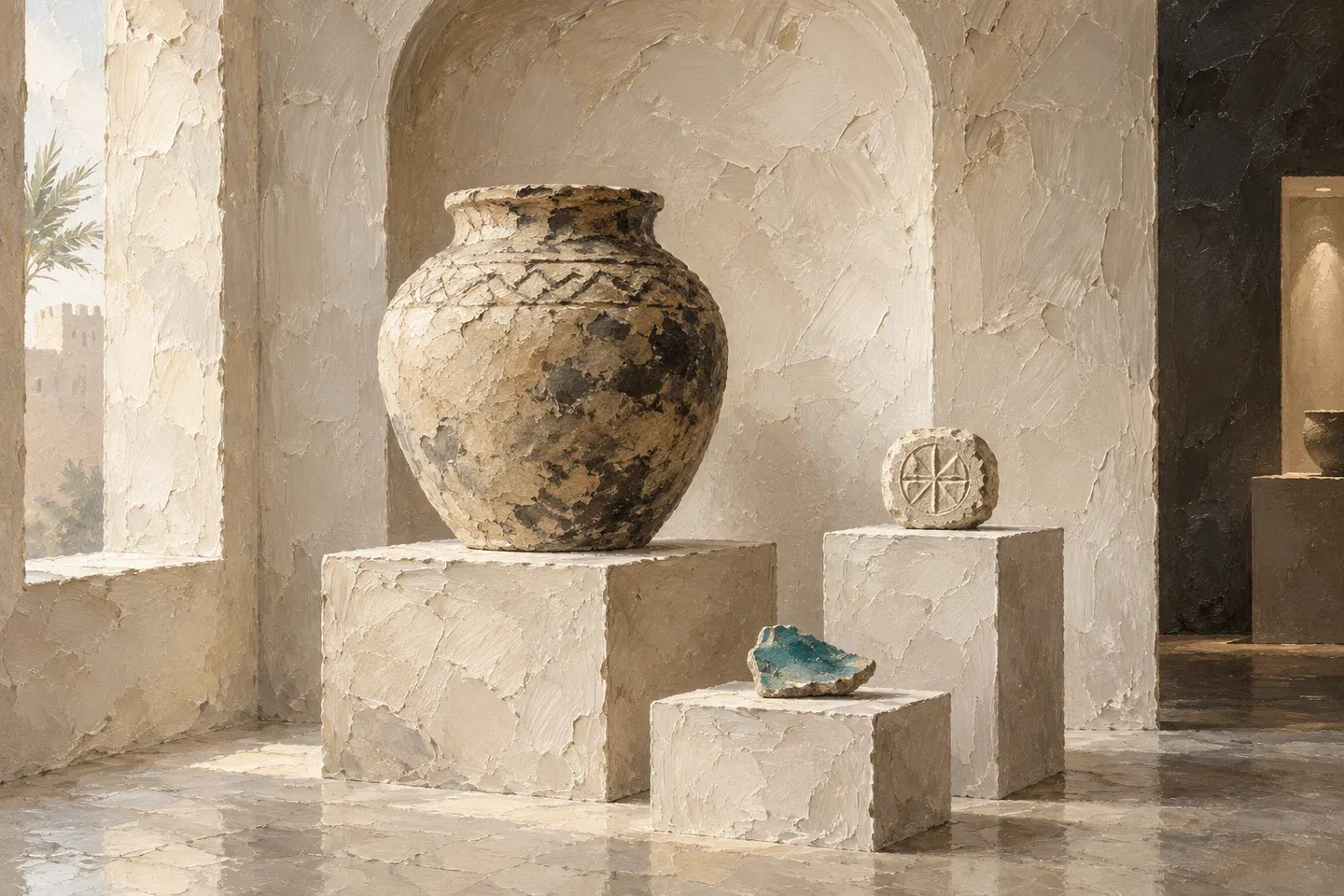
Bahrain National Museum is a useful first cultural stop if you want to understand the places you will see elsewhere on the island. Its archaeology, documents, customs and traditional trades give context to a fort visit or a walk through an old market. You do not need to know Bahrain's history before arriving. Choose a few themes, read the labels slowly and leave room for a break.
The museum operator's overview describes six main historical and cultural halls, with permanent displays, temporary exhibition spaces, an art gallery, gift shop and café. The present building opened on 15 December 1988. It sits on a peninsula overlooking Muharraq, so the outdoor setting is part of the experience, even though most of your visit can be indoors.
For a first visit, set aside roughly two hours as a planning allowance, rather than a prescribed tour duration. A short visit can concentrate on archaeology and traditional trades. An enthusiast can spend considerably longer reading cases and exploring temporary exhibitions. Check the day's accessible galleries at reception before deciding how to divide your time.
Opening hours and Tuesday closure
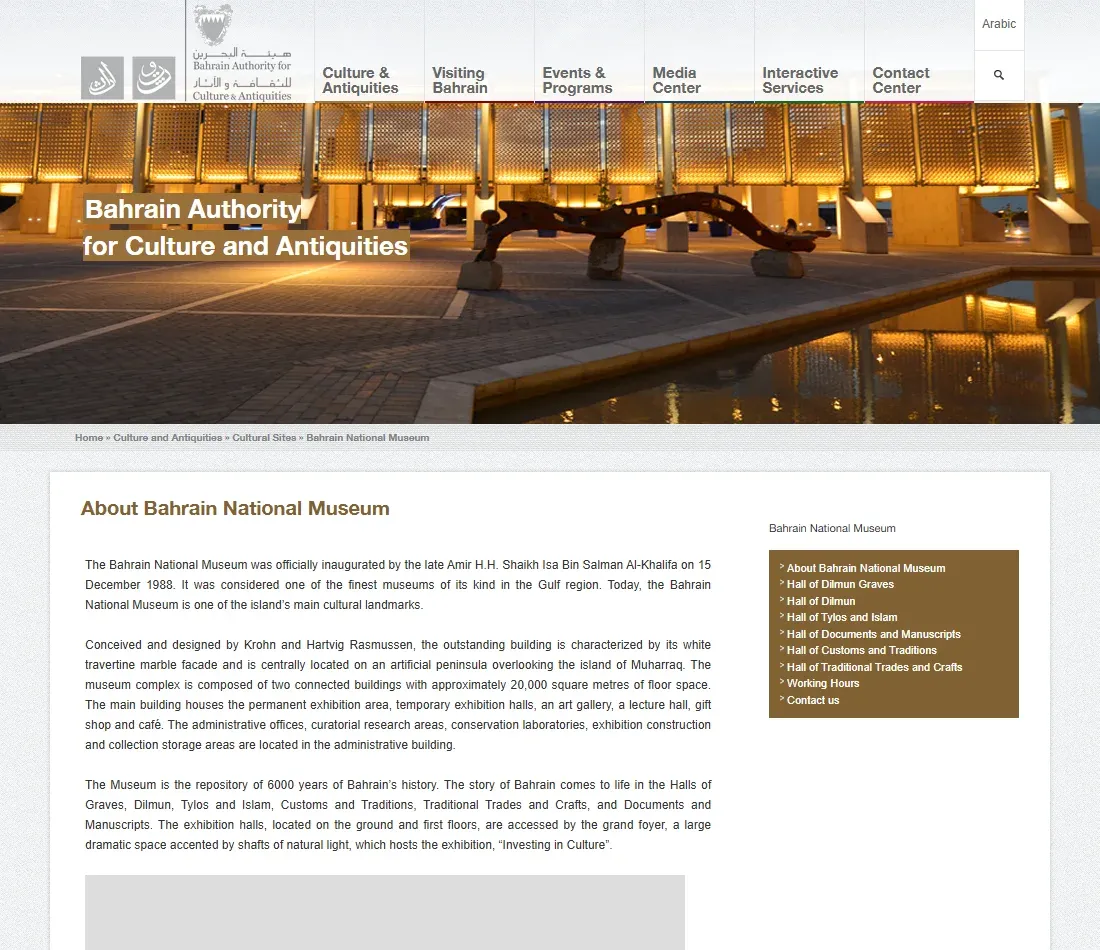
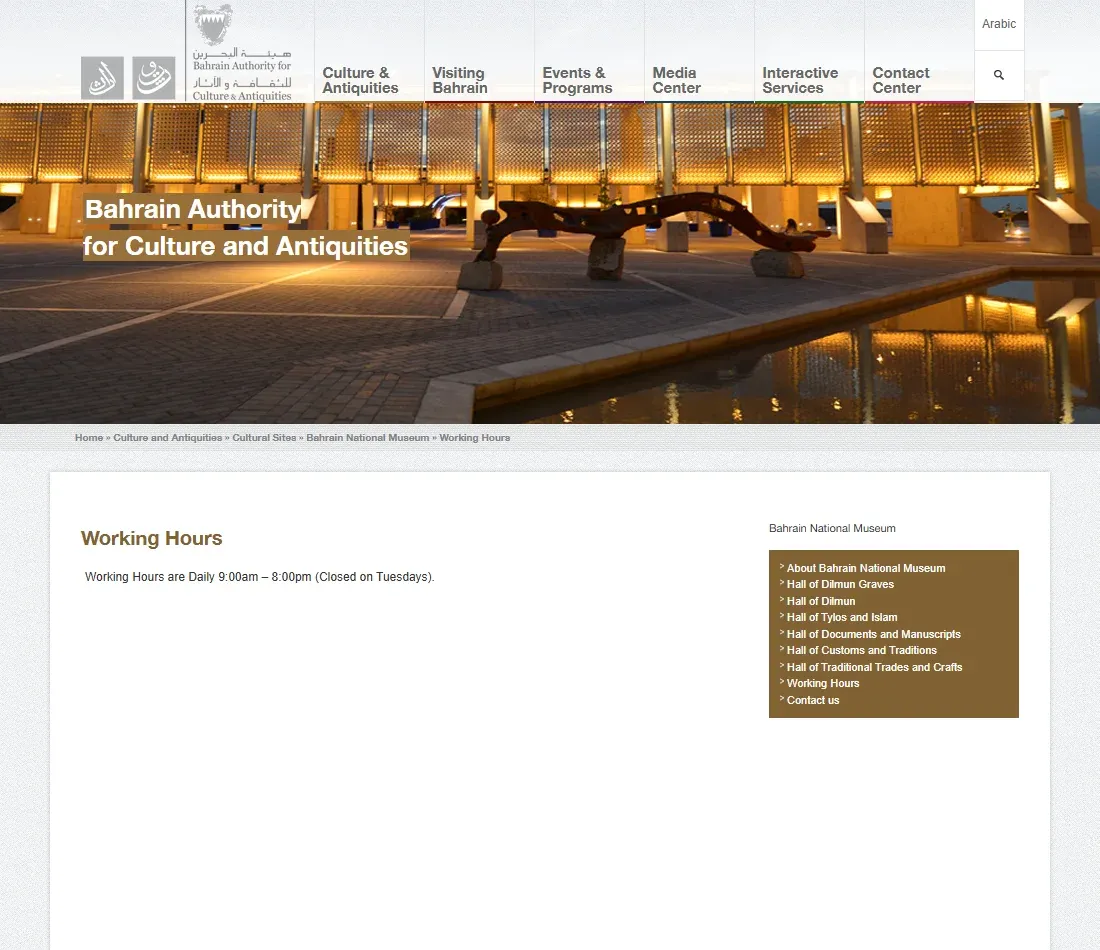
The dedicated operator working-hours page lists 09:00 to 20:00, closed Tuesdays. Bahrain Tourism's current museum listing agrees. Use that schedule when planning, then confirm exceptions for holidays, special events or a visit near closing.
An older culture-authority destination entry still shows an 08:00 opening. This is why a copied opening time can differ between guides. The dedicated hours page is the more appropriate planning source. Do not book an eight o'clock drop-off solely because the older destination page appears in search results.
Closing time and final admission are different questions. The reviewed hours page does not publish a separate last-entry cutoff. If you can arrive only late in the day, contact the museum and ask how much visiting time remains. A short stop may still be enjoyable, but it should not depend on staff keeping a gallery open beyond its normal schedule.
Tickets, exhibitions and optional extras
Do not assume that a national museum is free. The official pages reviewed for this guide did not provide a sufficiently clear current admission tariff covering every visitor category. Confirm the current charge at the museum before making a special journey, and ask whether children, residents, citizens, students or groups have different arrangements.
Ask what your ticket includes. General museum admission, a separately ticketed exhibition, a workshop, a boat outing and a theatre performance are different purchases. A description of an activity on a tourism page does not mean that it runs continuously or is included in the gallery ticket. Keep booking confirmations for any extra activity separately from the museum entry receipt.
For a simple budget, allow for transport both ways, admission once confirmed, and any food or shopping you choose. Families should price the actual ages in the group. Someone visiting primarily for a temporary exhibition should establish its closing date and admission terms before paying for transport. An old exhibition announcement is evidence that the event happened, not that it remains available.
If a group needs a guide or an educational session, make that arrangement before arrival. Explain the number of visitors, preferred language and any access requirements. A public opening schedule establishes when the museum normally operates; it does not reserve staff time for a private group.
A practical route through the collection
Begin with the archaeological story if this is your first encounter with Bahrain's past. The Hall of Dilmun explains the island's role in trade and shows material from important archaeological sites, including seals, pottery and finds from Saar and Barbar. Look at how a small object could help merchants identify property or connect distant communities.
Rather than trying to remember every date, choose one object and read its origin, material and purpose. Ask what it reveals about the people who used it. This makes the next archaeological stop more meaningful: a ruin becomes a place where people traded, worked and lived, rather than simply a collection of old stones.
Continue to the burial displays and the Tylos and Islam material if time and interest allow. Bahrain Tourism's museum description explains the range from burial traditions and ancient civilisations to manuscripts and more recent everyday life. It also identifies a café, temporary exhibitions and the waterfront setting. Treat special activities mentioned there as things to enquire about, not a fixed daily programme.
The Hall of Traditional Trades and Crafts offers a different way into the collection. Its recreated souq and treatment of pearling make economic history easier to connect with everyday tasks. Notice tools, workspaces and the relationship between the sea and livelihoods. This can be a good change of pace after reading archaeological labels.
Finish with the subjects that interest you most instead of rushing to tick off every room. If someone in your group prefers manuscripts while another enjoys models of daily life, agree a meeting place and time. The best route is the one that leaves everyone able to discuss something they noticed.
Visiting with children or accessibility needs
With children, keep the first visit focused. Give each child a simple task: find an object connected with the sea, choose a tool whose use they can guess, or compare an old shop with one they know today. These are informal family activities, not promises of an official worksheet or supervised programme.
Agree the rules before entering: look closely without touching objects or cases, walk through galleries and keep voices low enough for other visitors to read. Take breaks before interest turns into fatigue. A shorter visit with a few remembered objects is more useful than an exhausting attempt to inspect every label.
For mobility, sensory or other access needs, contact the museum about the actual route you plan to use. Ask about step-free entry from the drop-off point, lifts between exhibition floors, accessible toilets, seating and any temporary gallery closures. The existence of a modern museum building should not be treated as confirmation of every facility or assistance service.
If your group includes someone who needs a quieter visit, ask staff about suitable times and a place to pause. For a wheelchair or pushchair, confirm the entrance and any storage arrangements before the driver leaves. Practical details matter more than a broad claim that a destination is accessible.
Getting there and choosing a second stop
Use the museum's own map location when booking a ride. Bahrain's official transport guide describes taxis, advance booking and public transport options. Check the actual route and walking distance for your start point. A city bus network does not by itself prove a convenient direct service from your hotel to the entrance.
Arrange a clear collection point for the return journey, particularly after an evening visit. Save the destination on your phone while you have a connection. If driving, follow current site signs and ask staff about the appropriate visitor parking area; this guide does not promise a particular free space or parking tariff.
The nearby Bahrain National Theatre is an architectural and performance venue that can complement the museum setting. A look at the exterior is different from attending a show. For an event, check the programme, ticket and arrival instructions directly. Do not assume museum admission includes an auditorium visit.
For another day, Bahrain Fort connects the gallery objects with an outdoor archaeological landscape. It requires separate transport and separate checks for the fort and site museum. If you already spent several hours reading exhibits, leaving that outdoor visit for another day can make both experiences more enjoyable.
Use the official seasonal weather guide to decide how much outdoor time to add, then check the current forecast. An indoor museum visit and a long exposed waterfront walk have different comfort requirements. Carry water for travel and plan food breaks around the group's needs rather than assuming a café will solve every timing problem.
Frequently asked questions
Is Bahrain National Museum free?
Do not assume free entry. The reviewed official visitor pages did not establish a complete current tariff. Confirm admission and any concession directly, and ask whether a special exhibition or activity costs extra.
What is Bahrain National Museum famous for?
It brings together archaeology and everyday cultural history, including Dilmun, burial traditions, Tylos and Islam, documents, customs and traditional trades. It is useful for understanding how Bahrain's history connects with places you can visit today.
What are its opening hours?
The dedicated operator page lists 09:00 to 20:00, closed Tuesdays. Confirm holiday changes and final admission if arriving late. An older official destination page shows an earlier opening, so use the dedicated schedule.
What was Bahrain called in ancient times?
The displays introduce Dilmun and Tylos as historical contexts associated with Bahrain. These belong to different periods; a single modern place-name should not be substituted for the full history of the island and its regional connections.
How long should I allow?
About two hours is a useful planning allowance for a selective first visit, with more time for detailed reading or temporary exhibitions. It is not an official tour duration. Let your interests and the day's accessible galleries determine the route.
Can I take a boat trip from the museum?
The tourism page mentions a boat experience nearby, but the reviewed pages do not establish a current departure timetable or ticket inclusion. Ask the operator about availability, weather, destination and the return arrangement before adding it to your day.