Official Bahrain process
Bahrain Overtime Calculation: Day, Night and Rest-Day Pay
By Gaurav Agarwal · Checked 6 October 2026
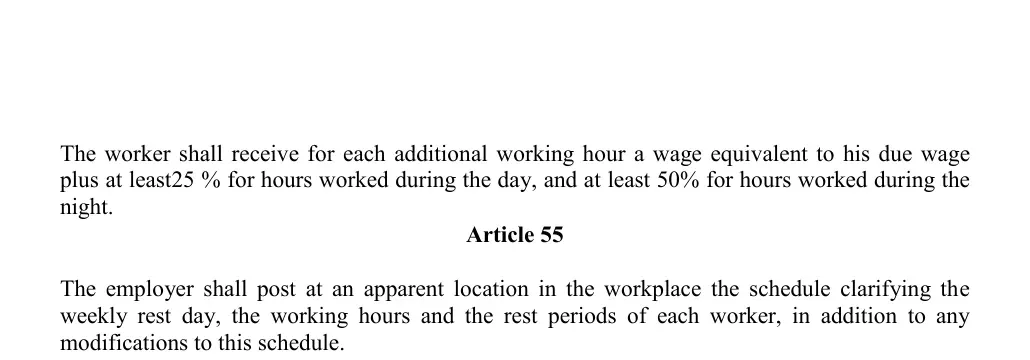
For a private-sector worker covered by Article 54, multiply the ordinary hourly wage by 1.25 for each daytime overtime hour or by 1.50 for each night overtime hour. For work on the weekly rest day, Article 57 gives the worker a choice between the normal wage for that day plus an additional 150%, or another rest day. Confirm the ordinary hourly wage, the day or night classification and any special worker-category rule before calculating.

Bahrain overtime calculation formula
| Work period | Minimum calculation |
|---|---|
| Daytime overtime hour | Ordinary hourly wage × 1.25 |
| Night overtime hour | Ordinary hourly wage × 1.50 |
| Weekly rest day, extra-pay option | Normal wage for the day + additional 150% of that wage |
| Weekly rest day, time-off option | Another rest day, chosen by the worker instead of the additional wage |
Article 54 of Bahrain's private-sector Labour Law says each additional hour receives the wage due for that hour plus at least 25% for daytime work or at least 50% for night work. The percentages are minimums, so a contract or policy can provide more.
Worked examples
Example 1: three daytime overtime hours
If the ordinary hourly wage is BHD 2.000:
BHD 2.000 × 1.25 × 3 hours = BHD 7.500
This is the total wage for those three overtime hours, including the ordinary hourly amount and the 25% addition.
Example 2: three night overtime hours
Using the same BHD 2.000 ordinary hourly wage:
BHD 2.000 × 1.50 × 3 hours = BHD 9.000
Example 3: work on the weekly rest day
If the worker's normal wage for that day is BHD 20 and the worker chooses additional pay:
BHD 20 normal day wage + BHD 30 additional wage = BHD 50 attributed to that rest day
The BHD 30 addition is 150% of BHD 20. If the worker chooses another rest day instead, do not also add the 150% unless the contract or employer policy provides both.
When do hours become overtime?
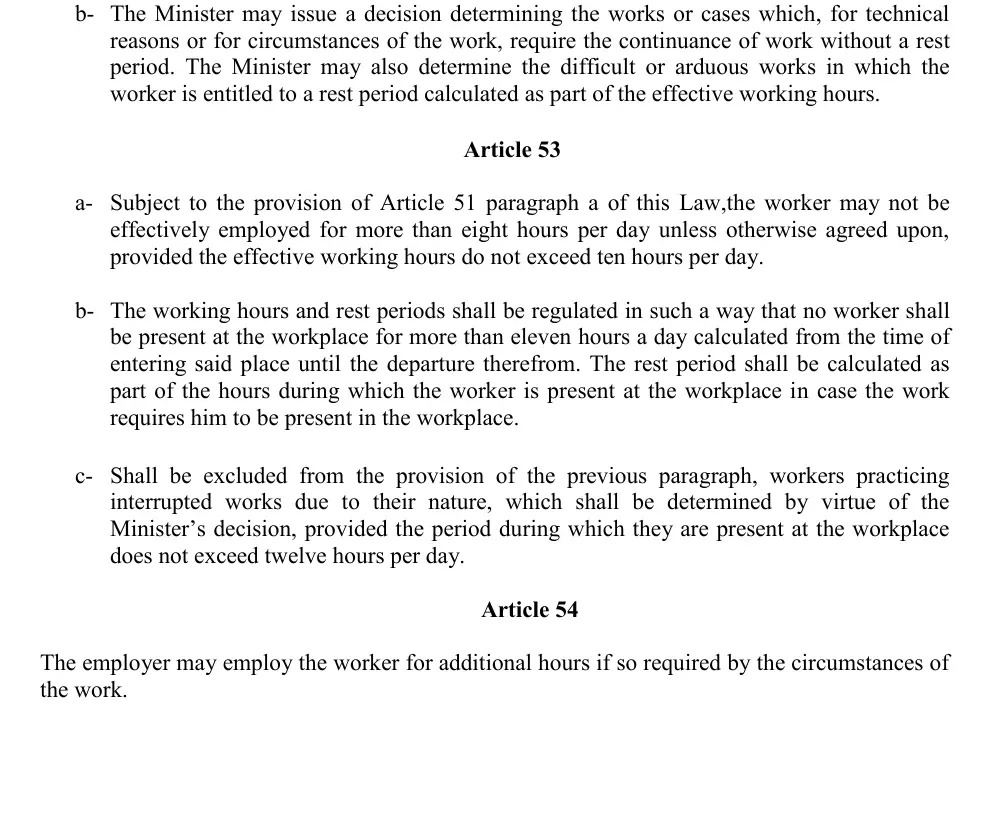
Article 51 normally limits effective work to 48 hours per week. For Muslim workers during Ramadan, it normally limits work to six hours per day or 36 hours per week. Article 53 says effective work should not exceed eight hours per day unless otherwise agreed, and even then effective work may not exceed ten hours per day.
Rest breaks are generally excluded from effective working hours. The schedule must also be organized so the period from the start to the end of the day normally does not exceed eleven hours, subject to the law's stated exceptions.
A shift lasting ten clock hours is not automatically ten effective work hours if it includes excluded breaks. Build the calculation from actual effective work, the agreed normal schedule and the applicable weekly limit.
Weekly rest-day work is calculated differently
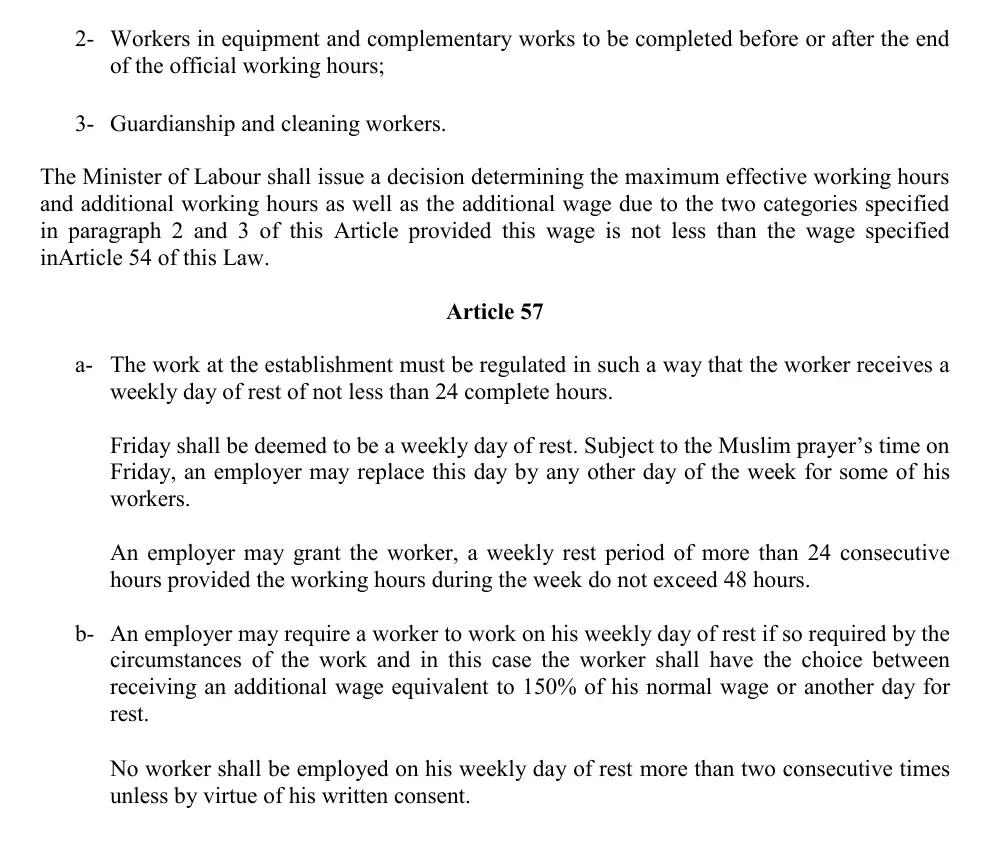
Article 57 requires a weekly rest period of at least 24 complete hours. Friday is treated as the weekly rest day, but an employer can replace it with another day for some workers, while observing Friday prayer time for Muslim workers.
If work is required on the assigned weekly rest day, the worker chooses between the normal wage for that day plus an additional wage equal to 150%, or another rest day. The law also says a worker should not be employed on the weekly rest day more than twice consecutively without written consent.
Records needed to check overtime
- Employment contract and any written working-hours schedule.
- Payslip showing the ordinary wage and overtime lines.
- Clock-in records, timesheets or attendance reports.
- Written overtime approvals or supervisor instructions.
- The assigned weekly rest day and any written change to it.
- A day-by-day list separating ordinary, daytime overtime, night overtime and rest-day work.
Article 55 requires the employer to post a schedule showing each worker's weekly rest day, working hours and rest periods, including changes. Photograph or retain the schedule when a dispute arises, while respecting workplace confidentiality rules.
Check whether a special category applies
Do not apply a generic calculator without checking Article 56. The working-hours provisions named there do not apply in the same way to the employer's authorized representatives, workers performing preparatory or complementary work before or after official hours, and guards and cleaners. A ministerial decision can set maximum effective and additional hours and the additional wage for the latter categories, with a floor linked to Article 54.
Public-sector employees, domestic workers and workers governed by another special regime may follow different rules. Confirm the governing law before treating this private-sector calculation as final.
If the overtime payment is wrong
- Ask payroll for the ordinary hourly wage and a breakdown of ordinary and overtime hours.
- Compare the payslip with your attendance records and the assigned rest day.
- Write a dated month-by-month calculation, keeping daytime, night and rest-day hours separate.
- Raise the discrepancy in writing and retain the response.
- If it is not corrected, use the official complaint route that matches your current employment status.
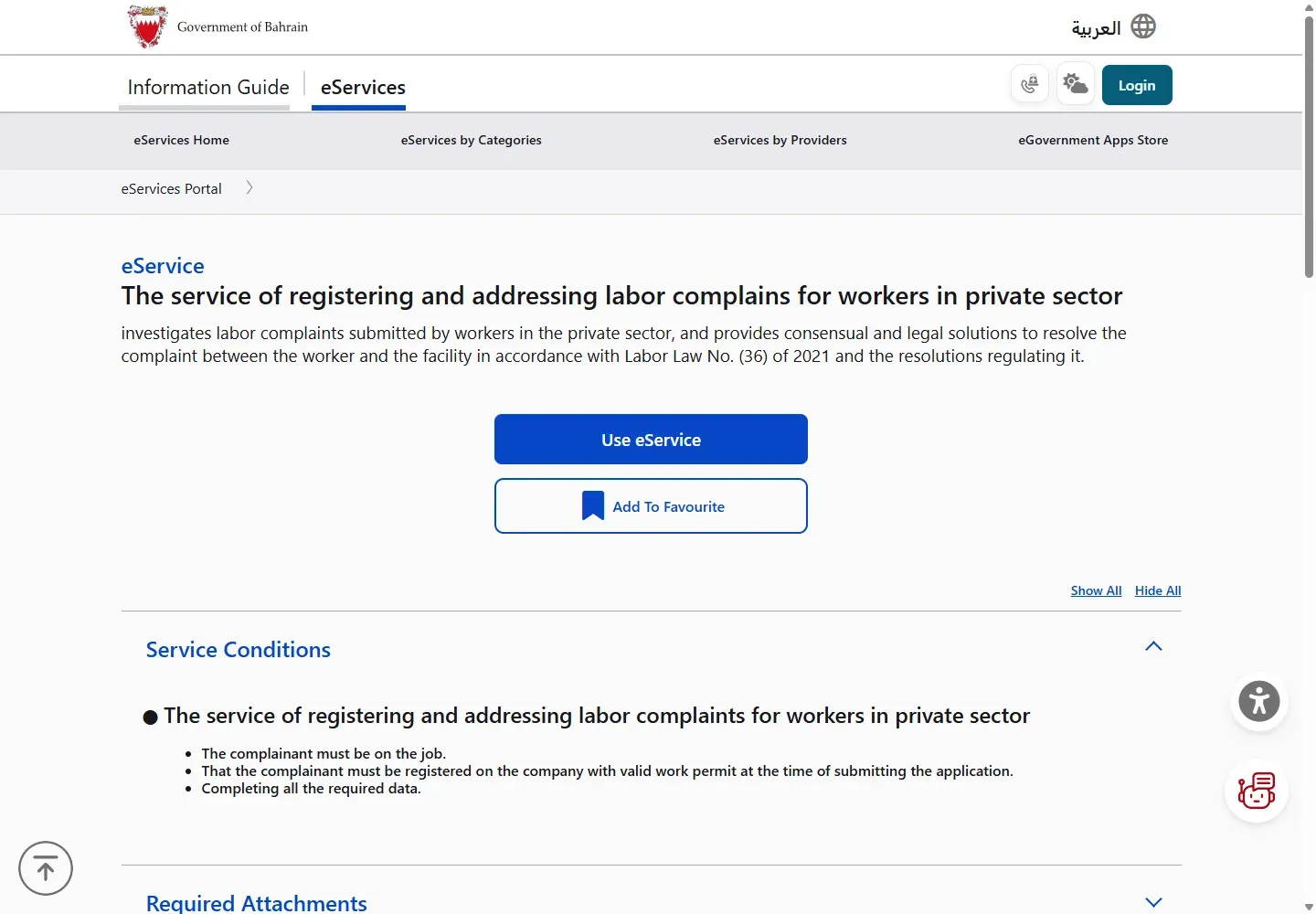
Current employees with a valid permit can use the process explained in our Bahrain labour complaint guide. The Ministry asks for the worker's ID, the employer's CR number and supporting documents. A former worker or a dismissal dispute may need the separate individual-dispute route.
Frequently asked questions
What is the Bahrain daytime overtime rate?
At least the ordinary hourly wage plus 25%, which is 125% of the ordinary hourly wage.
What is the night overtime rate?
At least the ordinary hourly wage plus 50%, which is 150% of the ordinary hourly wage.
Is Friday always the rest day?
Friday is the statutory weekly rest day, but the employer may replace it with another day for some workers under Article 57. Use the worker's assigned rest day for the calculation.
Is rest-day pay 150% or 250%?
Article 57 states the normal wage for the day plus an additional wage equal to 150%. Expressed as a combined total attributed to that day, that is 250% of the normal day wage. The worker can choose another rest day instead of the additional wage.
Does this apply to every worker?
No. Check the governing employment law, Article 56 categories and any sector-specific decision before relying on the formula.
Official sources
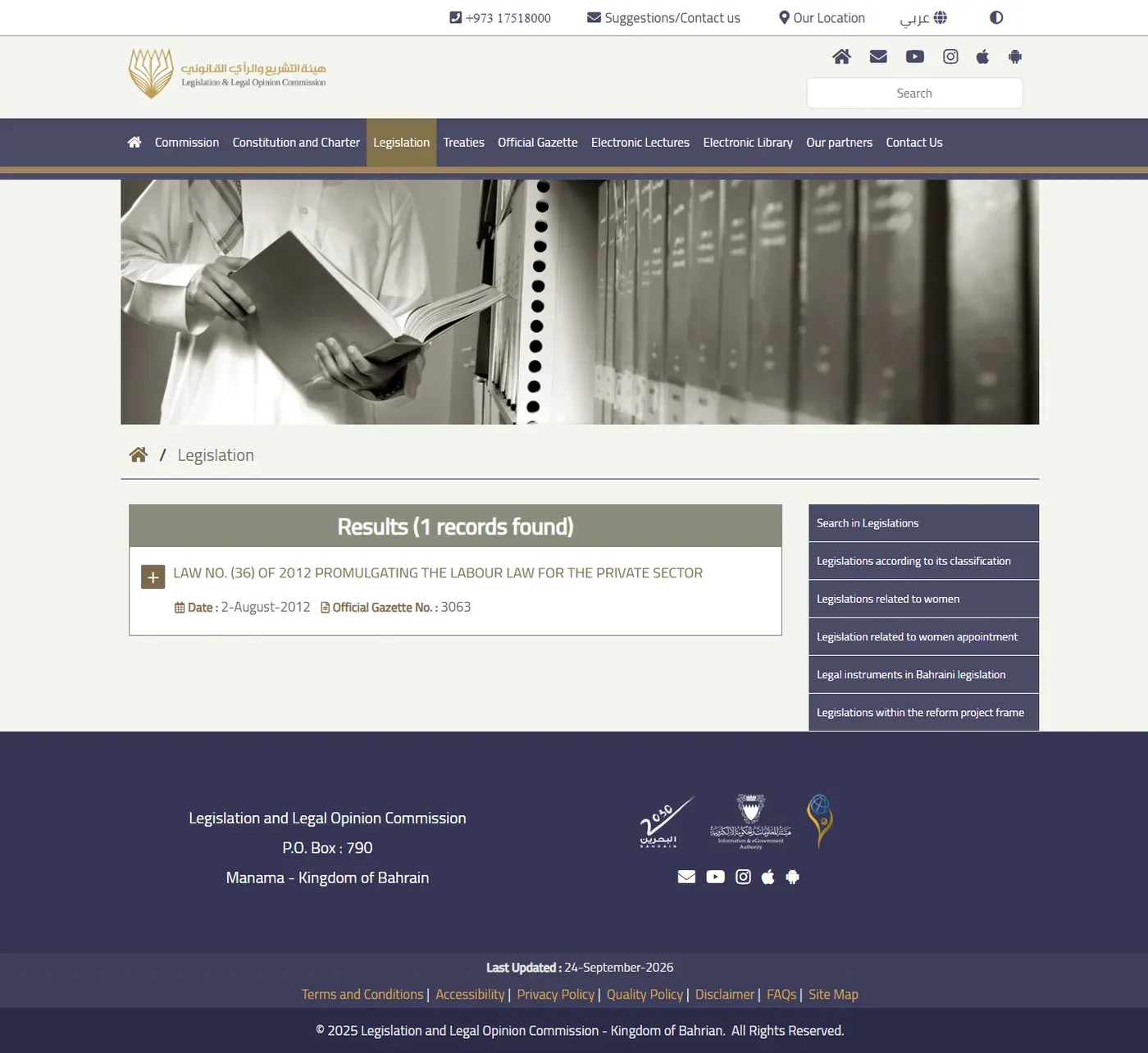
- Legislation and Legal Opinion Commission: Labour Law in the Private Sector
- Current consolidated Arabic text of Law No. 36 of 2012
- Official English Labour Law PDF
Articles 51 to 57 and complaint route checked on 6 October 2026.