Bahrain motoring and travel guides
Buying a used car in Bahrain: inspection, history and payment checks
By Gaurav Agarwal · Sources checked 6 October 2026
Check the seller’s authority and vehicle identity, review the service and import history, arrange an independent inspection, and agree payment and finance clearance in writing. Confirm buyer insurance and complete the GDT ownership transfer before treating the purchase as finished.
Jump to a section
- Buy the car in the right order
- Establish the seller’s authority and the car’s identity
- Use history checks without mistaking them for a guarantee
- Commission an inspection that answers buying questions
- Treat imported cars as a separate comparison
- Agree the price, conditions and payment sequence in writing
- Finish with a documented handover
- Frequently asked questions
- Sources and checking date
Buy the car in the right order
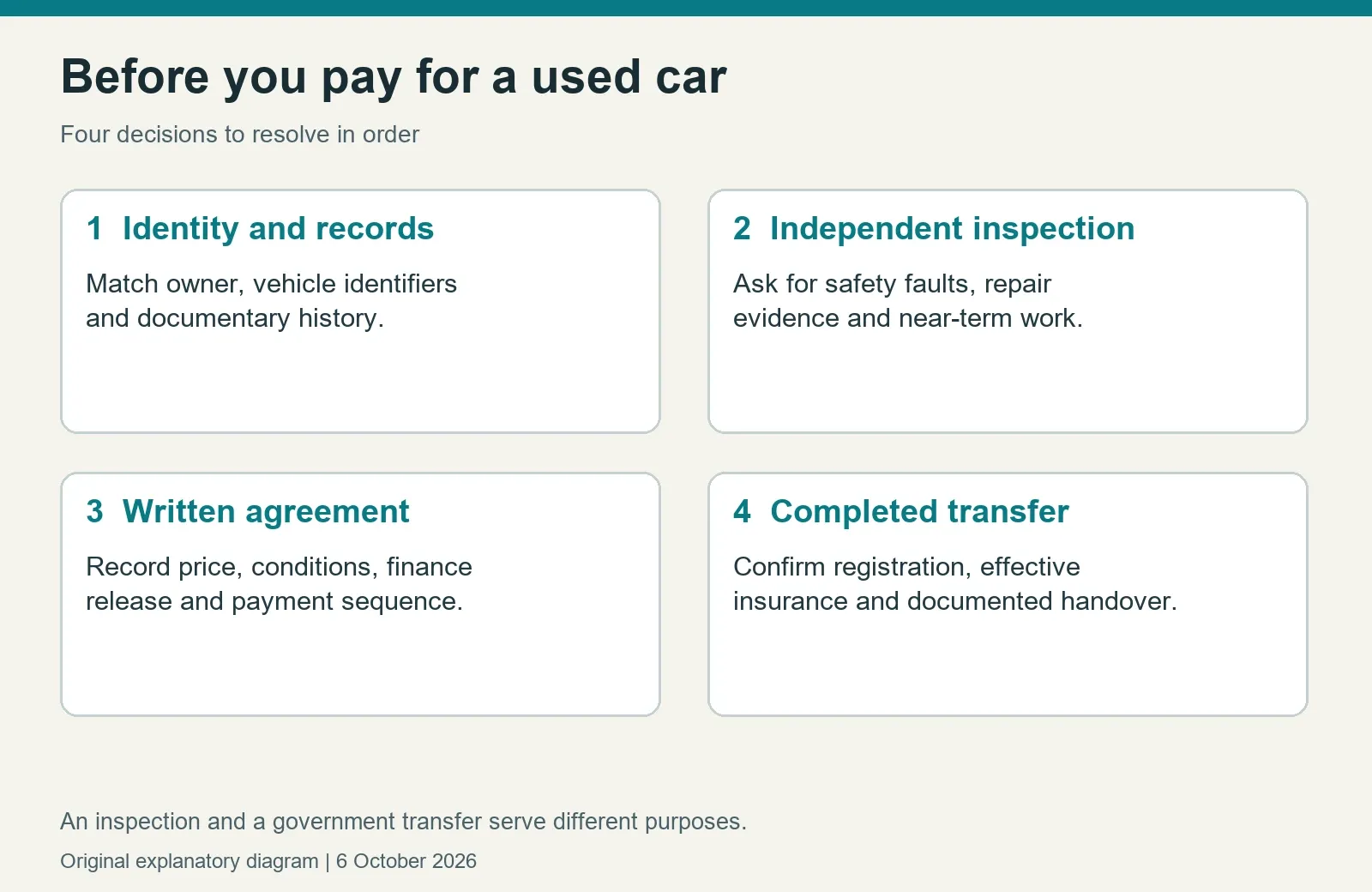
The safest order is to identify the exact car, establish who can sell it, inspect it independently, agree the transaction in writing and complete the ownership process with the right insurance. A cheap asking price is only the beginning. A car that needs tyres, cooling repairs and immediate servicing can cost more than a better maintained alternative even before an unresolved finance restriction delays the transfer.
Use this guide to organize the purchase, not to replace a technician’s inspection. All official service rules and fees below were checked on 6 October 2026. The motoring and travel hub links to related Bahrain guides. The ownership-transfer guide handles the government transaction in detail; this article focuses on deciding whether to buy and what to settle before that transaction begins.
Set a total first-year budget before viewing cars. Include the purchase, insurance, transfer, any immediate repairs, scheduled servicing, parking and fuel. Keep a reserve for faults that an inspection cannot reliably predict. Compare cars in the same model year, trim, mileage band and condition. A listing price is a seller’s request, not evidence that similar cars actually sold for that amount.
Establish the seller’s authority and the car’s identity
Ask to see the current registration and ownership information, then compare the vehicle identification number on the paperwork with the car. Look at the identifiers with the seller present. If numbers do not match, appear altered or cannot be read, stop the purchase until the issue has an authoritative explanation. Do not let an attractive price turn an identity discrepancy into a detail to sort out after payment.
Find out whether you are dealing with the registered owner, a dealership or a person acting for someone else. A salesperson may legitimately handle a transaction, but the authority to sell still needs to be clear. For a business purchase, put the legal seller’s name on the quotation and receipt. Save the advertisement, stated specification, mileage and any written promises about accident history, warranty or service history.
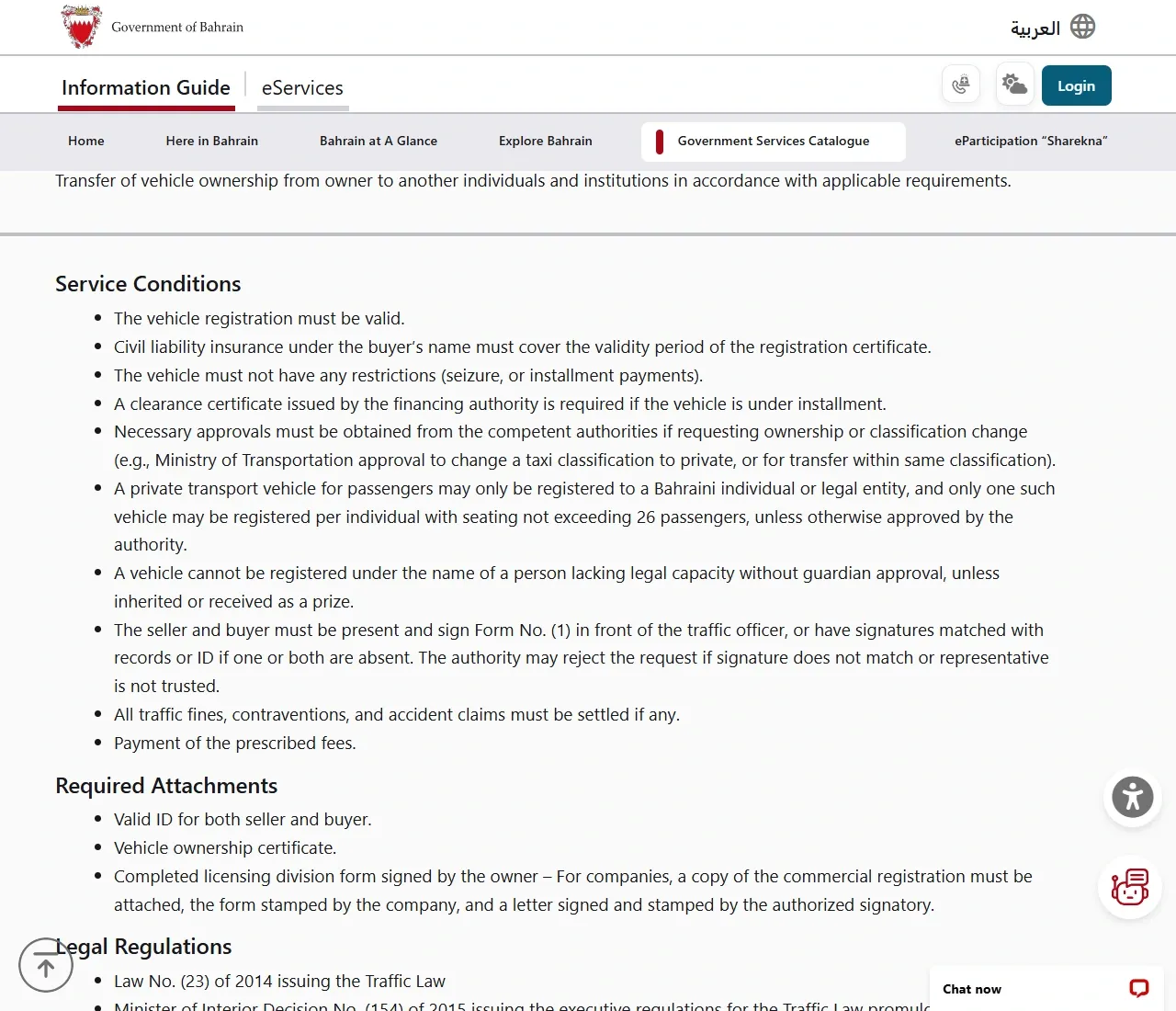
The GDT ownership-transfer service requires valid registration, buyer insurance covering the remaining registration period, appropriate IDs and ownership documents. It also requires the relevant signatures and the settlement of restrictions and outstanding matters described by the service. Ask the seller about finance early. Clearing the seller’s loan and arranging your own borrowing are separate decisions; see the used-car finance guide for the buyer’s side. Agree how any settlement and release will happen before you pay a large balance, rather than accepting a promise to clear a loan after you have taken the car.
Use history checks without mistaking them for a guarantee
Ask for service invoices and compare dates, recorded mileage and the vehicle identity. Look for a coherent sequence. Long gaps do not prove neglect, but they leave uncertainty that should affect your decision and inspection scope. A stamped booklet without invoices may tell you less than a set of detailed workshop records. Contact the servicing workshop or dealer with the owner’s cooperation if a material claim needs confirmation.
Bahrain lists an official vehicle-condition inquiry service, but the live output was not accessible during this review. We therefore do not promise that it provides a complete accident, flood, mileage or overseas history. Ask the seller to help obtain the current official information and read the report’s actual scope. A clean result within a limited database is not proof that a vehicle has never been damaged.
For a car brought from another country, ask for the original history and import documentation as well as the Bahrain record. A locally registered imported car may have an overseas repair history that local paperwork does not explain. The GDT imported-used-vehicle registration page lists different origin documents, including export certificates, title and shipping documentation depending on the source country. Use that distinction to frame questions; do not assume every import has the same document bundle.
Commission an inspection that answers buying questions
Choose an independent workshop or specialist familiar with the model. Ask the technician to identify safety defects, evidence of major repair, current faults and work likely to be needed soon. Make the report useful for a purchase decision: request photographs, fault descriptions and estimated repair categories, rather than only a pass or fail label. Tell the workshop about any history gap or seller claim you want examined.
Ask about the chassis and underbody, panel alignment, paint variation, corrosion, signs of water entry, airbags and seat belts. Mechanical checks should cover the engine, transmission, cooling system, brakes, steering, suspension and tyre condition. A diagnostic scan can add evidence, but clearing a warning light or finding no stored code is not the same as proving that every system is healthy. Let the technician explain what was and was not tested.
Air conditioning deserves a proper functional check in a Bahrain purchase. Test it after the car has warmed up and check the controls, windows, locks, cameras and other fitted equipment. Observe fluid leaks and temperature behaviour during an appropriate test drive with the owner’s permission. Do not attempt unsafe road tests or dismantling yourself. An independent inspection is a buying safeguard; it is separate from the official inspection needed for a government registration process.
Ask the workshop to separate urgent safety work from normal wear and optional improvements. A worn cosmetic item may be acceptable at the right price, while uncertain structural repairs may be a reason to walk away. If the seller refuses reasonable inspection access, you have less evidence on which to commit. You do not need to prove deception before deciding that the uncertainty is too expensive.
Treat imported cars as a separate comparison
A seller may describe a vehicle as Gulf specification, imported, dealer maintained or accident free. Ask what each description means for this exact car and what evidence supports it. Verify the specification, warranty territory and parts support with the relevant dealer or specialist. A badge and model name alone do not establish that the car has the same equipment, warranty or maintenance requirements as a Bahrain dealer vehicle.
Do not repeat an old blanket rule that Bahrain cannot register any private car over five years old. Decision 17 of 2021 changed the relevant regulation, and the current GDT service lists a BHD 1,000 file-opening fee for private vehicles, private passenger vehicles and motorcycles over five years old. That concerns initial registration of qualifying imported vehicles. It is not an automatic extra charge on every later sale of an older car already registered in Bahrain.
If the car is still abroad or awaiting registration, get a complete landed-cost estimate. Customs importing guidance describes the declaration and document process, while its vehicle import FAQ explains the Causeway import workflow and customs valuation. Freight, agent services, inspection, registration and taxes can sit outside the seller’s advertised price. Ask who is responsible for each item and who carries the risk if registration cannot be completed.
The NBR Imports and Exports VAT Guide explains that import VAT is calculated on a base that includes applicable customs duty and specified other costs. Do not casually add five and ten to produce a universal fifteen-percent invoice uplift. A buyer of an already registered local used car is in a different transaction from a person importing one. Obtain the correct invoice and tax treatment for the actual seller and transaction.
Agree the price, conditions and payment sequence in writing
Write down the vehicle identity, price, included accessories, keys, service records and agreed repairs. State whether a reservation payment is refundable and under what conditions. If you have made the purchase conditional on an inspection or finance release, put that condition in the agreement before paying. Keep a payment trail that identifies the recipient and vehicle. Avoid sending the balance to an unrelated person on the strength of an informal explanation.
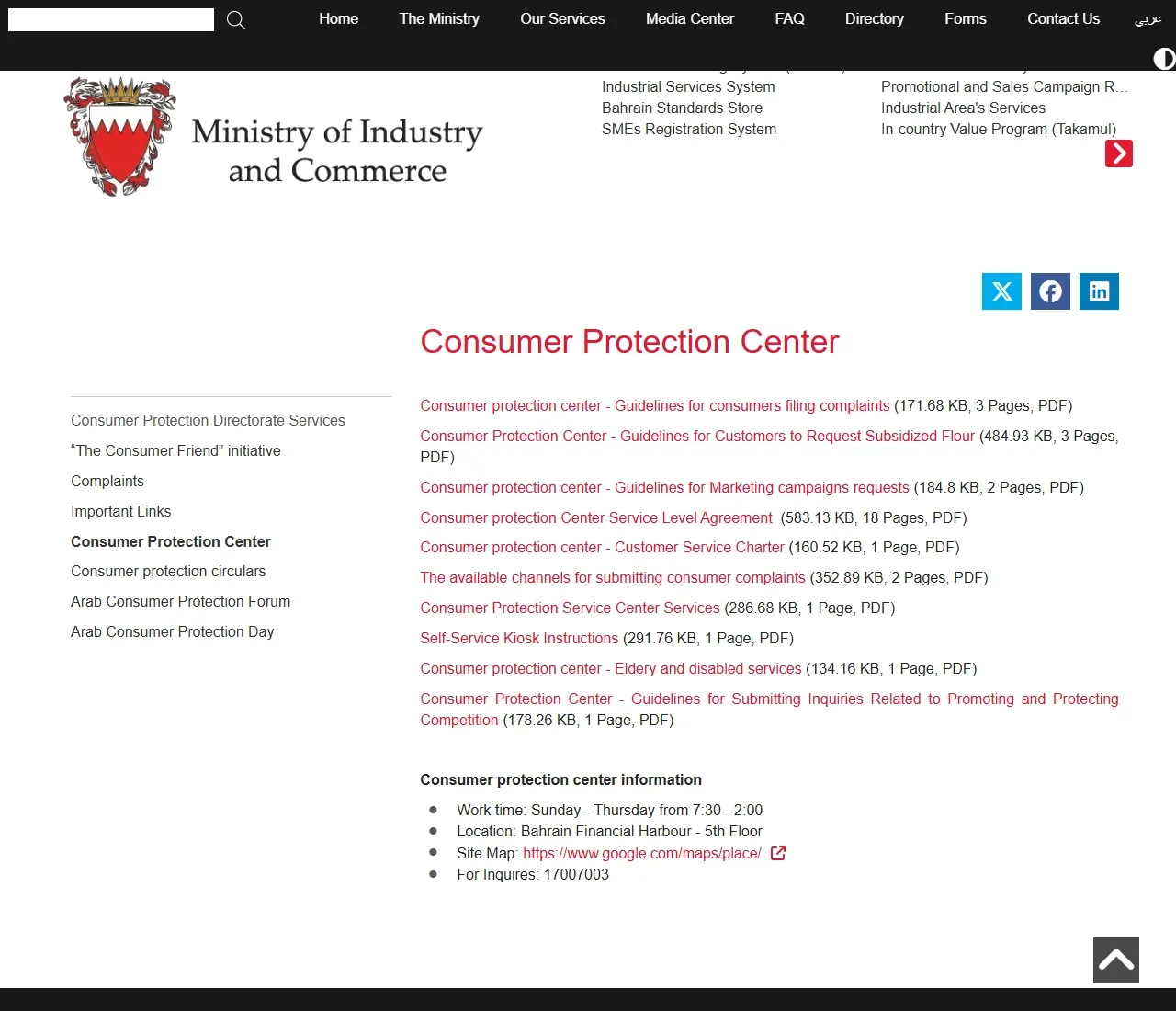
For a dealer warranty, ask who provides it, its duration, mileage limit, exclusions, required servicing and claim procedure. Distinguish a manufacturer warranty from a dealer warranty and a separately sold service contract. A phrase such as “warranty available” is not the same as an included warranty. The MOIC Consumer Protection Centre provides complaint guidance and channels for consumer issues. Preserve the documents that show what was advertised and agreed; do not assume the same remedy applies identically to a private sale.
The GDT transfer page lists BHD 16 for ownership transfer when reviewed on 6 October 2026. Insurance, repairs, finance settlement and other unresolved items are separate from that service fee. Agree who pays each item. Obtain an insurance quotation for the exact vehicle and intended driver before committing, particularly if the car has an unusual specification or repair history. Our car insurance guide explains questions to ask the insurer.
Finish with a documented handover
Confirm that the transfer has actually completed and the insurance is effective before treating the car as ready for ordinary use. Check the recorded buyer details and registration, then collect all agreed keys, manuals, invoices and accessories. Photograph the car and odometer at handover and retain the signed agreement and payment receipts. If an agreed repair remains outstanding, keep a clear written commitment with the responsible party and timing.
Book the first service using the inspection findings and available maintenance history. Ask the workshop what needs attention now and what can be scheduled later. Do not replace parts solely because a general online checklist mentions them; use the model’s maintenance requirements and the condition of the specific vehicle. Create a folder for future invoices so the next owner can assess the same evidence you wanted.
If Causeway travel influenced your choice, check the car’s eligibility after purchase rather than assuming every vehicle is unrestricted. The GDT authorization service requires valid registration and absence of listed legal restrictions. This is especially relevant while finance arrangements are being established. Ownership, authorization and territorial insurance are separate checks even when the car is now registered in your name.
Frequently asked questions
Is a government inspection enough before buying?
Use an independent purchase inspection to assess condition, repair risk and suitability. A registration-related inspection serves a different purpose. Ask the workshop for a written report explaining the scope and limitations.
Can I buy a financed used car?
First agree how the outstanding finance and any restriction will be cleared. The GDT transfer conditions require the relevant restrictions to be resolved. Do not release a large balance without a documented settlement and transfer plan.
Does an older imported car always cost BHD 1,000 extra?
The listed fee applies to initial registration of specified imported vehicle classes over five years old, subject to the rules. It is not a blanket fee on every local resale of an older registered car.
What is the official transfer fee?
The GDT service page listed BHD 16 on 6 October 2026. Obtain the current service amount before paying and budget insurance and other transaction costs separately.
Sources and checking date
Official authority and operator pages reviewed on 6 October 2026. A checking date records our review, not a promise that a tariff or eligibility rule will stay unchanged. Reopen the linked service before paying or travelling.
- GDT: transfer of vehicle ownership
- GDT: initial registration of imported used vehicles
- Ministry of Industry and Commerce: consumer protection
- Legislation Authority: Decision 17 of 2021
- Bahrain Customs: importing
- Bahrain Customs: frequently asked questions
- National Bureau for Revenue: Imports and Exports VAT Guide
- GDT: vehicle driving authorization outside Bahrain