Official sources checked
Flood Damage and Car Insurance in Bahrain
By Gaurav Agarwal · Sources checked 6 October 2026
Flood damage to your own car requires the relevant comprehensive cover and compliance with the policy conditions. The GIG Gulf Bahrain handbook includes a storm and flood extension but states that flood cover applies provided the vehicle is not driven. Other policies differ, so check the schedule, wording and endorsements.
Jump to a section
01Confirm the exact peril and condition
GIG Gulf Bahrain, Takaful International and the Gulf Union FAQ publish motor products that mention flood or storm protection. These are provider examples. A third-party-only policy does not generally repair the insured vehicle, and a comprehensive policy may still have exclusions or conditions.
02What to do when a car is in floodwater
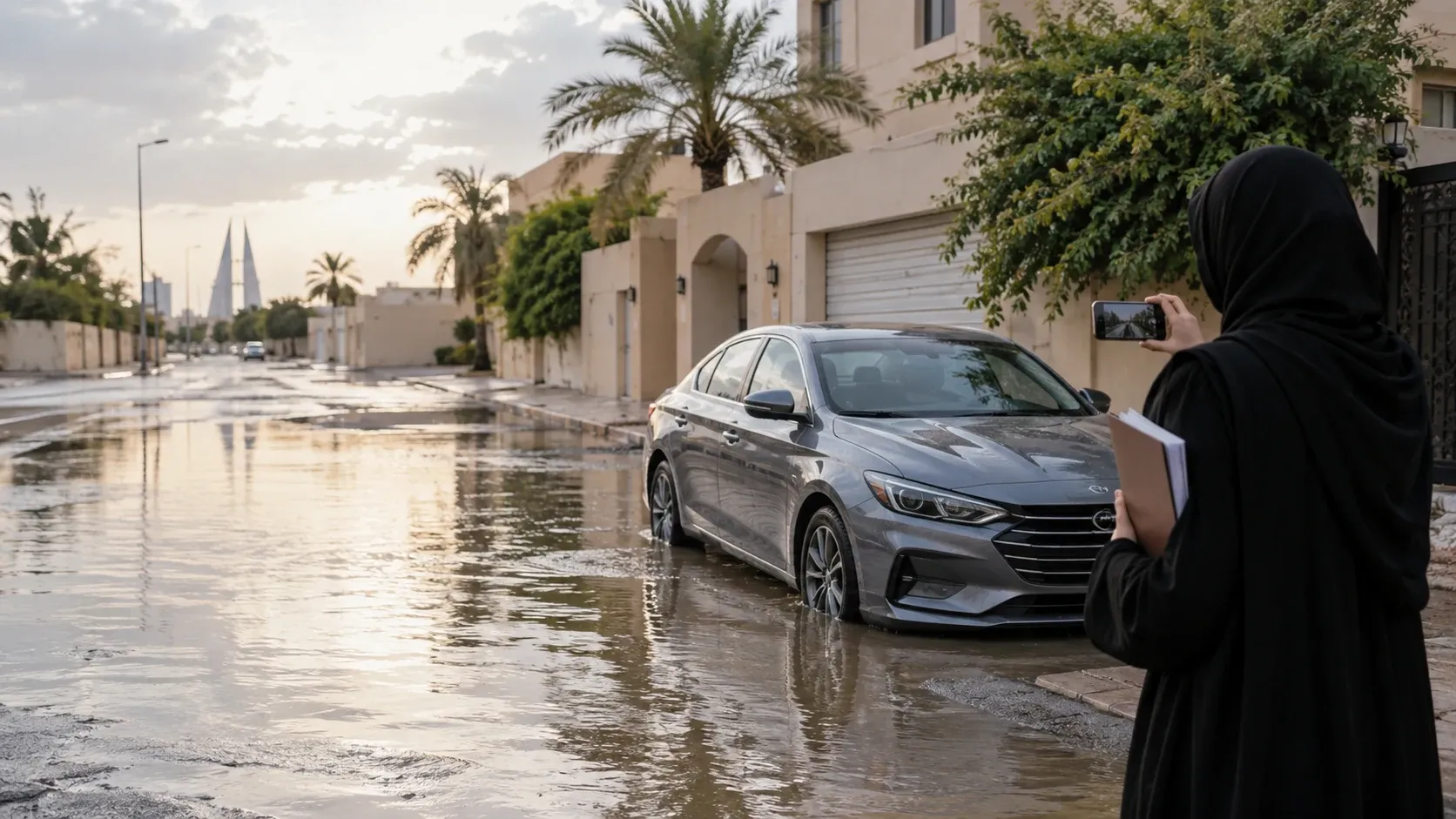
- Protect people first and avoid entering moving or deep water.
- Do not start or drive the vehicle if water may have reached the intake, engine, electronics or cabin.
- Photograph the water level, vehicle position and surrounding area from safety.
- Notify the insurer and request towing instructions.
- Use the approved recovery provider or obtain written approval.
- Do not authorise dismantling or repair before the insurer's inspection unless emergency mitigation is agreed.
- Keep towing, storage, cleaning and diagnostic records.
03Claim evidence and policy questions
| Evidence | Purpose |
|---|---|
| Policy schedule and wording | Proves flood extension, excess and conditions |
| Photos and video | Shows water level and vehicle position |
| Weather or authority notice | Supports event timing and location |
| Towing and storage receipt | Records mitigation costs |
| Workshop diagnostic | Links damage to water ingress |
| Service history | Separates pre-existing faults |
Ask about engine damage after attempted starting, contamination, corrosion, electrical faults, interior cleaning, depreciation, total-loss valuation and salvage. Verify the insurer in the CBB Licensing Directory.
Keep the key, do not erase dashboard warnings, and tell the workshop not to clear fault codes before the insurer's inspection. If water rises after the first photographs, record the later level safely so the evidence shows how the event developed.
04If the claim is rejected
Request the written reason, evidence and clause. Identify whether the dispute concerns cover, driving, maintenance, pre-existing damage or causation. Use the insurer's complaint process, then the CBB route if the written response remains unsatisfactory.
05Flood claim questions
Does comprehensive insurance always cover flood?
No. Check whether flood is included or optional and read all conditions.
Should I try to move the car?
Do not drive through floodwater. Follow emergency guidance and the insurer's safe recovery instructions.
What if the engine was started?
Disclose exactly what happened. The insurer will assess the wording and causal damage.
Can I clean the car immediately?
Prevent further damage only when safe, but document the condition and obtain insurer instructions before major work.
07Separate flood cover from the claim conditions
A policy can list natural perils and still contain duties that affect a claim. The Liva Bahrain motor wording and the first-party wordings already linked above show why the schedule, extensions, exclusions and claims conditions must be read together.
| Question | Where to check | Evidence to keep |
|---|---|---|
| Is flood or natural peril included? | Schedule and own-damage extensions | Full issued schedule and wording |
| Was the car driven into known water? | Exclusions and reasonable-care duties | Route, time, weather and scene photos |
| Was the engine restarted? | Loss-mitigation and damage-causation review | Recovery report and garage diagnosis |
| Will agency repair apply? | Repair-basis endorsement | Agency-repair line on the schedule |
| What amount could the customer pay? | Excess and depreciation clauses | Written estimate and insurer calculation |
Do not rely on a product-page phrase alone. Ask the insurer to identify the exact clause that grants cover and any condition it says was not met.
08Worked example: a parked car floods overnight
Hypothetical example: a comprehensive-policy holder finds the parked vehicle partly submerged after overnight rain. The engine is not started. The customer photographs the water line and surroundings, calls the insurer's assistance channel, arranges recovery and asks the garage to record water ingress before dismantling.
- Report the event through the channel named in the policy.
- Give the insurer the accident or incident record it requests.
- Ask whether inspection is required before repair or cleaning begins.
- Request a written decision on repair, total loss, excess and any depreciation.
- Keep recovery, storage and diagnostic invoices until the insurer states what is reimbursable.
This example does not predict acceptance. The issued policy, the cause of loss and the evidence decide the result.
09Challenge a rejection with the clause and evidence
Ask the insurer for the policy clause, factual finding and technical evidence behind any rejection. A useful complaint compares each stated reason with the schedule, photographs, recovery report and garage diagnosis. Verify the risk carrier in the CBB Licensing Directory, complain to the insurer first, then use the CBB insurance complaint procedure if the dispute remains unresolved.
Does third-party insurance pay for flood damage to my own car?
Third-party liability is designed for liability to others. Own-vehicle flood damage normally requires applicable own-damage cover in the issued policy.
Should I approve repairs before the insurer inspects the car?
Ask the insurer first. Emergency steps to prevent further loss should be documented, while non-urgent dismantling or repair may affect inspection evidence.